Bestseller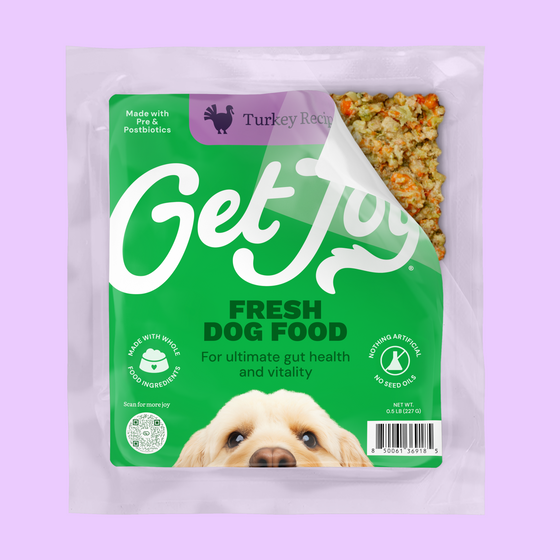
 Gut health
 Sensitive stomach
 Calm
Calm Joints & mobility
 Skin & coat
 Healthy weight
 Picky eaters



Protein for Dogs: Why Quality Fuels an Active Life
by The Get Joy Food Team ・ 24 min readLast Updated: June 30, 2026 · Reviewed against Get Joy nutrient profiles & published canine nutrition research
You wouldn't train for a hike, a 10K, or a lifetime of feeling good on a diet of processed junk. The food you put in is the performance you get out — that's the whole premise of a healthy, active life. Your dog is no different. If you want a trail buddy with real stamina, lean muscle, and the drive to keep up, it starts with what's in the bowl. And the first thing to look at is protein — how much, and just as importantly, what kind.
Here's why protein is the foundation of an active dog's diet, how much they actually need, why quality beats quantity, and what makes Get Joy's Freeze Dried Raw a genuine performance food.
🐾 Key Takeaways
- Protein fuels the active life: lean muscle, tissue repair, recovery after exercise, steady energy, immune strength, and a glossy coat.
- Adult dogs need a minimum of ~18% protein, but active and working dogs do best around 30–40%.
- Get Joy Freeze Dried Raw delivers 38.6% (Beef) and 39.8% (Chicken) crude protein — right in the performance range.
- Quality beats quantity. Real muscle + organ meats and a complete amino-acid profile feed muscle; rendered "meals" and plant fillers don't.
- Belly Biotics™ and 95%+ gelatinization mean your dog actually absorbs that protein — not just eats it.
Table of Contents
- Why protein is the fuel for an active life
- How much protein does a dog actually need?
- Protein needs by life stage & activity level
- Not all protein is equal: quality over quantity
- The amino acids that matter most
- How to read protein on a dog food label
- What's in the Get Joy bowl
- Fresh vs. Freeze Dried Raw: which protein for your dog?
- Signs your dog may need better protein
- Can a dog have too much protein? (The kidney myth)
- Fueling the active dog: hikes, the park, and play
- Frequently Asked Questions
Why Protein Is the Fuel for an Active Life
Protein is the raw material your dog's body is built and rebuilt from. For an active dog, it's doing constant work behind the scenes:
- Lean muscle & strength. Muscle is made of protein, and it's what powers the climb, the sprint, and the leap for the ball.
- Recovery and repair. Exercise breaks muscle protein down; dietary protein builds it back up. This cycle — protein turnover — ramps up the more your dog moves. Active dogs that don't get enough can fatigue and lose muscle.
- Steady energy. Alongside healthy fat, quality protein supports sustained energy rather than crash-and-burn spikes.
- Immune strength. Antibodies and immune cells are built from amino acids — the building blocks of protein.
- Skin & coat. Keratin, the protein in skin and hair, depends on a steady supply of high-quality protein. It's why a well-fed dog has a coat that shows it.
- Healthy weight. Protein promotes satiety, which helps active dogs stay lean and fueled without overeating.
In other words: protein isn't just an ingredient on the label. It's the difference between a dog who keeps up and one who taps out early.
How Much Protein Does a Dog Actually Need?
The baseline standard (AAFCO) is a minimum of about 18% protein for adult maintenance and 22%+ for growth. But "minimum to survive" and "optimized to thrive" are different targets. For most healthy, active adult dogs, the sweet spot lands around 30–40% protein.
Here's where Get Joy fits: our Freeze Dried Raw recipes deliver 38.6% crude protein (Beef) and 39.8% (Chicken) — squarely in the performance range, from real animal protein.
Protein Needs by Life Stage & Activity Level
Protein isn't one number for every dog. Growth, activity, and age all shift the target. Here's a practical guide (dry-matter basis):
| Life stage / type | Target protein (dry matter) | Why |
|---|---|---|
| Puppies & growth | ~22–32% | Building muscle, tissue, and organs fast |
| Adult maintenance | ~18–25% | Baseline upkeep for a low-activity adult |
| Active / working / sporting | ~30–40%+ | Higher protein turnover, recovery, lean muscle |
| Pregnant or nursing | Elevated | Supporting puppies and milk production |
| Healthy seniors | Maintain high-quality protein | Older dogs often need more quality protein to fight age-related muscle loss |
One myth worth retiring: that senior dogs automatically need less protein. For healthy seniors, the opposite is often true — adequate, high-quality protein helps preserve lean muscle (sarcopenia) as they age. Protein restriction is only appropriate for specific diagnosed conditions, on a vet's guidance.
Because Get Joy Freeze Dried Raw is formulated to AAFCO All Life Stages (including large-breed growth), it fits puppies through seniors — with the protein density active dogs need.
Not All Protein Is Equal: Quality Over Quantity
Here's the part the percentage on the bag won't tell you. A food can show "high protein" and still feed your dog poorly — because where that protein comes from, and whether your dog can absorb it, matters as much as the number.
Think about your own goals. You wouldn't try to build strength and stamina on candy bars and soda just because the wrapper lists some grams of protein. You'd want real food your body can actually use. Same logic, same dog.
What separates real, performance-grade protein from filler:
- Whole muscle and organ meat vs. rendered "meals." Named whole proteins and nutrient-dense organs (liver, heart, kidney) deliver a complete amino-acid profile. Generic "meat meal" and by-products are a question mark.
- Animal protein vs. plant filler. Wheat, corn, and soy can pad the protein number on paper without delivering the amino acids a carnivore-leaning body is built to use.
- Digestibility & absorption. Protein your dog can't absorb is protein wasted. Gentle processing and gut health determine how much of that 38% actually makes it into muscle.
That last point is the one most brands skip — and it's where Get Joy is built differently.
The Amino Acids That Matter Most
"Protein" is really shorthand for amino acids — the building blocks your dog assembles into muscle, enzymes, hormones, and immune cells. Dogs require 10 essential amino acids they can't make on their own: arginine, histidine, isoleucine, leucine, lysine, methionine, phenylalanine, threonine, tryptophan, and valine. They have to come from food.
This is where animal protein wins. Meat and organ meats provide a complete amino-acid profile in the right proportions, while most plant proteins are missing or low in one or more. A few worth knowing:
- Taurine — concentrated in heart muscle, it supports heart and eye health. Get Joy's recipes include organ meats like heart.
- Leucine — a key trigger for muscle protein synthesis, especially relevant for active dogs.
- Methionine & lysine — support coat, skin, and tissue repair; often the limiting amino acids in plant-heavy foods.
It's not just how much protein — it's whether the amino-acid profile is complete and bioavailable. Whole-meat, organ-rich recipes deliver that by design.
How to Read Protein on a Dog Food Label
This trips up almost everyone, and it's the key to comparing foods fairly. The "crude protein" number on a label is usually "as fed" — it includes the food's moisture. To compare two foods accurately, you convert to a "dry matter" basis (protein with the water removed):
Why this matters: high-moisture foods (fresh, gently cooked, canned) look "low protein" on the bag, while freeze dried raw — with almost no moisture — reads high as-fed because as-fed and dry-matter are nearly the same. So a canned food at 10% and a freeze dried raw at 38% can be closer than they appear once you do the math. When in doubt, compare on dry matter, and look at the source of the protein, not just the percentage.
What's in the Get Joy Bowl
Get Joy Freeze Dried Raw isn't "high protein" by accident. It's high-quality protein your dog can actually use:
- ~97% meat, organs, and superfoods. USDA-sourced real proteins plus nutrient-dense organ meats — no fillers like wheat, corn, or soy.
- A complete amino-acid profile from real meat. Beef or chicken as the first ingredient, supported by liver, heart, and kidney.
- Healthy fat for fuel. Salmon oil delivers Omega-3s at a near-ideal omega 6:3 ratio of about 2.33 — supporting energy, recovery, skin, and joints.
- Built to be absorbed. A gentle, low-temperature freeze-drying process (125°F max, no HPP) preserves nutrients, and 95%+ gelatinization makes the food easier to digest — so more protein is utilized, not passed through.
- Belly Biotics™ for the gut behind the gains. Built-in prebiotics, probiotics, and postbiotics support the microbiome that drives nutrient absorption. Gut health is whole-body health — and it's how good food becomes real results.
| What to look for | Typical "high-protein" food | Get Joy Freeze Dried Raw |
|---|---|---|
| Protein source | May rely on rendered meals or plant protein | USDA-sourced whole meat + organ meats |
| Protein level | Varies; often 28–34% | 38.6% (Beef) / 39.8% (Chicken) |
| Fillers | Wheat, corn, or soy common | None — ~97% meat, organs & superfoods |
| Absorption support | Rarely addressed | 95%+ gelatinization + Belly Biotics™ |
| Processing | High heat / HPP common | Gentle freeze drying, 125°F max, no HPP |
Fuel the Dog Who Keeps Up
Get Joy Freeze Dried Raw delivers 38.6–39.8% real animal protein, built for active dogs — with Belly Biotics™ so they absorb every bit of it.
Fresh vs. Freeze Dried Raw: Which Protein for Your Dog?
Both Get Joy formats deliver real, whole-food protein — they just do it differently:
- Freeze Dried Raw is the performance pick. Because nearly all the moisture is removed, the protein is highly concentrated — 38.6–39.8% — in a shelf-stable, no-thaw form that's easy to feed before a hike or pack for the trail.
- Gently Cooked Fresh is soft, whole-food nutrition many dogs love. It carries more moisture (great for hydration), so the as-fed protein percentage reads lower even though the ingredient quality is just as high.
Many active-dog households use both: Freeze Dried Raw as the concentrated, travel-friendly base, and a rotation or topper approach to keep mealtime interesting. Not ready to switch fully? Using Freeze Dried Raw as a topper is a budget-friendly way to boost the protein and gut support in your dog's current bowl.
Signs Your Dog May Need Better Protein
Sometimes the body signals a protein gap — in quality, quantity, or absorption. Watch for:
- Muscle loss or a bony topline despite eating normally
- A dull, dry, or brittle coat, or more shedding than usual
- Low energy or slow recovery after activity
- Weak or brittle nails and slow wound healing
- Frequent illness — immune cells depend on amino acids
- Increased hunger on a diet that's filling but not nourishing
These can have other causes too, so they're signals to investigate rather than diagnoses. If your dog shows several, look at both the quality of their protein and how well they're absorbing it — and check with your vet to rule out underlying issues.
Can a Dog Have Too Much Protein? (The Kidney Myth)
This is one of the most persistent myths in dog nutrition: that high protein damages the kidneys. For healthy dogs, it doesn't. Research has not shown that high-protein diets cause kidney disease in dogs with normal kidney function — healthy kidneys are built to process protein.
The confusion comes from a different scenario: dogs that already have advanced kidney disease are sometimes put on a protein-managed diet by their vet. That's treatment for an existing condition — not evidence that protein caused it.
The real risks of "too much protein" for a healthy dog are minor: excess is simply used for energy or excreted, and a sudden rich-food change can cause temporary loose stools (which is why you transition gradually). Bottom line: for a healthy, active dog, high-quality protein is a benefit. Dogs with diagnosed kidney or liver conditions should follow their vet's guidance.
Fueling the Active Dog: Hikes, the Park, and Play
If your dog's idea of a good day involves a trailhead, a tennis ball, or a long loop around the park, their nutrition should match the lifestyle:
- Before activity: feed a normal meal a couple of hours ahead rather than right before hard exercise. Freeze Dried Raw is light and concentrated — easy on a pre-adventure stomach.
- Recovery: quality protein after exertion supports the muscle-repair cycle. Consistency day to day matters more than any single meal.
- Lean & strong: high-quality protein helps active dogs hold lean muscle and a healthy weight — the foundation for joints that last and stamina that shows up on mile five.
- On the trail: shelf-stable Freeze Dried Raw travels without a cooler, making it a genuinely practical fuel for camping, road trips, and all-day outings.
- Hydration: active dogs need water, especially in heat. If you feed Freeze Dried Raw dry, always offer plenty of fresh water; you can also rehydrate it with warm water.
The throughline: an active dog is an athlete, and athletes are built on real food. Give the body high-quality protein it can absorb, support the gut that powers absorption, and the results show up where it counts — energy, muscle, coat, and a dog who's ready for whatever you've got planned.
Better Food. Better Adventures.
You fuel your goals with real food — give your dog the same. Gut-first, protein-rich nutrition for the dog who lives out loud. Joy starts from within.
Frequently Asked Questions
How much protein does an active dog need?
Adult dogs need a minimum of about 18% protein, but active and working dogs generally do best around 30–40%. Get Joy Freeze Dried Raw provides 38.6% (Beef) and 39.8% (Chicken) crude protein, right in that performance range.
Is high-protein dog food good for dogs?
For most healthy, active dogs, yes — high-quality protein supports muscle, recovery, energy, immunity, and a healthy coat. What matters most is protein quality and digestibility. Dogs with certain kidney or liver conditions may need protein managed, so check with your vet.
Does freeze dried raw have more protein than fresh or kibble?
Freeze dried raw is highly concentrated because the moisture is removed, so its as-fed protein percentage is high — Get Joy's is 38.6–39.8%. Fresh (gently cooked) food carries more moisture, so its as-fed percentage reads lower even at equal ingredient quality. The key in any format is the source and digestibility of the protein.
What makes Get Joy's protein higher quality?
Get Joy uses USDA-sourced whole meat and organ meats (not rendered "meals"), with no wheat, corn, or soy fillers — about 97% meat, organs, and superfoods. A gentle freeze-drying process (125°F max, no HPP), 95%+ gelatinization, and built-in Belly Biotics™ help your dog actually absorb that protein.
Can high-protein food help my dog build muscle?
Quality protein provides the amino acids needed for muscle maintenance and repair, especially when paired with regular activity. Food alone doesn't build muscle — exercise plus consistent, high-quality nutrition does — but adequate protein is the essential foundation.
Can too much protein damage my dog's kidneys?
For healthy dogs, no. Research has not shown that high-protein diets cause kidney disease in dogs with normal kidney function. Protein restriction is a treatment for dogs that already have advanced kidney disease, not evidence that protein caused it. Dogs with diagnosed kidney or liver conditions should follow their vet's guidance.
Is chicken or beef better for dogs?
Both are excellent, complete protein sources. The better choice depends on your individual dog. Chicken is leaner; beef is richer and higher in fat (Get Joy Beef FDR is 38.6% protein and 24.3% fat; Chicken is 39.8% and 32.2%). If your dog has a sensitivity to one protein, choose the other. Rotating proteins can also add variety.
Do senior dogs need less protein?
Usually not. For healthy seniors, adequate high-quality protein actually helps preserve lean muscle as they age. Protein is only restricted for specific diagnosed conditions, under a vet's direction. Healthy older dogs generally benefit from quality protein, not less of it.
How do I compare protein between fresh, kibble, and freeze dried raw?
Convert to a dry-matter basis: crude protein percentage divided by (100% minus moisture %). High-moisture foods look low on the label but can be high once water is removed. Freeze dried raw reads high as-fed because it has almost no moisture. Always compare on dry matter, and weigh the protein source, not just the number.
Browse More Topics
Shop by Concern


Featured Posts
Keeping Your Dog Healthy in Winter: Cold Weather, Immunity, and Gut Health
The Best Dog-Safe Christmas Treats (Store-Bought and Homemade)