Bestseller


 Gut health
 Sensitive stomach
 Calm
Calm Joints & mobility
 Skin & coat
 Healthy weight
 Picky eaters
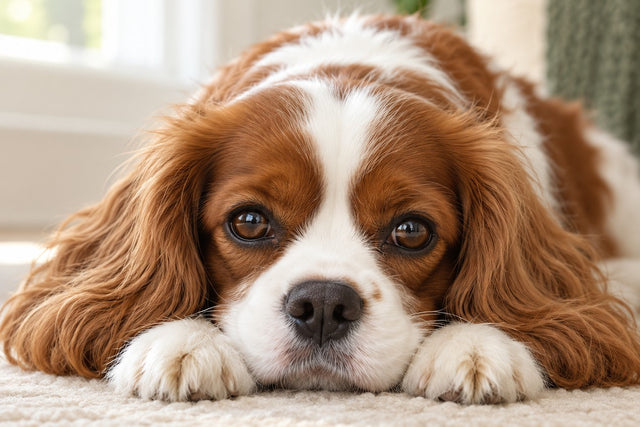


Dog Anxiety: Signs, Causes & How to Help
by The Get Joy Team ・ 23 min readLast updated: October 2026
In simple terms
Dog anxiety is a stress response to something your dog sees as a threat, like storms, fireworks, being left alone, or new places. It shows up as pacing, panting, trembling, hiding, barking or destructive chewing, and in quieter signs like lip licking, yawning, a tucked tail or showing the whites of the eyes. A predictable routine, a safe space, exercise, gentle training and gut-first nutrition help most dogs. Self-harm, aggression or anxiety that isn't improving after a few weeks needs your vet.
Key Takeaways
- Dog anxiety is a physiological response — not a behavioral flaw. It comes in three forms: situational, generalized, and separation anxiety.
- Symptoms range from obvious (pacing, destructive behavior, trembling) to subtle (lip licking, whale eye, excessive yawning). The quiet ones matter just as much.
- Up to 95% of serotonin is produced in the gut, not the brain. Gut dysbiosis has been directly linked to anxiety and phobic behaviors in dogs.
- Managing anxiety works best with a multi-pronged approach: environmental support, training, exercise, and gut-first nutrition — not any single fix.
- Seek professional help if your dog self-harms, shows aggression during anxiety episodes, or doesn't respond to consistent home management after several weeks.
Most Affected Breeds: All dog breeds can experience anxiety. Border Collies, Australian Shepherds, German Shepherds, Vizslas, Siberian Huskies, and Bichon Frises are among the most commonly affected.
Dog anxiety is one of the most common issues dog companions face — and one of the most misunderstood. It's not stubbornness. It's not spite. It's a physiological stress response stuck in overdrive, with real consequences for your dog's body, gut, and quality of life. Here's what's actually going on, how to recognize it, and what genuinely helps.
What Is Dog Anxiety?
When your dog's brain perceives a threat — real or imagined — it floods the body with stress hormones like cortisol and adrenaline. That's the fight-or-flight response, and in the short term it's completely normal. The problem is when that response gets stuck in the "on" position, showing up too often or too intensely for the situation at hand.
Anxiety in dogs comes in three main forms. Situational anxiety is tied to specific triggers — thunderstorms, fireworks, vet visits, car rides. Your dog may be relaxed 95% of the time and completely destabilized the moment storm clouds appear. Generalized anxiety is the persistent, low-grade version: dogs who seem perpetually on edge, startle easily, and struggle to relax even in safe, familiar environments. Separation anxiety kicks in when you leave — it's genuine panic, not spitefulness, and often starts showing before you've even reached the door.
Dog anxiety isn't just a mental experience. It's whole-body. The constant flood of stress hormones disrupts digestion, immune function, sleep, and more. And because the gut and brain communicate constantly through the gut-brain axis, an anxious mind often means an upset stomach — and an unhealthy gut can fuel anxiety right back. That connection is more important than most people realize.
Signs Your Dog Is Anxious
Recognizing anxiety early is one of the most valuable things you can do for your companion. Some signs are hard to miss; others are easy to overlook until they become bigger problems.
The Obvious Red Flags
- Excessive pacing or restlessness, especially when confined
- Heavy panting when it's not hot and they haven't been exercising
- Trembling or shaking without a clear cause
- Destructive episodes — chewing furniture, digging, scratching at doors
- Non-stop barking, whining, or howling
- Frantic attempts to escape crates, rooms, or yards
- Repetitive behaviors like spinning or compulsive licking
Signs Most People Miss
- Lip licking when there's no food around
- "Whale eye" — showing the whites of their eyes while looking sideways
- Yawning repeatedly when they're clearly not tired
- Avoiding eye contact or becoming suddenly withdrawn
- Tail tucked low or pressed against the belly
- Excessive shedding outside normal seasonal patterns
- Freezing in place or moving in slow, tense, deliberate steps
When Anxiety Gets Physical
From a gut health perspective, stress can wreak havoc on the digestive system. Diarrhea, vomiting, sudden loss of appetite, accidents from house-trained dogs, and excessive drooling can all signal anxiety-driven physical distress. The digestive upset isn't just a side effect — it's a window into the gut-brain connection that directly influences your dog's mental state.
Know Your Dog's Baseline
A naturally shy dog acting withdrawn is different from a social dog suddenly hiding under the bed. What matters is change from their normal. Pay attention to patterns — when do these signs appear? During thunderstorms? When you grab your keys? After schedule changes? Identifying the pattern is your roadmap for intervention.
What Causes Dog Anxiety?
Understanding what triggers your dog's anxiety is the first step toward addressing it. Triggers range from obvious environmental stressors to subtle health issues that most companions miss entirely.
Separation Anxiety
Distress when left alone — even briefly. Destructive behavior and house accidents that only happen when you're away, or signs of panic starting the moment you reach for your keys.
Noise Phobias
Thunderstorms, fireworks, construction, and even vacuum cleaners can send some dogs spiraling. These sudden, unpredictable noises trigger intense fear responses that often worsen over time without proper management.
Environmental Changes
Dogs are creatures of habit. Moving homes, schedule changes, new family members, or even rearranging furniture can shake a sensitive dog's sense of security.
Past Trauma or Abuse
Dogs with difficult histories carry emotional baggage that shows up as fear-based reactions — often to specific triggers like raised hands, certain sounds, or situations that echo past experiences.
Inadequate Early Socialization
Dogs who weren't sufficiently exposed to people, animals, and environments during the critical socialization window (roughly the first three months of life) often struggle with anxiety when facing new situations throughout their lives (AVSAB Position Statement on Puppy Socialization).
Age-Related Cognitive Decline
Senior dogs may develop anxiety as cognitive function declines. Confusion and disorientation in familiar environments can create distress even in previously calm dogs.
Medical Conditions
Thyroid disorders, chronic pain, and neurological conditions often masquerade as behavioral problems. Pain in particular makes dogs feel vulnerable and reactive to everyday situations — always worth ruling out with your vet.
Gut Health Imbalances
One of the most overlooked factors: your dog's gut health directly influences their emotional state through the gut-brain axis. When the microbiome falls out of balance, it can fuel anxiety from the inside out — a connection we'll unpack next.
The Gut-Brain Connection
Your dog's gut is running a mood control center. The gut-brain axis creates constant, bidirectional communication between the digestive system and the brain through neural pathways, hormones, and immune signals. When that communication goes sideways, it can spark or amplify anxiety in ways that purely behavioral approaches never fully address.
Here's the key fact: up to 95% of serotonin — the neurotransmitter that stabilizes mood and promotes calm — is produced in the gut, not the brain (Yano et al., Cell, 2015). When the gut microbiome falls out of balance (dysbiosis), here's what happens downstream:
- Stress response stuck on high. An unbalanced gut overstimulates the stress system, making dogs overreact to situations that wouldn't normally faze them.
- Sleep disruption. Poor gut health interferes with natural sleep cycles, creating restless nights that compound daytime anxiety.
- Inflammation-driven brain fog. Gut dysbiosis triggers systemic inflammation that clouds thinking and emotional regulation.
- Neurotransmitter shortage. An unhealthy gut produces fewer mood-stabilizing compounds, including serotonin and GABA.
- Slow recovery from stress. Dogs with gut issues struggle to return to baseline after a stressful event, staying on edge long after the trigger has passed.
Research has confirmed this link directly: dogs with digestive problems show significantly more signs of anxiety and phobic behavior compared to those with healthy guts (Mondo et al., Heliyon, 2020). Yet most dog anxiety treatment plans completely skip this piece. Training and environmental adjustments matter — but they're treating symptoms while ignoring a root cause. Gut health is whole-body health, and it directly shapes how your dog handles stress, reacts to triggers, and maintains emotional balance.
How to Help Your Anxious Dog
Managing dog anxiety works best with a layered approach. No single intervention does it all — but these four areas, used together, create real change.
Environmental Modifications
Create a designated safe space your dog can retreat to: a crate with comfortable bedding, a quiet corner, or a room away from household activity. Calming music or white noise can mask anxiety-triggering sounds — soft rock and reggae have shown particular effectiveness in reducing stress in kenneled dogs (Bowman et al., Physiology & Behavior, 2017). Pheromone diffusers that release synthetic versions of the calming signals mother dogs produce can work subtly in the background to lower baseline stress.
Training and Desensitization
Counter-conditioning pairs anxiety triggers with positive experiences. If your dog fears the doorbell, start by playing doorbell sounds at very low volume while offering high-value treats — gradually increasing volume as their comfort grows. Gradual exposure therapy builds tolerance over time. The key word is gradual: rushing the process typically causes setbacks, not progress.
Important: punishment-based methods make dog anxiety worse and should never be used. Yelling, shock collars, or dominance-based corrections increase cortisol, damage trust, and deepen the anxiety cycle.
Physical Exercise and Mental Enrichment
A tired dog is often a calmer dog. Regular physical activity burns off stress hormones and provides a natural outlet for anxious energy. Mental enrichment — puzzle feeders, scent work, sniff walks — engages the brain in ways that are often as effective as physical exercise for reducing anxiety. Rotate enrichment regularly to prevent the boredom that amplifies anxiety in intelligent breeds.
Gut-First Nutritional Support
What your dog eats directly affects how they feel emotionally. Supporting the gut microbiome with quality nutrition is one of the most impactful — and most overlooked — parts of an anxiety management plan. More on this in the next section.
Anxiety-Supportive Nutrition
Nutrition won't cure dog anxiety on its own, but the gut-brain connection means that what's in the bowl directly influences emotional state. Think of gut-supportive nutrition as building the foundation your anxious companion needs — not a replacement for behavioral work, but something that makes everything else work better.
When choosing food for an anxious dog, look for:
- Whole, minimally processed ingredients that retain their natural nutritional value
- Prebiotics, probiotics, and postbiotics to support a thriving gut microbiome and strengthen gut-brain communication
- Omega-3 fatty acids from quality sources like salmon to support brain function and reduce inflammation
- Short, recognizable ingredient lists — if you can't identify it, your dog's gut probably struggles with it too
- No artificial colors, preservatives, or fillers that can disrupt gut balance and amplify anxious behaviors
For dogs who benefit from targeted daily calm support alongside their meals, Get Joy's Calm Support Bundle is formulated specifically for the gut-brain connection — supporting mood balance from the inside out as part of a complete daily routine.
Gut Health Is the Foundation of Calm
Get Joy's Freeze Dried Raw Meals include Belly Biotics™ — prebiotics, probiotics, and postbiotics — built directly into every bowl to support the gut-brain connection your anxious dog needs.
Shop Freeze Dried Raw Meals → Shop The Calm Support BundleWhen to See a Professional
Home management helps many anxious dogs, but some situations genuinely need professional expertise. These warning signs mean it's time to consult a vet or certified behaviorist:
- Self-harm behaviors: excessive licking that creates hot spots, compulsive paw chewing, or scratching to the point of injury
- Aggression: snapping, biting, or resource guarding triggered by anxiety
- Inability to function: refusing to eat for extended periods, complete withdrawal from family, or inability to be left alone even briefly
- Severe physical symptoms: persistent vomiting, diarrhea, or trembling during anxiety episodes
- No improvement: anxiety that doesn't respond to consistent home management after several weeks
Start with your veterinarian to rule out underlying medical causes — anxiety and physical health problems often overlap. From there, veterinary behaviorists handle complex cases, and certified trainers with CPDT-KA credentials specialize in evidence-based behavioral modification. If your vet recommends anti-anxiety medication, it can be genuinely life-changing for severe cases — providing the mental space your dog needs to actually learn new coping patterns. Seeking expert help is a sign of exceptional care, not failure.
Related Reading
- Dog Gut Health 101 — The Foundation of Your Dog's Wellbeing
- The Complete Guide to Dog Gut Health
- What Is Belly Biotics™? Prebiotics, Probiotics & Postbiotics for Dogs
- Sensitive Stomach in Dogs: 7 Signs
- Signs of Stress in Dogs: 12 Early Warnings
- Dog Separation Anxiety: Signs & Solutions
- Calming Treats for Dogs
- How to Calm a Dog at the Vet
Calm Starts From the Inside Out.
Belly Biotics™ is built into every Get Joy Freeze Dried Raw Meal — prebiotics, probiotics, and postbiotics working together to support the gut-brain connection your dog needs to feel their best.
Shop Freeze Dried Raw Meals Shop The Calm Support Bundle →Stress, fear or anxiety: what's the difference?
The words get used interchangeably, but they describe different things, and the difference changes what helps.
| What it looks like | What helps first | |
|---|---|---|
| Stress | A short reaction to a specific moment: yawning, lip licking, shaking off after the vet | Remove the trigger, give space, and let them settle. See the 12 early signs of stress |
| Fear | A response to something real and present: hiding during fireworks, cowering at the vacuum | A safe space, distance from the trigger, and slow desensitization |
| Anxiety | Worry about what might happen: pacing when you pick up your keys, restlessness before storms | Routine, exercise, training, gut-first nutrition, and your vet if it isn't improving |
Big nights are coming. If fireworks are a trigger, start your plan early with our guide on how to comfort a dog scared of fireworks, and see how long calming chews take to work so you know when to start.
Frequently Asked Questions
Can diet affect dog anxiety?
Yes, directly. The gut produces up to 95% of the body's serotonin and plays a significant role in mood regulation through the gut-brain axis. When gut health is compromised by low-quality ingredients or imbalanced bacteria, anxiety often follows. Supporting digestive health with quality nutrition and beneficial bacteria can make a real, measurable difference in emotional stability.
What are signs of severe anxiety in dogs?
Severe anxiety goes beyond mild panting or pacing. Watch for destructive behavior, excessive drooling, loss of bladder control, or complete withdrawal from normal activities. Self-harm behaviors — excessive licking that creates sores, compulsive chewing of paws — and panic responses where your dog seems disconnected from reality require prompt veterinary attention.
How long does it take to help an anxious dog?
Most behavioral interventions show meaningful progress within 2–4 weeks, but gut health support takes longer — typically 6–8 weeks before lasting changes become visible. The microbiome needs time to rebalance, and new behavioral patterns develop gradually. Consistency beats speed every time.
Should I medicate my anxious dog?
Medication can be life-changing for severe cases, and it works best alongside behavioral training and nutritional support rather than as a standalone solution. Many companions find that addressing the gut-brain connection first reduces anxiety enough to make medication unnecessary. Never adjust or stop prescribed anxiety medications without veterinary guidance.
Can puppies have anxiety?
Yes, and early intervention matters most. Puppies can develop anxiety from inadequate socialization, genetics, or early trauma — but young brains are also the most adaptable. Quality nutrition that supports gut health during this critical development period helps lay the foundation for lifelong emotional resilience.
Do calming supplements actually work?
Quality matters enormously. Look for research-backed formulations that support the gut-brain axis — specific probiotic strains, omega-3s, and adaptogens with clinical evidence behind them — rather than herbal sedatives that simply dull symptoms. The goal is addressing root causes, not masking surface behavior.
What does anxiety look like in dogs?
Common signs include pacing, panting when it isn't hot, trembling, hiding, barking or whining, and destructive chewing, plus quieter signs like lip licking, yawning, a tucked tail and showing the whites of the eyes. A change from your dog's normal behavior is the biggest clue.
Can stress cause stomach problems in dogs?
Yes. Stress can bring on diarrhea, vomiting, gas or a skipped meal, because the gut and brain are closely connected. Short-lived tummy upset during a stressful event is common; anything lasting more than a day or two, or with blood or vomiting, is worth a call to your vet.
Research Sources
Gut-Brain Axis & Serotonin: Yano, J.M., et al. "Indigenous Bacteria from the Gut Microbiota Regulate Host Serotonin Biosynthesis." Cell, 2015. https://pubmed.ncbi.nlm.nih.gov/25860609/
Canine Gut Health & Behavior: Mondo, E., et al. "Gut microbiome structure and adrenocortical activity in dogs with aggressive and phobic behavioral disorders." Heliyon, 2020. https://pubmed.ncbi.nlm.nih.gov/32021942/
Music and Canine Stress: Bowman, A., et al. "The effect of different genres of music on the stress levels of kennelled dogs." Physiology & Behavior, 2017. https://pubmed.ncbi.nlm.nih.gov/28093218/
Canine Socialization Guidelines: American Veterinary Society of Animal Behavior (AVSAB). "Position Statement on Puppy Socialization." https://avsab.org/resources/position-statements/
Browse More Topics

Written by
The Get Joy Team
Shop by Concern


Featured Posts
Keeping Your Dog Healthy in Winter: Cold Weather, Immunity, and Gut Health
The Best Dog-Safe Christmas Treats (Store-Bought and Homemade)