Bestseller
 Gut health
 Sensitive stomach
 Calm
Calm Joints & mobility
 Skin & coat
 Healthy weight
 Picky eaters



What is Belly Biotics? Prebiotics, Probiotics & Postbiotics Explained
by The Get Joy Team ・ 14 min readLast updated: May 2026
Key Takeaways
- Belly Biotics™ is Get Joy's proprietary blend of prebiotics, probiotics, and postbiotics — built directly into every Freeze Dried Raw Meal, not sprinkled on as an afterthought.
- Prebiotics feed beneficial bacteria already in your dog's gut. Probiotics introduce and maintain beneficial bacteria. Postbiotics are the compounds those bacteria produce that directly support gut barrier function and reduce inflammation.
- All three work together as a system — giving your dog only one or two is like hiring a team of three and sending two of them home.
- About 70% of a dog's immune system lives in the gut — making gut health the foundation for immune function, nutrient absorption, energy, coat quality, and more.
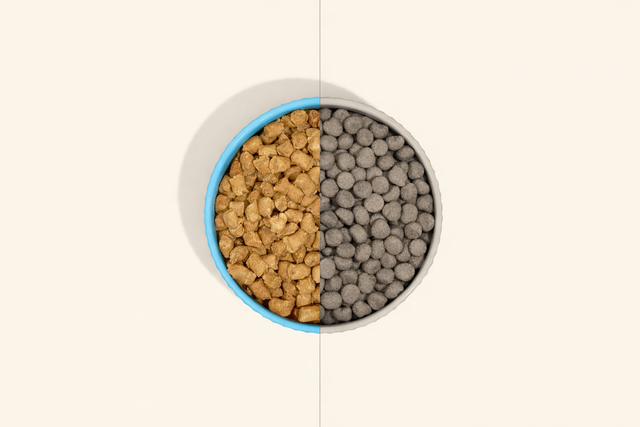
- High-heat processing (like kibble extrusion) destroys most probiotics before they reach your dog's bowl. Freeze-drying preserves them.
- Most dog foods include none of the three biotics. Get Joy's Freeze Dried Raw Meals include all three, working together with every meal.
Most Affected Breeds: All breeds. Dogs with sensitive stomachs, frequent digestive upset, food allergies, or anxiety — including German Shepherds, Bulldogs, Boxers, Golden Retrievers, and Great Danes — see the most noticeable benefits.
If your dog struggles with digestion, low energy, or recurring illness, the answer might be living right in their gut. The gut microbiome — the ecosystem of trillions of bacteria in your dog's digestive system — controls far more than digestion alone. It drives immune function, nutrient absorption, energy, skin and coat health, and even mood.
Belly Biotics™ is Get Joy's proprietary combination of prebiotics, probiotics, and postbiotics, built directly into every Freeze Dried Raw Meal. Here's exactly what each component does, why you need all three, and why most dog foods miss the mark entirely.
Why Your Dog's Gut Health Matters
Your dog's gut houses trillions of bacteria, and the balance between beneficial and harmful microbes directly impacts everything from digestion to immune function. About 70% of your dog's immune system lives in the gut — making gut health not a niche wellness concern, but the central pillar of whole-body health.
Most dogs today face serious gut health challenges: processed foods, stress, antibiotics, and environmental toxins all disrupt the delicate balance of the microbiome. The result shows up as digestive issues, weakened immunity, dull coats, low energy, and even behavioral changes that many dog companions don't realize stem from gut problems.
The microbiome doesn't just need good bacteria — it needs a complete ecosystem. Beneficial bacteria need to be fed (prebiotics), replenished (probiotics), and supported by the compounds they produce (postbiotics). Gut health is whole-body health, and addressing it means addressing all three.
Prebiotics: Fueling the Good Bacteria
Think of prebiotics as food for the gut. These specialized plant fibers act as fuel for the beneficial bacteria already living in your dog's digestive system. Unlike probiotics, which introduce new bacteria, prebiotics work by feeding and strengthening the good microbes that are already there — creating a stable, thriving environment for them to flourish.
What prebiotics do for your dog's gut health: they improve stool quality by promoting consistent, well-formed bowel movements; enhance nutrient absorption by creating an optimal digestive environment; strengthen immune function by supporting the 70% of immune cells that live in the gut; and reduce harmful bacteria by crowding them out.
One important distinction: prebiotics are not live bacteria. They're specialized fibers, which makes them stable and not subject to the same storage challenges as some probiotics. Their staying power is what makes them particularly valuable — they create lasting changes by establishing a sustainable environment where beneficial bacteria can consistently thrive.
Probiotics: The Good Bacteria Themselves
Probiotics are live beneficial bacteria that restore and maintain a healthy gut microbiome. They form the backbone of gut health support — actively working to improve digestive balance and overall wellness by repopulating the microbiome with healthy strains that support digestion, immunity, and nutrient absorption.
Not all probiotics are equal, and this is where most dog companions get it wrong. Strain specificity matters — different bacterial strains target different health concerns. CFU count indicates potency — look for at least 1 billion CFUs per serving, guaranteed through the expiration date, not just at the time of manufacturing.
Processing temperature is critical. High-heat extrusion used in most kibble manufacturing destroys most probiotics before they ever reach your dog's bowl. Cold-processing methods — like freeze-drying — maintain viability, preserving the live bacteria that make probiotics actually work.
Postbiotics: The Underappreciated Heroes
While prebiotics and probiotics get most of the attention, postbiotics are the quiet achievers doing critical work behind the scenes. Postbiotics are the beneficial compounds produced when probiotics ferment prebiotics — essentially the active outputs of a well-functioning gut ecosystem, delivering direct benefits to the gut without requiring live bacteria to do the heavy lifting.
Postbiotics offer several distinct advantages: immediate immune system support through ready-to-use compounds; anti-inflammatory properties that help reduce gut irritation and support healing; gut barrier reinforcement through compounds that directly strengthen intestinal wall integrity; and enhanced nutrient absorption by optimizing the overall gut environment.
What makes postbiotics particularly valuable is their efficiency — they skip the waiting period. Prebiotics need time to feed beneficial bacteria. Probiotics must survive the journey to the intestines. Postbiotics get straight to work. This makes them especially beneficial for dogs with sensitive stomachs.
Why You Need All Three Working Together
This is the part most gut health products get wrong. Many dog supplements contain only probiotics. Some add prebiotics. Almost none include all three — and without all three, you're not getting the full benefit of any of them.
Prebiotics without probiotics: you're feeding bacteria, but not ensuring the right bacteria are there to feed. Probiotics without prebiotics: you're adding beneficial bacteria but not giving them the food they need to thrive. Both without postbiotics: you're missing the direct beneficial compounds that support the gut lining, reduce inflammation, and deliver immediate physiological effects.
The three components form an ecosystem, not a checklist. Prebiotics create the foundation. Probiotics populate and maintain it. Postbiotics are what the healthy ecosystem produces — and what the gut directly benefits from. That's the system Get Joy's Belly Biotics™ is built around.
Belly Biotics™ — Built Into Every Meal
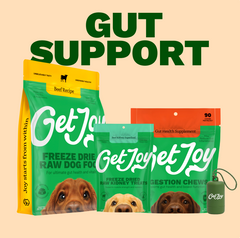
Get Joy's Freeze Dried Raw Meals include our proprietary 3-in-1 biotic blend in every bag — prebiotics, probiotics, and postbiotics working together at every meal. No separate supplement. No guesswork.
Shop Freeze Dried Raw Meals → Gut Support Bundle →What to Look For in a Gut Health Product
Not all prebiotic, probiotic, and postbiotic products are created equal. Reading labels carefully will save you from wasting money on products that don't deliver.
Start with the guaranteed analysis section, which should list specific probiotic strains and their CFU counts at the time of consumption — not just at manufacturing. Vague terms like "probiotic blend" without named strains are a red flag. Look for transparency signals like specific prebiotic fiber sources (chicory root, Jerusalem artichoke), named probiotic strains (Lactobacillus acidophilus, Bifidobacterium animalis), and postbiotic mentions like short-chain fatty acids.
Storage stability matters enormously. High-heat kibble manufacturing essentially cooks most probiotics out of the product before your dog ever eats it. Freeze-drying preserves them. Third-party testing and expiration date potency guarantees separate serious products from those just checking marketing boxes.
Finally, consider whether you want gut support built into the food or delivered separately. A supplement you add to every meal is only as good as your consistency in remembering to add it. A meal with gut support already built in works every single time.
Related Reading
Joy Starts from Within.
Belly Biotics™ is built into every Get Joy Freeze Dried Raw Meal — so your dog gets the full prebiotic, probiotic, and postbiotic system working for their gut with every single bowl.
Shop Freeze Dried Raw Meals Gut Support Bundle →Frequently Asked Questions
What is Belly Biotics™?
Belly Biotics™ is Get Joy's proprietary blend of prebiotics, probiotics, and postbiotics — a complete 3-in-1 gut health system built directly into every Freeze Dried Raw Meal. Unlike a supplement you add to food, Belly Biotics™ is structural to the meal itself, meaning your dog gets consistent daily gut support with every bowl, every day.
What's the difference between prebiotics, probiotics, and postbiotics?
Prebiotics are specialized fibers that feed beneficial bacteria already in your dog's gut. Probiotics are live beneficial bacteria that repopulate and maintain the gut microbiome. Postbiotics are the beneficial compounds those bacteria produce — things like short-chain fatty acids that directly support gut barrier function and reduce inflammation. Each plays a distinct role, and all three work best as a complete system rather than in isolation.
Do dogs need gut health supplements?
Most dogs benefit from daily gut support, especially given modern diets that include processed foods, exposure to antibiotics, and environmental stressors that disrupt the microbiome. Rather than a separate supplement, the most reliable approach is a food that already includes gut support built in, like Get Joy's Freeze Dried Raw Meals with Belly Biotics™.
Are probiotics safe for dogs every day?
Yes. Daily probiotic use is not only safe but beneficial for most dogs. The gut microbiome thrives on consistent support, not occasional doses. The key is choosing the right strains at appropriate CFU counts, and delivering them in a format that survives to the gut — which means avoiding high-heat processed products that destroy live bacteria before your dog ever eats them.
How long until I see results from gut health support?
Most dog companions see improvements in stool consistency and energy within 2–4 weeks of consistent gut support. Immune function, coat quality, and overall vitality tend to improve over 4–8 weeks as the microbiome rebalances. Daily support through the food itself makes consistency effortless.
Can I use the Gut Support Bundle alongside the Freeze Dried Raw Meals?
Absolutely. The Gut Support Bundle provides targeted additional support that complements Belly Biotics™ in the meals — especially useful during transitions, recovery from antibiotics, or for dogs who need extra gut support. Think of it as reinforcing an already strong foundation.
Browse More Topics

Written by
The Get Joy Team
Shop by Concern


Featured Posts
Keeping Your Dog Healthy in Winter: Cold Weather, Immunity, and Gut Health
The Best Dog-Safe Christmas Treats (Store-Bought and Homemade)