Bestseller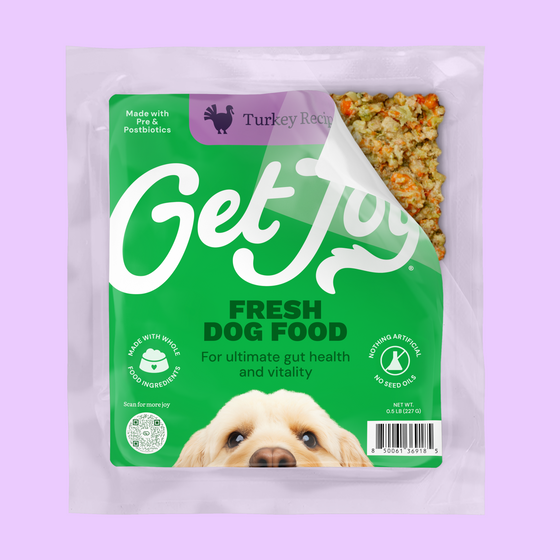
 Gut health
 Sensitive stomach
 Calm
Calm Joints & mobility
 Skin & coat
 Healthy weight
 Picky eaters



More Good Years Start in the Gut: Dog Longevity & Healthspan
by The Get Joy Food Team ・ 12 min readLast Updated: July 1, 2026 · Reviewed against Get Joy product formulation & published canine research
Ask any dog parent what they want and, underneath it all, it's the same thing: more good years together. More trailheads, more road trips, more mornings where the gray-muzzled senior still trots to the door for the walk. We can't stop the clock — but a growing body of research points to one daily lever that quietly shapes how a dog ages, and most of us overlook it entirely: the gut.
Here's the science on how dogs age, why so much of it traces back to the gut, and the one input you fully control — what's in the bowl.
🐾 Key Takeaways
- Longevity is really about "healthspan" — more good years, not just more years.
- Research shows a dog's gut microbiome shifts measurably with age, and lower microbial diversity is generally associated with declining resilience.
- Because a large share of the immune system lives in the gut, a balanced microbiome is associated with better-regulated, lower-grade inflammation — a driver of age-related decline.
- What you feed daily is the most repeatable habit you control. Get Joy builds Belly Biotics™ (pre-, pro-, and postbiotics) into every meal — so supporting the gut is just dinner.
Table of Contents
Lifespan vs. Healthspan: More Good Years
Most of us think about longevity as a single number — how many years. But the number that shapes daily life is healthspan: the share of those years a dog spends feeling good, moving well, and staying engaged. Two dogs can live to the same age and have completely different final chapters.
So the real goal isn't just a longer life — it's more good years. And while genetics and luck play their part, the daily inputs add up. The most repeatable one, served twice a day, is food.
How Long Do Dogs Live? (Average Lifespan by Size)
Most dogs live about 10–13 years, but size makes a real difference: smaller breeds tend to live longer than giant breeds. These are general ranges — individual dogs vary widely based on genetics, weight, and daily care.
| Dog size | Typical adult weight | Average lifespan |
|---|---|---|
| Small breeds | Under 20 lbs | 12–16 years |
| Medium breeds | 20–50 lbs | 10–14 years |
| Large breeds | 50–90 lbs | 9–12 years |
| Giant breeds | Over 90 lbs | 7–10 years |
General ranges only; individual dogs vary. Your veterinarian can give guidance specific to your dog's breed and health.
How a Dog Ages Starts in the Gut
Here's what recent research keeps finding: aging shows up in the gut. The Dog Aging Project — the largest population-wide look at the canine gut microbiome to date, spanning 900+ dogs — documented gradual, age-associated shifts in microbiome composition, consistent enough that researchers built a model to estimate a dog's age from its microbial signature.
A separate study of 175 Beagles across life stages found significantly lower microbial diversity in senior dogs. In the microbiome, lower diversity is generally considered a marker of reduced resilience — a less adaptable internal ecosystem. Other analyses have noted age-associated changes in intestinal-health biomarkers, reinforcing that the gut is an active participant in how a dog ages, not a bystander.
Why the Gut Has a Say in How Dogs Age
Two big reasons the gut keeps showing up in the aging conversation:
- Immunity. A large share of the immune system — often cited around 70% — is associated with gut tissue. A balanced microbiome is associated with a better-regulated immune response, which matters more as dogs age and immune function naturally shifts.
- Inflammation. Much of age-related decline is linked to chronic, low-grade inflammation. A balanced, diverse microbiome is associated with helping keep that background inflammation in check.
Reviews of postbiotic and synbiotic support in dogs have reported improvements in certain immune markers in seniors — early but encouraging signs that supporting the gut may help counter some age-related shifts. As always, this is "supports" and "associated with," not a cure or guarantee.
The Daily Lever You Actually Control
You can't choose your dog's genes or rewind their birthday. But you choose their bowl, every single day. If the gut is this central to how a dog ages, then feeding the gut consistently is one of the most repeatable longevity habits available — not a heroic intervention, just a daily one.
Gut health is whole-body health. Support it day after day, and you're supporting the systems — immune, digestive, inflammatory — that shape how those later years actually feel.
Where Get Joy Fits: A Longevity Habit Built Into the Bowl
This is exactly why Get Joy builds gut support into the food instead of leaving it to a supplement you have to remember. Every meal carries Belly Biotics™ — a proprietary system of prebiotics (inulin), probiotics (five strains), and a postbiotic (yeast culture) — designed to support a balanced, diverse microbiome as part of dinner, not on top of it.
A few things that make it a sensible daily habit for the long game:
- Built in, not sprinkled on. Belly Biotics™ is structural to every recipe, so microbial support is automatic — the most repeatable habit is the one you don't have to think about.
- For every life stage. Get Joy Freeze Dried Raw is formulated to AAFCO All Life Stages (including large-breed growth), so it fits puppies through seniors.
- Whole-food nutrient density. USDA-sourced meat and organs, gently freeze dried to support nutrient retention — the kind of real food that supports whole-body wellness.
None of this is a promise of extra years. It's a daily way to support the gut that research keeps tying to healthy aging — so more of your dog's years have a good chance of being good ones.
Feed the Gut. Support the Years.
Get Joy meals carry Belly Biotics™ — pre, pro & postbiotics built in — so supporting your dog's gut is simply dinner. Here's to more good years together.
Frequently Asked Questions
How long do dogs live?
Most dogs live roughly 10–13 years, with smaller breeds often living longer than giant breeds. Beyond genetics and size, daily habits — nutrition, weight, exercise, and veterinary care — all influence not just lifespan but healthspan (the good years).
Can a dog live to 20 years?
It's rare, but some dogs — usually smaller breeds — do reach their late teens or occasionally 20. There's no guaranteed formula, but supporting a healthy weight, staying active, routine vet care, and consistent, gut-supportive nutrition all stack the odds toward more good years.
Does gut health affect how a dog ages?
Research increasingly associates the gut microbiome with aging: diversity tends to decline with age, and the gut is closely tied to immunity and inflammation. Supporting a balanced microbiome through daily nutrition is a sensible, research-aligned way to support healthy aging — though it's support, not a cure.
What's the best food to support a senior dog's health?
Look for complete, high-quality, whole-food nutrition your dog absorbs well, with built-in gut support (prebiotics, probiotics, postbiotics). Get Joy Freeze Dried Raw is AAFCO All Life Stages and includes Belly Biotics™ in every meal. For dogs with diagnosed conditions, follow your vet's guidance.
How can I help my dog live a longer, healthier life?
Focus on the daily levers you control: maintain a healthy weight, keep them active and engaged, stay current on vet care, and feed consistent, gut-supportive nutrition. Small habits repeated every day are what add up over a lifetime.
Research referenced: Dog Aging Project microbiome mapping (Nature Communications); age-related changes in gut health & behavioral biomarkers in Beagles (PMC); age-associated intestinal-health biomarkers in dogs (PMC); postbiotic administration & canine health systematic review (PMC). Findings are associational and framed as support, not medical claims.
Browse More Topics
Shop by Concern


Featured Posts
Keeping Your Dog Healthy in Winter: Cold Weather, Immunity, and Gut Health
The Best Dog-Safe Christmas Treats (Store-Bought and Homemade)