Bestseller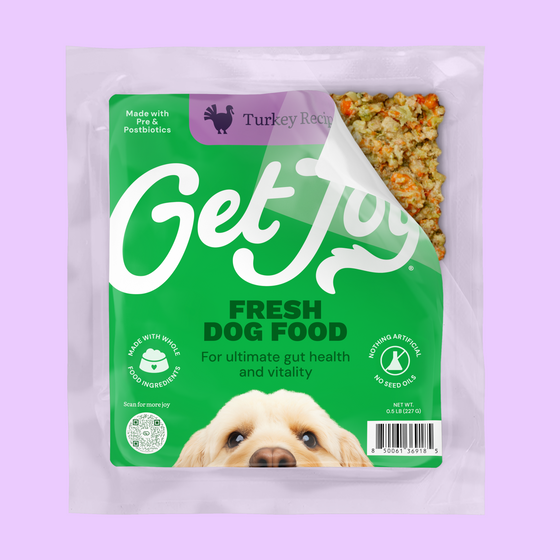

 Gut health
 Sensitive stomach
 Calm
Calm Joints & mobility
 Skin & coat
 Healthy weight
 Picky eaters



Where Your Dog's Energy Actually Comes From
by The Get Joy Food Team ・ 12 min readLast Updated: July 1, 2026 · Reviewed against Get Joy product formulation & published canine research
Every dog parent knows the two versions of their dog: the one who sprints back with the ball, and the one who watches you throw it and decides today is a nap day. When energy dips, the instinct is to look at the food bowl — and that's right, but not for the reason most people think. Energy isn't just about what's in the bowl. It's about how much of it your dog's body can actually absorb and convert into fuel. And the engine that does that conversion is the gut.
If your dog seems low energy, sluggish, or less excited for walks, it's natural to look at their food first. Here's where a dog's energy really comes from, the surprising role fiber plays, and how to feed for the kind of vitality that keeps up with your life.
🐾 Key Takeaways
- Energy isn't just calories — it's what the body absorbs and converts. The gut is the conversion engine.
- Beneficial gut bacteria ferment fiber into short-chain fatty acids (SCFAs) like butyrate, recognized as real energy sources that fuel the gut lining and feed wider metabolism.
- A healthier gut barrier is associated with better nutrient uptake and less energy lost to low-grade inflammation.
- Get Joy pairs whole food with Belly Biotics™ — including the prebiotic fiber (inulin) that fuels SCFA production — to support the gut that helps turn meals into energy.
Table of Contents
- The myth: energy equals calories
- Why is my dog low energy?
- The gut is your dog's energy engine
- The surprising role of fiber (and how much dogs need)
- Butyrate, the gut barrier, and the energy loop
- Food, gut health & energy: what to watch for
- How Get Joy turns food into fuel
- Frequently Asked Questions
The Myth: Energy Equals Calories
It's easy to assume a sluggish dog just needs more calories, or richer food. But calories are only potential energy — the body still has to break food down, absorb the nutrients, and convert them into fuel. If that conversion is inefficient, you can feed a great diet and still see a dog who runs low.
So the more useful reframe is this: energy is what your dog absorbs and converts, not just what they eat. And absorption and conversion both happen in the gut.
Why Is My Dog Low Energy?
A dog can seem low energy for many reasons: age, heat, boredom, weight gain, illness, stress, or a diet they don't digest well. Sudden or significant lethargy should always be checked by a veterinarian. But for everyday vitality, food quality and gut health matter — because the body can only use the nutrients it can break down and absorb. That's why two dogs eating similar calories can have very different energy: the difference is often in how efficiently each one converts food into fuel.
The Gut Is Your Dog's Energy Engine
The gut microbiome is central to how a dog harvests energy from food — research describes it as governing energy acquisition, metabolic regulation, and nutrient use. In plain terms, the community of bacteria in your dog's gut helps decide how much of a meal becomes usable fuel.
One of the clearest examples: when beneficial bacteria ferment dietary fiber, they produce short-chain fatty acids (SCFAs) — butyrate, acetate, and propionate. These aren't waste products; they're recognized as genuine host energy sources that fuel the cells lining the gut and feed into the body's wider metabolism.
The Surprising Role of Fiber (and How Much Dogs Need)
Fiber has an image problem — it sounds like filler. In reality, the right functional fiber is one of the most important inputs for the SCFA-energy story above. There are two types, and dogs benefit from both:
- Soluble fiber (like inulin and pumpkin's pectin) ferments in the gut and feeds beneficial bacteria — this is the prebiotic fuel behind SCFA production.
- Insoluble fiber adds bulk and helps move things through, supporting regularity.
How much does a dog actually need? It's less than you'd think, and quality matters more than quantity. Rather than repeat it all here, we break down the numbers in our dedicated guide: How Much Fiber Do Dogs Need? The key idea for energy: it's not about loading up on fiber — it's about functional fiber that feeds the microbiome.
Butyrate, the Gut Barrier, and the Energy Loop
Butyrate deserves its own moment. It's described in research as the primary energy source for the cells lining the colon, and it's associated with a stronger gut barrier and better-regulated inflammation. Why does that matter for energy?
- A stronger barrier is associated with better nutrient uptake — more of the meal gets absorbed.
- Less low-grade inflammation means less energy quietly spent on background immune activity.
And it's a loop: bacteria produce SCFAs that nourish the gut lining, and a healthy lining in turn supports the beneficial bacteria. Feed that loop consistently, and you're supporting the whole conversion engine — not just topping off calories.
Food, Gut Health & Energy: What to Watch For
| What you notice | Possible nutrition/gut connection | What to do |
|---|---|---|
| Less interest in walks or play | Food may not be converting efficiently into usable energy | Review diet quality, digestion, weight, and vet guidance |
| Gas or inconsistent stools | The gut microbiome may be struggling with the current diet | Transition slowly and prioritize digestible, gut-supportive food |
| Energy crashes after meals | The meal may not be supporting steady digestion and nutrient use | Look for balanced protein, fat, fiber, and functional gut support |
| Sudden or marked lethargy | Could signal an underlying health issue, not just diet | See your veterinarian promptly |
How Get Joy Turns Food Into Fuel
Great ingredients only matter if the gut can turn them into fuel — which is the whole idea behind building biotics into the food. Get Joy pairs real whole-food nutrition with Belly Biotics™, and several pieces work together here:
- Prebiotic fiber (inulin), plus pumpkin and flaxseed — the functional fiber that fuels SCFA production.
- Probiotics + a postbiotic (yeast culture) — supporting the bacteria and the gut lining that keep the loop running.
- Built to be absorbed — a gentle freeze-drying process and 95%+ gelatinization support digestibility, so more of the meal is available to convert.
The result is food designed to become fuel: whole-food nutrition plus the gut support that helps your dog actually use it. (As always, this is support for everyday vitality — a sudden energy change or lethargy is worth a vet visit.)
Food Is Only Fuel If the Gut Can Use It
Get Joy pairs whole food with Belly Biotics™ — prebiotics, probiotics & postbiotics built in — to support the gut that turns meals into energy.
Frequently Asked Questions
Why does my dog seem low on energy or sluggish?
Energy dips can come from many things — age, weather, activity level, weight, or how well your dog absorbs their food. Because the gut is central to converting food into usable fuel, digestion and gut balance are worth considering alongside diet quality. A sudden or significant drop in energy always warrants a vet visit to rule out underlying issues.
Do dogs need fiber in their diet?
Yes — the right amount of functional fiber supports digestion and feeds the beneficial bacteria that produce short-chain fatty acids. Both soluble fiber (like inulin) and insoluble fiber play a role. See How Much Fiber Do Dogs Need? for specifics.
What are short-chain fatty acids (SCFAs) and why do they matter?
SCFAs like butyrate, acetate, and propionate are produced when gut bacteria ferment fiber. They're recognized energy sources that fuel the cells lining the gut, support the gut barrier, and feed into the body's wider metabolism — part of how food becomes usable energy.
What's the difference between soluble and insoluble fiber for dogs?
Soluble fiber (inulin, pumpkin pectin) ferments in the gut and feeds beneficial bacteria — the prebiotic side. Insoluble fiber adds bulk and supports regularity. A good diet includes both, in the right balance.
Can food really affect my dog's energy levels?
The quality of food and how well your dog absorbs it both influence everyday energy. Whole-food nutrition your dog can digest well, plus gut support that aids absorption, is a sensible way to support steady energy — though it's support, not a guaranteed fix, and persistent low energy should be checked by a vet.
Research referenced: short-chain fatty acids & host energy balance (PMC); gut microbiome/metabolome response to dietary fiber in dogs (mSystems); butyrate as primary colonocyte energy source; SCFA-mediated gut epithelial & immune regulation (Frontiers in Immunology). Findings are associational and framed as support, not medical claims.
Browse More Topics
Shop by Concern


Featured Posts
Keeping Your Dog Healthy in Winter: Cold Weather, Immunity, and Gut Health
The Best Dog-Safe Christmas Treats (Store-Bought and Homemade)