Bestseller
 Gut health
 Sensitive stomach
 Calm
Calm Joints & mobility
 Skin & coat
 Healthy weight
 Picky eaters

What Your Dog's Poop Says About Their Health
by Dr. Jamie L. Peyton ・ 18 min readLast updated: May 2026
What Your Dog's Poop Says About Their Health
By The Get Joy Food Team
Key Takeaways
- Healthy dog poop is chocolate brown, firm but not hard, log-shaped, and only mildly smelly.
- Color, consistency, content, and coating are the four signals worth checking at every cleanup.
- Poop is one of the clearest windows into your dog's gut health — and gut health drives whole-body health.
- Diet has a direct and measurable impact on stool quality. Better nutrition shows up at pickup time.
- Belly Biotics™ — Get Joy's blend of prebiotics, probiotics, and postbiotics — is built into every meal to support digestion from the inside out.
Most Affected Breeds: All dogs can experience digestive issues, but German Shepherds, Boxers, Great Danes, Irish Setters, and Labrador Retrievers are among the breeds most prone to gut sensitivities and stool irregularities.
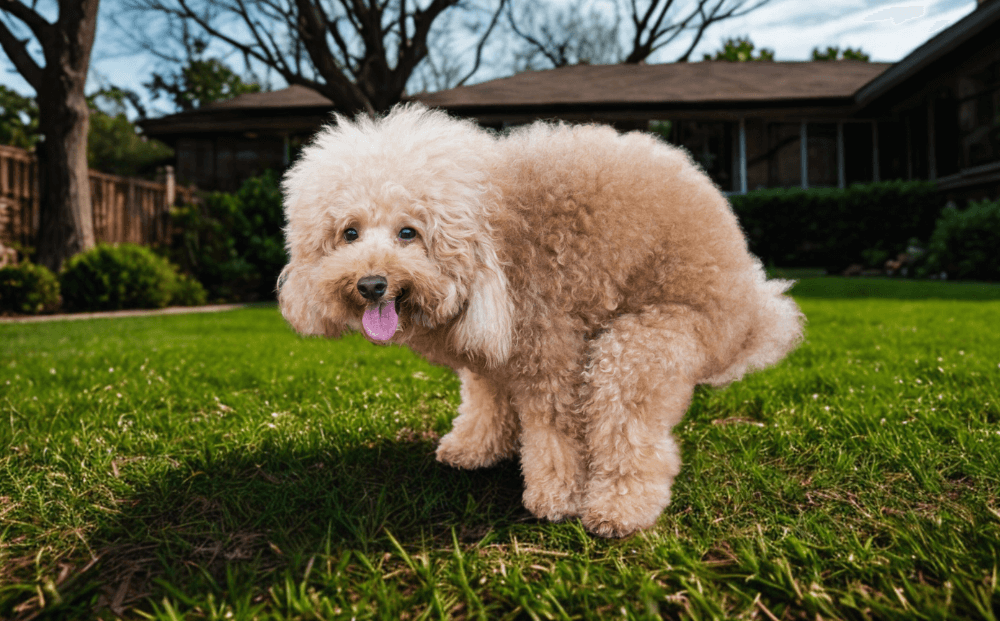
Nobody loves picking up after their dog. But that quick moment with the bag in your hand? It might be one of the most useful health checks you do all week.
Your dog's poop is a direct readout of what's happening inside their gut — how well they're digesting food, whether their microbiome is balanced, and whether something worth paying attention to is going on. It's not glamorous information, but it's good information.
This guide walks you through what to look for, what different signals mean, and how nutrition plays a central role in keeping things moving in the right direction.
What Healthy Dog Poop Looks Like
Healthy poop isn't a mystery. It has a few consistent traits:
- Color: Chocolate brown — not too light, not too dark.
- Consistency: Firm and log-shaped, easy to pick up without falling apart or leaving residue on the ground.
- Size: Roughly proportional to what your dog ate. Well-absorbed food means smaller, more compact stools.
- Smell: Present, but not knock-you-over. A very strong or unusually foul odor can indicate fermentation issues or poor absorption.
- Content: No visible parasites, no undigested food chunks, no foreign material.
- Coating: None. Healthy poop has a clean surface — no mucus film, no blood.
These four qualities — color, consistency, content, and coating — are what we call the 4 C's. For a deeper breakdown, see our guide: The 4 C's of Healthy Dog Poop.
Understanding Poop Colors and What They Mean
Color is often the first thing you notice — and it can tell you a lot. Here's a practical breakdown:
| Color | What It May Indicate | Action |
|---|---|---|
| Chocolate brown | Healthy digestion | Keep doing what you're doing |
| Light brown / tan | Possible dietary change or mild absorption issue | Monitor; mention to vet if persistent |
| Grey / greasy | Too much fat, or a pancreas/biliary issue | Talk to your vet |
| Orange / yellow | Diet-related (carrots, certain proteins) or liver/gallbladder issue | Check recent food; vet if no dietary explanation |
| Green | Eating a lot of grass, or bile moving too fast | Monitor for other symptoms |
| White spots | Possible tapeworm segments | Call your vet |
| Red streaks | Bleeding in the lower GI tract (colon or rectum) | Call your vet |
| Black / tarry | Possible upper GI bleeding — digested blood | Call your vet immediately |
A one-time color oddity after a new food or a grass-eating spree isn't a reason to panic. Persistent or unexplained color changes are worth a call to your vet.
Quick Poop Scoring Reference
Vets often use a stool scoring scale to evaluate digestive health. Here's a simplified version you can use at home:
| Score | What It Looks Like | What It Means |
|---|---|---|
| 1 | Hard, dry pellets; difficult to pass | Constipation — increase water intake, review diet |
| 2 | Firm, segmented log; slight surface dryness | On the drier side of normal — monitor hydration |
| 3 | Firm, well-formed log; holds shape, easy pickup | Ideal — this is what you're aiming for |
| 4 | Soft, still formed but doesn't hold shape well | Mild softness — review recent food changes |
| 5 | Very soft, mushy; leaves residue | Soft stool — may indicate sensitivity or poor absorption |
| 6 | Soft-serve consistency; no defined shape | Diarrhea territory — monitor closely |
| 7 | Liquid; puddles or watery spray | Acute diarrhea — call your vet if it persists beyond 24 hours |
Score 3 is the sweet spot. Scores consistently at 1–2 or 5–7 are worth addressing — usually starting with a look at what's in the bowl.
Gut Health, Built Into Every Meal
Get Joy's Freeze Dried Raw Meals include Belly Biotics™ — prebiotics, probiotics, and postbiotics — as a structural ingredient in every bowl. Not a sprinkle. The foundation of gut-first nutrition that shows up at pickup time.
Shop the Gut Support BundleOther Warning Signs to Watch For
Abnormal Consistency
Diarrhea ranges from soft-serve texture all the way to pure liquid. Occasional loose stool after a dietary change or stressful event isn't unusual, but diarrhea that lasts more than 24–48 hours, or that contains blood, warrants a vet call.
Constipation shows up as hard, dry pellets that your dog strains to pass. If it's been more than 48 hours with no movement, or your dog is visibly uncomfortable, call your vet. Do not give laxatives intended for humans.
Abnormal Content
- Visible blood: Bright red streaks or a dark, tarry consistency — both are vet-worthy, and black tarry stool is urgent.
- Visible parasites: Small white segments (tapeworms), tiny white specks (roundworms), or anything that looks like it's moving — call your vet for deworming treatment.
- Excess mucus: Some mucus is normal and acts as a lubricant. A thick, consistent mucus coating across multiple stools can indicate colitis or other GI inflammation.
- Undigested food: Chunks of recognizable food — especially protein — suggest the gut isn't breaking things down properly. This can point to enzyme deficiency, food sensitivity, or food being passed too quickly.
- Foreign objects: Plastic, fabric, grass clumps, bone fragments. If something got swallowed and came out on its own without apparent distress, note it and monitor. If it didn't come out and your dog seems unwell, that's a vet visit.
How Diet Affects Stool Quality
What goes in has a direct relationship to what comes out. Not as a metaphor — as a measurable fact.
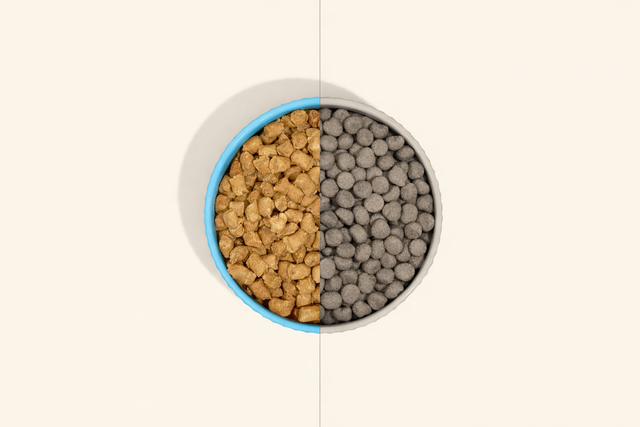
Highly processed diets (like most kibble) often produce larger, looser, more pungent stools. That's because a significant portion of the food — filler carbohydrates, synthetic binders, ingredients the gut can't fully use — passes through without being absorbed. The gut has to work harder, and the output shows it.
Fresh and minimally processed diets tend to produce smaller, firmer, less smelly stools. When ingredients are bioavailable — meaning the body can actually use them — more nutrition gets absorbed and less bulk ends up on the lawn. Whole food proteins are easier to digest than rendered meal proteins. Real ingredients produce real results.
Raw food diets are associated with particularly compact, firm, low-odor stools — largely because raw proteins and fats digest efficiently and leave minimal waste. The trade-off with traditional raw has historically been the bacterial risk of handling and preparation. Freeze dried raw solves that: the freeze-drying process eliminates harmful bacteria while preserving the nutritional profile of raw food.
Get Joy's Freeze Dried Raw Meals deliver the digestive benefits of a raw diet — better absorption, more compact stools, less odor — without the prep burden or bacterial risk.
Poop as a Gut Health Signal
Stool quality is one of the most direct ways to read gut health. And gut health isn't just about digestion — it's connected to immune function, skin and coat condition, energy levels, mood, and more. The gut microbiome influences nearly every system in a dog's body. When it's balanced and thriving, the rest of the dog tends to follow.
That's why Get Joy builds gut health into the food itself, rather than treating it as an afterthought. Belly Biotics™ is Get Joy's proprietary blend of prebiotics, probiotics, and postbiotics — and it's formulated as a structural part of every Freeze Dried Raw Meal. Not a powder dusted on top. Not a capsule on the side. It's in the food, every single meal, every single day.
- Prebiotics feed the beneficial bacteria already living in your dog's gut, helping them thrive.
- Probiotics introduce beneficial live organisms that support a healthy, balanced microbiome.
- Postbiotics are the beneficial compounds produced by gut bacteria — including short-chain fatty acids that support gut lining integrity, immune response, and overall GI health.
The result: better absorption, more consistent stools, and the kind of visible health changes that show up over time — in energy, coat condition, and yes, what you pick up on walks.
To go deeper on the science: Dog Gut Health 101 →
Making Poop Monitoring Part of Your Routine
You don't need a lab or a checklist to be a good poop monitor. A quick glance at cleanup time is enough to catch most changes worth noticing. The goal is consistency — not obsession.
Know your dog's baseline. What's normal for them in terms of frequency, color, and shape? Once you know that, anything unusual stands out naturally. Most dogs poop one to three times per day, usually within 30–60 minutes after eating.
Good nutrition is the most controllable factor in stool quality. If your dog's output is consistently soft, large, foul-smelling, or unpredictable, that's often a nutrition conversation before it's a medical one. The gut responds to what it's fed.
If you're looking for additional gut support alongside your dog's meals, Get Joy's Gut Supplement offers targeted prebiotic, probiotic, and postbiotic support for dogs who need an extra boost — whether during a transition, recovery, or just as an ongoing foundation.
Related Reading
FAQs About Dog Poop and Gut Health
How often should my dog poop?
Most healthy adult dogs poop one to three times per day, typically after meals. Puppies tend to go more frequently — sometimes after every meal — because their digestive systems are still maturing. What matters more than number is consistency: same general frequency, same color, same firmness. If the pattern changes without a clear cause (new food, more exercise, different schedule), it's worth paying attention.
When should I call the vet about my dog's poop?
Call your vet if you notice: blood (red streaks or black tarry stool), persistent diarrhea lasting more than 24–48 hours, straining without producing stool, visible parasites, a sudden and dramatic change in color with no dietary explanation, or any combination of GI symptoms alongside lethargy, vomiting, or appetite loss. Black tarry stool in particular — which can signal upper GI bleeding — warrants a same-day call.
Why is my dog's poop firm in the morning but soft later in the day?
This is more common than you'd think. The first poop of the day tends to be firmer because it's been forming overnight. Later stools — especially the second or third pass — can be softer simply because there's less transit time and less bulk to form. That said, if the afternoon softness is pronounced or getting worse, it can indicate inconsistent digestion, mild food sensitivity, stress, or eating something that didn't agree with them. Consistent nutrition at consistent times helps regularize the pattern.
Can switching dog food change stool quality?
Yes — significantly. Any dietary transition can temporarily soften stools as the gut adjusts to new ingredients and macronutrient ratios. This is why slow transitions (mixing new food into old over 7–10 days) are recommended. Once the gut adapts, many dogs on higher-quality, more digestible diets experience noticeably firmer, smaller, less odorous stools. If your dog's stool quality doesn't stabilize within two to three weeks of a full transition, that's worth a conversation with your vet.
What does mucus in dog poop mean?
A small amount of mucus coating is actually normal — the large intestine produces it as a lubricant to help stool pass. What's not normal is thick, jelly-like mucus covering most or all of the stool, or mucus that appears consistently over multiple days. This can indicate colitis (inflammation of the colon), a food intolerance, a bacterial imbalance, or intestinal parasites. If you see heavy mucus repeatedly, have your vet take a look.
Can probiotics help improve my dog's poop quality?
Yes — a balanced gut microbiome is directly linked to stool quality. Probiotics introduce beneficial bacteria that support digestion, reduce inflammation in the gut lining, and help regulate how quickly food moves through the system. Prebiotics feed those beneficial bacteria and help them survive. When both are part of the daily diet — as they are in Get Joy's Freeze Dried Raw Meals through Belly Biotics™ — the result is more consistent digestion and more predictable, healthier stools over time. For dogs who need additional support, Get Joy's Gut Supplement provides a targeted boost.
Better Nutrition. Better Gut. Better Pickup.
Get Joy's Freeze Dried Raw Meals are built around gut health — whole food ingredients plus Belly Biotics™ prebiotics, probiotics, and postbiotics in every bowl. Real food that works from the inside out.
Find Your Dog's MealBrowse More Topics

Written by
Dr. Jamie L. Peyton
Shop by Concern


Featured Posts
Keeping Your Dog Healthy in Winter: Cold Weather, Immunity, and Gut Health
The Best Dog-Safe Christmas Treats (Store-Bought and Homemade)