Bestseller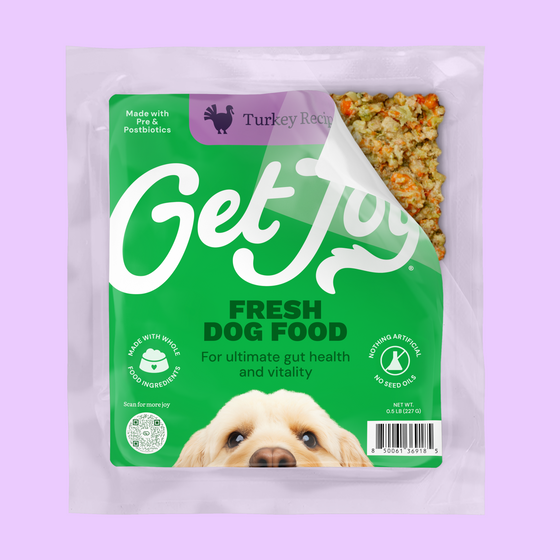

 Gut health
 Sensitive stomach
 Calm
Calm Joints & mobility
 Skin & coat
 Healthy weight
 Picky eaters



Probiotics for Dogs: Benefits, Strains & How to Choose
by The Get Joy Food Team ・ 12 min readUpdated: October 2026 · By The Get Joy Food Team · Reviewed by our veterinary team · Meet our experts
The short answer
Probiotics are live beneficial bacteria that support your dog's gut microbiome — the trillions of microbes that drive digestion, immunity (roughly 70% of it is gut-associated), and even mood. Evidence is strongest for firmer stools, recovery after antibiotics or diet changes, and stress-related digestive upset. Strain matters (spore-forming Bacillus strains survive stomach acid), dose matters (measured in CFUs), and probiotics work best as a system: prebiotics feed them, postbiotics deliver finished benefits directly.
Your dog's gut hosts trillions of bacteria in a balance that shifts with every meal, stressor, and course of antibiotics. When the balance tips wrong, you see it in the yard: loose stools, mucus, gas, urgency. Probiotics reinforce the beneficial side of that balance — this guide covers when they help, what to look for on a label, and the two companions (prebiotics and postbiotics) that most probiotic products skip.
Signs your dog could benefit
Recurring soft or inconsistent stools · gas that clears rooms · recovery after antibiotics (which clear good bacteria along with bad) · food transitions · stress-triggered tummy trouble (boarding, travel, storms) · seasonal itchiness with no clear cause (the gut-skin axis) · picky appetite with digestive grumbles. If your dog is on this list a few times a month, the microbiome is the first place to look.
Strains and CFUs, decoded
Two questions cut through every probiotic label:
1. Will it survive the trip? Stomach acid kills most unprotected bacteria. Spore-forming strains — Bacillus coagulans and Bacillus subtilis — travel in a protective shell and activate in the intestine, which is why they're the workhorses of dog-specific formulas. Many human and yogurt strains have poor survival unless specially coated.
2. How much arrives? CFUs (colony-forming units) measure live bacteria. Dog formulas typically deliver 1–10 billion CFUs daily; Get Joy's Digestion Chews deliver 3 billion per chew, scaled by weight. More isn't automatically better — strain quality and daily consistency beat headline numbers.
Prebiotics and postbiotics: the missing two-thirds
This is where most probiotic products stop and most probiotic results stall.
| Layer | What it is | Job in the system |
|---|---|---|
| Prebiotic | Specialized fiber (like inulin) | Feeds beneficial bacteria — seeds need watering |
| Probiotic | Live beneficial bacteria (Bacillus strains) | Reinforces the good side of the balance |
| Postbiotic | Beneficial compounds bacteria produce, delivered pre-made | Direct benefits with no survival lottery |
Pre feeds, pro reinforces, post delivers. That's the Belly Biotics™ architecture built into Get Joy's Freeze Dried Raw Meals, and the same pre + pro + postbiotic system inside every Digestion Chew — the full comparison is in our prebiotics vs. probiotics vs. postbiotics explainer.
Food first, supplement second
A probiotic can't out-supplement a gut-hostile diet. The daily foundation is food that carries its own functional support — that's the meals' job. Digestion Chews are the targeted layer on top: for sensitive dogs, post-antibiotic recovery, stress seasons, or any dog whose stools say the microbiome needs reinforcement. Meals set the baseline; the chew closes the gap.
How to choose a dog probiotic (60-second checklist)
Dog-studied, acid-surviving strains (Bacillus family) · guaranteed CFU count per chew, not per bag · prebiotic AND postbiotic included · per-ingredient amounts listed, no proprietary blends · NASC quality seal and third-party testing · weight-based dosing · made in the USA · a real guarantee · and a subscription option — microbiomes are built on consistency, not sprints. For how today's top products stack up, see our best dog probiotics comparison.
What to expect
First visible changes — firmer stools, less gas — typically arrive in 10–14 days, with steadier digestion by day 30 and the longer-game immune and coat benefits building over 90 days. The full week-by-week picture is in our probiotic timeline guide. If nothing changes by day 30, revisit dose, consistency, and diet — or ask your vet whether something beyond the microbiome is going on.
More than a probiotic
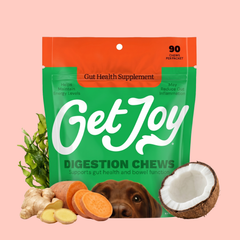
Digestion Chews combine probiotics (3B CFUs), prebiotics, and postbiotics with L-glutamine, ginger, and omega-3s — one chew for firmer stools and less gas.
Shop Digestion ChewsWhat do probiotics do for dogs?
Probiotics are one piece of a bigger system: the gut microbiome. Here's what a balanced gut supports, and why people reach for probiotics.
| Area | What a balanced gut supports |
|---|---|
| Digestion | Steadier, firmer stools and less gas |
| Immunity | Roughly 70% of the immune system lives in the gut |
| Life changes | Food transitions, travel, boarding and recovery after antibiotics |
| Skin and coat | Part of the gut-skin connection |
| Mood | Part of the gut-brain connection |
What the research says (and doesn't)
Probiotic research in dogs is still growing, and results depend heavily on the strain, the dose and how consistently they're given. One 2024 review of treatments for sudden (acute) diarrhea found probiotics shortened it by less than a day on average, which is why we think of probiotics as daily support for a steady gut, not a quick fix. Diarrhea lasting more than 48 hours, or with blood or vomiting, is a vet question first.
Are probiotics safe for dogs? Side effects to know
For most healthy dogs, dog-specific probiotics are well tolerated. Some dogs have a little extra gas or softer stools in the first few days as the gut adjusts, which usually settles. Start with the recommended amount, keep it consistent, and check with your vet first if your dog is very young, elderly, immunocompromised, or on medication.
Probiotic foods for dogs: yogurt, kefir and more
Plain, unsweetened yogurt or kefir can be an occasional treat for dogs that tolerate dairy, but many dogs don't digest lactose well, and amounts and strains vary widely. Never share products sweetened with xylitol. For reliable daily support, a food or chew made for dogs is the more consistent choice. More on that in Can Dogs Eat Yogurt?
Frequently asked questions
Do probiotics really work for dogs?
For firmer stools, gas, antibiotic recovery, and stress-related upset, evidence and clinical use support them — with dog-appropriate strains at adequate CFUs, given consistently.
What is the best probiotic for dogs?
One built as a full system: surviving strains (Bacillus coagulans, B. subtilis), a prebiotic to feed them, and a postbiotic for direct benefits.
Can I give my dog human probiotics?
Not ideal — strains are chosen for human microbiomes, doses are wrong, and some human products contain xylitol. Dog-specific formulas remove the guesswork.
How long does it take for probiotics to work in dogs?
First visible changes in 10–14 days; full microbiome benefits build over 30–90 days of daily use.
Can probiotics help my dog's diarrhea?
Often, for mild diet- or stress-related diarrhea. Bloody stool, black stool, vomiting alongside, or diarrhea beyond 48 hours are vet questions first.
What do probiotics do for dogs?
Probiotics are live beneficial bacteria that help keep your dog's gut microbiome balanced. That supports steadier digestion and firmer stools, recovery after antibiotics or a stomach upset, and the immune system, since much of it lives in the gut. They work best as a daily habit and alongside prebiotics that feed them and postbiotics that deliver their benefits.
Is dog food with probiotics enough?
It depends on the food. Many kibbles spray probiotics on after cooking, and counts can fade by the time the bag is open. A food built around gut health, like Get Joy Freeze Dried Raw Meals with Belly Biotics (prebiotics, probiotics, and postbiotics built into every recipe), covers the daily foundation. Dogs with sensitive stomachs, stress seasons, or post-antibiotic recovery often benefit from adding a targeted chew like Get Joy Digestion Chews on top.
Should probiotics be given with food?
Spore-forming strains are flexible — with or without food works. Consistency (same time daily) matters more than timing.
Is it OK to give my dog probiotics every day?
Yes. Probiotics are designed for daily use, and consistency is what makes them work. A food with probiotics built in, or a daily chew, makes that easy.
What are signs my dog needs probiotics?
Recurring soft or inconsistent stools, frequent gas, a recent course of antibiotics, a food change, or stress from travel or boarding are common reasons dog parents add probiotics. Ongoing digestive symptoms should be checked by your vet.
Are probiotics safe for dogs?
For most healthy dogs, dog-specific probiotics are well tolerated. A little extra gas or softer stools for a few days can happen as the gut adjusts. Ask your vet first for puppies, seniors, or dogs with health conditions.
This article is for general educational purposes and is not a substitute for professional veterinary advice. Supplements are designed to support normal function and are not intended to diagnose, treat, cure, or prevent any condition. Always talk to your veterinarian about your individual dog.
Browse More Topics
Shop by Concern


Featured Posts
Keeping Your Dog Healthy in Winter: Cold Weather, Immunity, and Gut Health
The Best Dog-Safe Christmas Treats (Store-Bought and Homemade)