Bestseller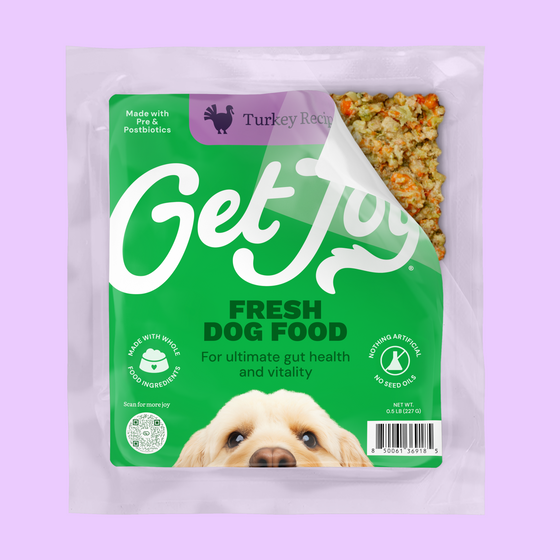

 Gut health
 Sensitive stomach
 Calm
Calm Joints & mobility
 Skin & coat
 Healthy weight
 Picky eaters



How to Clean Your Dog's Teeth at Home (And Why It Matters for Gut Health)
by The Get Joy Food Team ・ 19 min readLast updated: May 2026
Key Takeaways
- By age three, most dogs already show early signs of periodontal disease — making dental care a year-round priority, not a once-a-year reminder.
- The mouth is the first stop in your dog's gut. Bacteria that thrive in an unhealthy oral environment don't stay there — they can continuously seed the digestive tract and disrupt the gut microbiome over time.
- Daily brushing is the gold standard for at-home care. Dental chews, water additives, and vet cleanings all fill in the gaps.
- Protecting your dog's oral microbiome is a direct investment in their gut health — and gut health drives whole-body wellness.
- Get Joy's Belly Biotics™ supports the gut microbiome that periodontal disease can quietly undermine.
Most Affected Breeds: All breeds benefit from dental care, but Cavalier King Charles Spaniels, Pugs, Bulldogs, Dachshunds, Yorkshire Terriers, and small breeds prone to dental crowding are especially susceptible to periodontal disease.
Why Dog Dental Care Matters More Than Most People Think
Most dog parents think about food, exercise, and the occasional vet visit. Dental care? It usually comes up only when something is already wrong — bad breath, pawing at the mouth, or reluctance to eat. But by the time those signs appear, the damage has often been building for months or years.
Periodontal disease is one of the most common health conditions in dogs. The American Veterinary Medical Association reports that by age three, most dogs already show early signs of it. And it is not just a mouth problem. Left untreated, the bacteria that colonize infected gums can enter the bloodstream and affect the heart, kidneys, and liver. A 2019 study published in Frontiers in Veterinary Science found a significant association between periodontal disease in dogs and systemic conditions including heart and kidney disease (source).
Beyond the serious downstream risks, dental disease causes real, daily discomfort. Dogs with inflamed gums and sore teeth still eat — because they have no other choice — but they are not thriving. They are managing.
The good news: dental disease is largely preventable. And the tools to prevent it are simpler than most people expect.
The Oral-Gut Microbiome Connection
Here is something that does not get talked about enough: the mouth is not separate from the gut. It is the beginning of it.
Everything that enters your dog's digestive system passes through the oral cavity first. That includes food, water, and — critically — the bacteria that live there. A healthy oral microbiome is populated by balanced communities of bacteria that coexist without causing harm. A diseased one is dominated by pathogenic species that have no business being in the gut.
When periodontal disease takes hold, it creates a bacteria-rich environment in the gums and between the teeth. Those bacteria do not stay put. They are continuously swallowed, passing into the stomach and intestines with every meal, every drink of water, every lick. Over time, this steady seeding of pathogenic oral bacteria into the digestive tract can disrupt the gut microbiome — the community of trillions of microorganisms that governs digestion, immune function, inflammation, mood, and more.
Research in human medicine has well-established the oral-gut microbiome axis. Veterinary science is catching up, and the implications are the same: what happens in the mouth does not stay in the mouth.
This is why dental care is not just about fresh breath or avoiding tooth loss. It is a gut health issue. Reducing the bacterial load in your dog's mouth directly protects the downstream microbiome that supports their whole-body wellness.
Support the gut microbiome that dental disease can quietly undermine.
Get Joy Freeze Dried Raw Meals are built with Belly Biotics™ — our proprietary blend of prebiotics, probiotics, and postbiotics — baked directly into every meal. Not a sprinkle-on. Structural gut support, every single day.
Shop the Gut Support BundleHow to Brush Your Dog's Teeth (Step by Step)
Toothbrushing is the gold standard for at-home dog dental care. The AVMA recommends daily brushing as the most effective way to reduce plaque buildup at home — and even a few times a week makes a measurable difference compared to not brushing at all (AVMA).
The challenge is not technique. It is habit. Most dogs can be trained to tolerate — and even enjoy — tooth brushing. The key is starting slow and making it a positive experience from day one.
What You Need
- A soft-bristled toothbrush sized for your dog (finger brushes also work well for smaller dogs or beginners)
- Dog-specific toothpaste — never human toothpaste, which contains fluoride and xylitol, both toxic to dogs
- Patience and a few small treats
Step-by-Step Guide
- Introduce the toothpaste first. Let your dog smell and lick the toothpaste off your finger. Most dog toothpastes come in flavors dogs like — poultry, peanut butter, vanilla. This is just about making the taste familiar and positive.
- Touch the teeth and gums with your finger. Before the brush ever enters the picture, spend a day or two just gently rubbing your finger along your dog's outer teeth and gums. Go slow. Reward every session.
- Introduce the brush without toothpaste. Let your dog sniff and lick the brush. Then touch it lightly to the teeth. Short session, big reward.
- Add toothpaste and start brushing. Apply a pea-sized amount of toothpaste. Focus on the outer surfaces of the upper teeth — where plaque accumulates most. Use small, circular motions at a 45-degree angle to the gum line.
- Build up to a full session over days or weeks. Aim for two minutes total, working around the whole mouth. Front teeth, back molars, both sides. End every session with praise and a reward.
If your dog resists, do not push it. Back up a step and rebuild the positive association. Consistency over weeks beats force in a single session every time.

Alternatives to Brushing: Chews, Water Additives, and Dental Treats
Brushing is ideal. But it is not always possible every day, and some dogs simply will not tolerate it. That is where complementary tools come in — they will not replace brushing, but they genuinely help reduce oral bacterial load and plaque accumulation between sessions.
Dental Chews
The mechanical action of chewing is nature's toothbrush. When a dog gnaws on a textured chew, the friction scrapes away soft plaque before it can harden into tartar. The Veterinary Oral Health Council (VOHC) evaluates products specifically for their ability to reduce plaque and tartar — their accepted product list is the most reliable guide when choosing a dental chew (VOHC accepted products).
When choosing a chew, the AVDC's rule of thumb: if you cannot indent it with your thumbnail, it is too hard. Avoid real bones, very dense antlers, and hard nylon toys, all of which can fracture teeth (AVDC home care guidelines).
Water Additives
Dental water additives are among the easiest habits to build — you just add the recommended amount to your dog's water bowl every day. Quality additives help reduce oral bacteria, slow plaque formation, and freshen breath. Look for VOHC-accepted formulas and avoid additives with artificial sweeteners. Some dogs are sensitive to taste changes in their water, so introduce gradually.
Dental Treats
Dental treats work similarly to chews — the texture helps dislodge plaque as the dog chews. They are a convenient addition to a dental routine, especially for dogs who are not enthusiastic chewers. As with chews, VOHC acceptance is a meaningful indicator of efficacy.
Using These Together
Think of this as layers: brushing is the foundation, chews and treats add mechanical cleaning between brush sessions, and water additives provide continuous low-level antimicrobial support throughout the day. None of these tools replaces the others — but together, they create a meaningfully cleaner oral environment.
Professional Vet Cleanings — When and Why
Even the most diligent home dental routine cannot remove tartar that has already hardened onto the teeth. That requires professional cleaning under anesthesia — and it is not optional.
The American Veterinary Dental College recommends that all dogs receive a professional oral examination and cleaning under general anesthesia at least once a year. Breeds prone to dental crowding — especially small breeds like Yorkies, Chihuahuas, Dachshunds, and Pugs — often need cleanings more frequently (AVDC on anesthesia).
What Happens During a Professional Cleaning
- Removal of plaque and tartar above and below the gum line (below is the critical part home tools cannot reach)
- Probing of periodontal pockets to assess gum disease severity
- Tooth-by-tooth evaluation for fractures, looseness, or infection
- Polishing to smooth enamel and slow future plaque accumulation
- X-rays to evaluate the health of tooth roots and surrounding bone
Signs Your Dog May Need a Cleaning Before Their Annual Visit
- Persistent bad breath that does not improve with home care
- Visible brown or yellow tartar buildup at the gum line
- Red, swollen, or bleeding gums
- Pawing at the mouth or reluctance to chew on one side
- Dropped food or difficulty eating
If you see any of these signs, schedule a vet visit sooner rather than later. Periodontal disease progresses — early intervention is always better and less costly than waiting.
Building a Simple Home Dental Routine
Good dental care does not have to be elaborate. It has to be consistent. Here is what a realistic, sustainable routine looks like:
Daily (5 minutes or less)
- Brush your dog's teeth — or do a quick finger brush if they are still building tolerance
- Top up their water bowl with a dental water additive
Several Times a Week
- Give a VOHC-accepted dental chew or dental treat
- Take a quick look in your dog's mouth — check for redness, swelling, buildup, or anything unusual
Annually (minimum)
- Professional cleaning at your vet or veterinary dental specialist
- Full oral exam, including X-rays, to catch problems early
Ongoing
- Feed a diet that supports — rather than undermines — oral and gut health. Fresh, whole-food nutrition avoids the excess starches found in many processed kibbles that can contribute to plaque formation and feed the wrong bacteria in the gut.
- Support the gut microbiome directly with Belly Biotics™, which helps maintain the downstream balance that good oral care helps protect.
The goal is not perfection. It is making dental care a normal part of your dog's week — as routine as a walk, as simple as filling a water bowl.
Gut health and oral health go hand in hand.
Get Joy Freeze Dried Raw Meals deliver whole food nutrition with Belly Biotics™ built right in — making consistent gut support as simple as feeding time.
Shop Freeze Dried RawFrequently Asked Questions
How often should I brush my dog's teeth?
Daily is ideal, and it is what the AVMA recommends for maximum plaque control. If daily is not realistic right now, even three to four times a week makes a meaningful difference. Build the habit gradually — short, positive sessions consistently beat long, stressful ones.
What toothpaste is safe for dogs?
Only use toothpaste formulated specifically for dogs. Human toothpaste contains fluoride and often xylitol, both of which are toxic to dogs. Dog toothpastes come in flavors like poultry, peanut butter, and vanilla — most dogs find them genuinely appealing, which makes the whole process easier.
Can dental chews replace brushing?
They help — but they cannot fully replace brushing. Dental chews reduce plaque mechanically through chewing, but they do not reach into the gum line the way a brush does. Think of them as a valuable complement to brushing, not a substitute for it.
How does my dog's dental health affect their gut?
The mouth is the entry point to the digestive system. When periodontal disease takes hold, pathogenic bacteria proliferate in the gums and are continuously swallowed, reaching the gut with every meal and drink. Over time, this can disrupt the gut microbiome — the community of microorganisms that governs digestion, immunity, and inflammation. Keeping the oral environment healthy reduces this bacterial seeding and protects gut health downstream.
When should I schedule a professional dental cleaning?
Most dogs benefit from at least one professional cleaning per year, starting by age two or three. Small breeds and those prone to dental crowding may need more frequent cleanings. Signs that suggest you should not wait for the annual visit: persistent bad breath, visible tartar, red or swollen gums, or any change in eating behavior.
What is Belly Biotics™ and how does it support dental health?
Belly Biotics™ is Get Joy's proprietary blend of prebiotics, probiotics, and postbiotics — built directly into every Freeze Dried Raw Meal, not added as a separate supplement. It supports the gut microbiome that periodontal disease can quietly undermine. When you are reducing oral bacteria through good dental care and simultaneously supporting gut balance with Belly Biotics™, you are addressing the oral-gut connection from both ends.
Joy starts in the gut. And the gut starts in the mouth.
Get Joy's Freeze Dried Raw Meals with Belly Biotics™ make it simple to support your dog's gut microbiome every single day — no measuring, no mixing, no guesswork. Pair that with a consistent home dental routine and you are giving your dog the kind of whole-body care that shows up in how they feel, how they move, and how much joy they bring to every day.
Shop the Gut Support BundleBrowse More Topics
Shop by Concern


Featured Posts
Keeping Your Dog Healthy in Winter: Cold Weather, Immunity, and Gut Health
The Best Dog-Safe Christmas Treats (Store-Bought and Homemade)