Bestseller

 Gut health
 Sensitive stomach
 Calm
 Joints & mobility
 Skin & coat
 Healthy weight
 Picky eaters

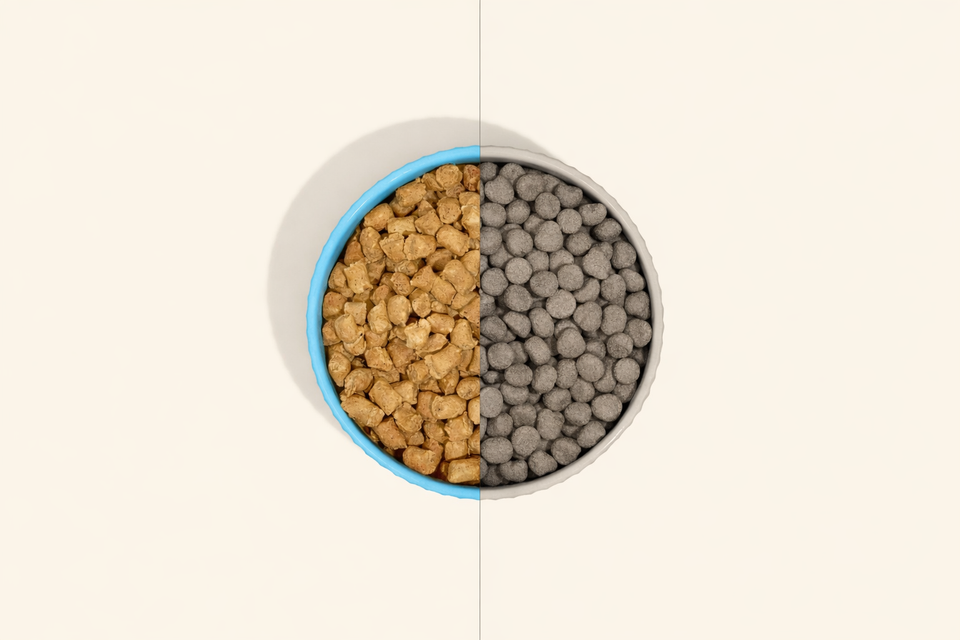



Freeze-Dried vs. Air-Dried Dog Food: What's the Real Difference?
by The Get Joy Food Team ・ 9 min readPublished October 2026 · Last reviewed October 2026
Freeze-dried and air-dried dog food are both minimally processed alternatives to kibble, but they use fundamentally different preservation methods. Freeze-drying removes moisture through sublimation at very low temperatures, preserving the most nutrients and retaining the closest nutritional profile to raw food. Air-drying uses low heat over long periods — still minimal processing, but with more nutrient degradation than freeze-drying. For maximum nutrition, freeze-dried wins. For lower cost and slightly easier feeding, air-dried is a reasonable alternative.
Comparing freeze-dried and air-dried bags in the aisle? They look similar, but they are made differently. Here is what changes for your dog’s bowl.
Key Takeaways
- Freeze-drying uses no heat — sublimation at sub-zero temperatures preserves the most nutrients and enzymes
- Air-drying uses low heat (~68–104°F) over days or weeks — more nutrient loss than freeze-drying, less than kibble
- Freeze-dried food is lighter, rehydrates fully, and is closer to raw in nutritional profile
- Air-dried food is denser, typically doesn't require rehydration, and is often lower cost
- Both are significantly better than conventional kibble for whole-food nutrition and gut health support
How Each Process Works
Freeze-Drying
Food is first frozen solid, then placed in a vacuum chamber where pressure drops low enough that ice converts directly to vapor (sublimation) without passing through liquid. This happens at temperatures well below freezing, meaning no heat touches the food. The result: 98%+ moisture removal with essentially zero heat exposure.
Air-Drying
Food is exposed to controlled airflow at low temperatures (typically 68–104°F / 20–40°C) for 12–24+ hours. This removes 70–75% of moisture, leaving a denser, slightly chewy product. Some enzyme and heat-sensitive nutrient degradation occurs at these temperatures — significantly less than kibble (which reaches 300–400°F), but more than freeze-drying.
Nutritional Comparison
| Factor | Freeze-Dried | Air-Dried | Kibble (for reference) |
|---|---|---|---|
| Heat exposure | None | Low (68–104°F) | High (300–400°F) |
| Moisture removed | 98%+ | 70–75% | ~90% (via baking) |
| Enzyme preservation | Excellent | Good | Poor |
| Protein bioavailability | Very high | High | Moderate |
| Vitamin retention | Very high | High | Low (added back post-process) |
| Closest to raw | Yes | Partial | No |

Palatability and Texture
Freeze-dried food is lightweight and crunchy when dry, expanding back to near-original texture when rehydrated. Aroma is intense because fat-soluble volatile compounds are preserved intact. Air-dried food is denser, slightly chewy without rehydration, and has a more concentrated savory aroma from the low-and-slow drying process. Both are highly palatable relative to kibble. Picky dogs often respond better to freeze-dried due to the more intense aroma signal on rehydration.
Shelf Life and Storage
| Product | Unopened Shelf Life | After Opening | Refrigeration Needed? |
|---|---|---|---|
| Freeze-dried | 12–24 months | 4–6 weeks (sealed) | No |
| Air-dried | 12–18 months | 6–8 weeks (sealed) | No |
Both are shelf-stable because they've reduced moisture to levels that prevent microbial growth. Freeze-dried has a slight edge in longevity for some formulas due to the more complete moisture removal.
Cost Comparison
Air-dried food is typically 20–40% less expensive than freeze-dried at equivalent serving sizes. This is partly because the air-drying process is simpler and less equipment-intensive than freeze-drying. However, serving portions differ — freeze-dried is lighter, so a smaller volume delivers equivalent nutrition. Compare cost per daily serving (by weight), not cost per bag, for an accurate comparison.
Gut Health Considerations
Both formats support gut health better than highly processed kibble because whole-food ingredients feed a more diverse gut microbiome. Freeze-dried has a slight edge in enzyme preservation — digestive enzymes naturally present in raw meat help support digestion, and freeze-drying preserves more of them than air-drying.
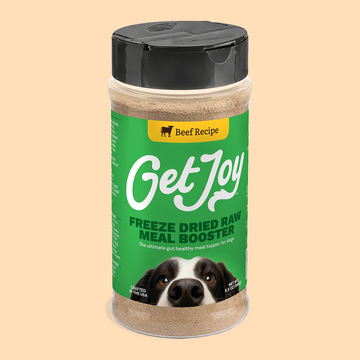
For added gut health support beyond the base nutrition, look for a formula with built-in prebiotics, probiotics, and postbiotics. Get Joy's Belly Biotics™ is integrated directly into the freeze-dried food — not added as a sprinkle-on supplement — delivering consistent three-layer gut support with every meal regardless of how it's served.
Which Should You Choose?
| Choose Freeze-Dried If... | Choose Air-Dried If... |
|---|---|
| Maximum nutritional preservation is the priority | Budget is a consideration — air-dried costs less |
| You have a picky eater who responds to strong aroma | You prefer a denser food that doesn't require rehydration |
| Your dog needs gut health support built into the meal | Your dog does well with slightly chewier textures |
| You want the closest thing to raw without the handling challenges | You're transitioning from kibble and want something familiar |
Get Joy Freeze-Dried Raw Meals — maximum nutrition, zero heat processing, with Belly Biotics™ (prebiotics, probiotics, postbiotics) built directly into the food. Shop Now →
From Get Joy dog parents
“My picky eater is finally eating her food!”
“Their poops have been solid and it’s great as a mix in.”
Customer reviews, shared as written
Ready when you are
Freeze Dried Raw Meals are never cooked at high heat.
Freeze Dried Raw Meals have Belly Biotics™ built in, store in the pantry and work as a full meal or a topper. 50% off your first Auto-Ship order. Skip, pause or cancel anytime.
Worried they won’t eat it? Mix a little into their current food and shift over 7 to 10 days. And we guarantee they’ll love it or your first order is free — that’s the Clean-Bowl Promise.
Frequently Asked Questions
Is freeze-dried better than air-dried for dogs?
Freeze-dried better preserves heat-sensitive nutrients and enzymes because it uses no heat. Air-dried is a close second — still far superior to kibble — and costs less. For dogs with specific gut health or digestive needs, freeze-dried is the stronger choice. For budget-conscious families who still want whole-food nutrition, air-dried is a valid option.
Can I mix freeze-dried and air-dried food together?
Yes. There's no nutritional conflict between the two formats. Mixing them is a reasonable strategy for variety, cost management, or transitioning between products. Follow the standard transition guidelines — gradual introduction over 2–3 weeks — to minimize digestive adjustment.
Do I need to rehydrate air-dried dog food?
Air-dried food doesn't require rehydration the way freeze-dried does — the density and 25–30% remaining moisture give it a soft, chewy texture without added water. You can add water if your dog prefers a softer texture or needs more hydration, but it's not necessary for palatability or digestion the way it is with freeze-dried.
Browse More Topics
Shop by Concern


Featured Posts
How to Transition Your Dog to Freeze-Dried Food
Freeze-Dried Dog Food for Weight Management
Freeze-Dried Dog Food with Probiotics: The Gut Health Guide