Bestseller
 Gut health
 Sensitive stomach
 Calm
Calm Joints & mobility
 Skin & coat
 Healthy weight
 Picky eaters



How Freeze Dried Beef Organ Treats Support Gut Health
by The Get Joy Food Team ・ 11 min readYour dog's gut is doing more than digesting food. It's regulating immunity, producing neurotransmitters, managing inflammation, and maintaining a barrier between the internal body and the outside world. What you feed — including treats — is either supporting that system or adding stress to it.
Freeze dried beef organ treats happen to be one of the most gut-supportive treats you can give your dog. Not because of clever marketing — because of what organs actually are, and what freeze-drying actually preserves.
Why Organ Meats Are in a Different Nutritional Category
Muscle meat is nutritious. Organs are nutritionally extraordinary.
Beef organs — liver, heart, kidney, tripe, lung — are among the most micronutrient-dense foods that exist. They're called "nature's multivitamin" for a reason: gram for gram, they contain concentrations of vitamins, minerals, enzymes, and cofactors that muscle meat can't match. In the wild, organs are the parts of prey that predators eat first.
Each organ has a distinct nutritional profile, and each one contributes something specific to gut and whole-body health.
Liver: The Gut Lining's Best Friend
Beef liver is the most nutrient-dense food in most carnivore diets — for dogs or humans. It's extraordinarily rich in:
- Vitamin B12 — essential for DNA synthesis, nerve function, and the health of rapidly dividing cells (including intestinal epithelial cells that line the gut)
- Copper — a cofactor in connective tissue formation, including the structural proteins that maintain gut lining integrity
- Zinc — critical for tight junction protein synthesis, the cellular "locks" that keep the gut barrier intact and prevent intestinal hyperpermeability (leaky gut)
- Vitamin A — supports the mucosal lining of the GI tract and regulates immune cell activity in the gut
Zinc deficiency is one of the most well-documented contributors to compromised gut barrier function. Liver is one of the richest bioavailable sources of zinc in any diet.
Heart: Cellular Energy for the Entire System
Heart is technically a muscle, but it functions differently from skeletal muscle — it never stops working, which means it's packed with the energy substrates needed to sustain that continuous work.
- CoQ10 (Coenzyme Q10) — a powerful antioxidant and mitochondrial cofactor that supports cellular energy production throughout the body, including in intestinal cells
- Taurine — an amino acid critical to cardiac function and also important for bile acid conjugation, which directly affects fat digestion and gut microbiome composition
- B vitamins — B1, B2, B6, and B12 in meaningful concentrations, supporting energy metabolism at the cellular level
Green Tripe: The Most Directly Gut-Supportive Organ
Green tripe — the unprocessed stomach lining of ruminants — is in its own category for gut health. Unlike bleached white tripe (which has been cleaned of its beneficial contents), green tripe contains:
- Natural probiotics — live beneficial bacteria from the ruminant's own digestive system, which can help colonize and diversify the canine gut microbiome
- Digestive enzymes — proteases, amylases, and lipases that support the breakdown and absorption of nutrients
- Lactobacillus acidophilus — one of the most well-studied beneficial bacteria strains for gut microbiome support
- A near-perfect calcium-to-phosphorus ratio — important for mineral balance and bone health
Green tripe smells terrible. Dogs love it. The smell is a reliable indicator that nothing has been cooked or processed out of it.
Kidney: B12 and Selenium Density
Kidney is among the highest dietary sources of vitamin B12 and selenium:
- B12 — supports the production of digestive enzymes and the health of intestinal mucosal cells
- Selenium — a trace mineral that functions as an antioxidant cofactor (part of the glutathione peroxidase system), reducing oxidative stress in the gut lining
- Iron — highly bioavailable heme iron, which is absorbed more efficiently than plant-based non-heme iron
Why Freeze Dried Preserves More Than Any Other Processing Method
How treats are processed matters as much as what goes into them. The three most common methods — cooking, dehydration, and freeze-drying — have meaningfully different effects on nutritional retention.
Cooking (including baking and extrusion) uses high heat that degrades heat-sensitive nutrients: B vitamins, vitamin C, many enzymes, and some amino acids. The higher the temperature and the longer the exposure, the greater the loss. Most commercial dog treats are made this way.
Dehydration uses lower heat over a longer period. Better than cooking for some nutrients, but the sustained heat still degrades enzymes and some vitamins. Products can become shelf-stable but are nutritionally diminished compared to the raw starting material.
Freeze-drying removes moisture through sublimation — ice transitions directly to vapor at very low temperatures, with no heat applied to the food itself. The result is:
- Enzymes remain structurally intact and biologically active
- Heat-sensitive vitamins (B12, B6, folate, vitamin C) are retained at levels close to the raw food
- Proteins are preserved without denaturing
- The cellular structure of the food remains largely intact
- Shelf stability of up to two years without refrigeration
For organ meats specifically — which derive much of their value from enzymatic activity and heat-sensitive micronutrients — freeze-drying is the only processing method that preserves the full nutritional profile of the raw ingredient.
Where Organ Treats Fit in the Get Joy Routine
Get Joy's nutritional philosophy is gut-first. Meals are the foundation — and Get Joy's Freeze Dried Raw Meals are built with Belly Biotics™, a proprietary blend of prebiotics, probiotics, and postbiotics that's a structural part of every meal, not a sprinkle-on supplement. This provides consistent, daily gut microbiome support with every serving.
Organ treats are the nutrient-dense complement to that foundation. They don't replace daily gut support — they add to it. The zinc and copper in liver reinforce gut barrier integrity. The CoQ10 in heart supports the cellular energy systems that keep the gut lining functioning. The natural probiotics and enzymes in green tripe directly augment the microbiome work that Belly Biotics™ is doing at mealtime.
Think of it this way: Belly Biotics™ in meals is the consistent daily routine. Organ treats are the nutritional density that rounds out the picture.
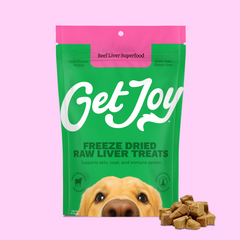
Get Joy's Freeze Dried Beef Organ Treats are single-ingredient — beef organs, nothing added. No fillers, no artificial preservatives, no binding agents. Just organs, freeze dried to preserve everything that makes them worth feeding.
How to Introduce Organ Treats Without Digestive Upset
Organ meats are rich. That's what makes them so nutritionally valuable — and it's also why introducing them too quickly can cause loose stools or GI upset in dogs that aren't used to them.
The guidance is simple: start small and go slow.
- Start with a few small pieces (one to three pieces per session) once daily for the first week
- Watch for loose stools or changes in digestion — this is normal in the first few days as the gut adjusts
- Gradually increase over two to three weeks as your dog's system adapts
- Follow the treat guidelines on the package — organ treats should complement the diet, not displace it
Dogs that are already on a gut-supportive diet with daily microbiome support tend to adapt to organ treats faster and with fewer GI adjustments — which is one of the underappreciated benefits of consistent daily gut health investment.
The Bigger Picture
Most dog treats are filler. They exist to deliver a moment of reward, and most of the nutritional work they do is either neutral or a minor tax on the digestive system — empty calories, unnecessary additives, ingredients that do nothing.
Freeze dried beef organ treats are the opposite: a dense packet of exactly the micronutrients the gut lining, the immune system, and the microbiome need most. They reward the dog and support the gut at the same time.
That's the standard Get Joy is building toward: better nutrition that fits real life. Treats that do something. A gut-first approach that shows up in every part of the feeding routine — from the Belly Biotics™ in every meal to the organ density in every treat.
Joy starts from within. This is how you feed it.
Shop Get Joy Freeze Dried Beef Organ Treats and explore the full lineup of meals and supplements designed to support your dog from the inside out.
Browse More Topics
Shop by Concern


Featured Posts
Keeping Your Dog Healthy in Winter: Cold Weather, Immunity, and Gut Health
The Best Dog-Safe Christmas Treats (Store-Bought and Homemade)