Bestseller
 Gut health
 Sensitive stomach
 Calm
Calm Joints & mobility
 Skin & coat
 Healthy weight
 Picky eaters


How Long Does It Take a Puppy to Digest Food
by The Get Joy Team ・ 11 min readLast Updated: July 1, 2026
Puppy digestion moves fast, but there’s more to the picture than a simple number. This guide breaks down how long it takes a puppy to digest food, what speeds things up or slows them down, and how to tell when everything is running the way it should. You’ll also get the practical stuff: rest timing after meals, habits that keep digestion on track, and clear signs it’s time to call the vet.
How long does it take a puppy to digest food?
If you’re wondering how long does it take a puppy to digest food, a good rule of thumb is about 4 to 6 hours for early digestion and stomach emptying. That does not mean the whole meal has fully passed through and out of the body that quickly. Think of it as the window when food is being broken down and moving along, not the full trip from bowl to backyard.
In general, puppies tend to digest food faster than adult dogs. They’re growing fast, burning through energy, and eating more often, so their digestive systems usually move at a quicker pace too. That’s one reason how often should puppies eat comes up so often: smaller, more frequent meals simply fit how their bodies work.
That said, puppy digestion time is not one-size-fits-all. Small breeds often land on the faster end, while large and giant breeds may take longer. Age matters too. A young puppy may process meals a bit faster than an older puppy getting closer to adulthood. Meal type can also shift timing. A larger meal or richer food may sit longer than a smaller, simpler one.
So if you’re asking how long does puppy food take to digest, start with that 4-to-6-hour benchmark, then expect some variation based on size, age, and what’s in the bowl. Normal doesn’t look exactly the same for every pup.
| Factor | Typical Effect on Digestion Time |
|---|---|
| Early digestion & stomach emptying | About 4–6 hours (a general benchmark, not the full transit) |
| Small breeds | Often on the faster end |
| Large & giant breeds | May take longer; more volume to process |
| Meal size | Bigger meals generally mean slower emptying |
| Food type & richness | Richer, higher-fat recipes may sit longer |
If you want help figuring out meal timing by age and size, the Get Joy puppy feeding guide is a smart next step.
What changes digestion speed in puppies?
Puppy digestion time is not one fixed clock. If you’re wondering how long does it take a puppy to digest food, the honest answer is: it depends on what’s in the bowl, how much is in it, and the puppy eating it.
Here are the biggest things that change digestion speed:
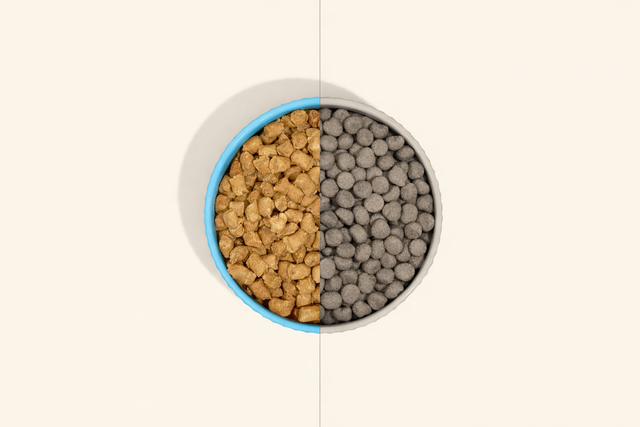
- Food type: Different foods can move through the stomach at different rates, but there is no perfect fastest-to-slowest ranking for every puppy. In general, kibble may take longer because it is dry and more heavily processed. Wet food often empties a bit more easily because of its moisture content. Fresh food and Freeze Dried Raw can also digest differently depending on ingredient quality, fat level, fiber, and how rich the recipe is. Translation: the formula matters, not just the format.
- Meal size: Bigger meals usually mean longer puppy stomach emptying time. Smaller meals are easier to handle, which is one reason young puppies need to eat more often.
- Age: Very young puppies are still building digestive strength. As they grow, digestion usually becomes more efficient and predictable.
- Activity level: A short walk or calm sniff session after eating is fine. Hard play right after a meal is not. Digestion works better when the body is not busy launching into full chaos mode.
- Breed size: Larger-breed puppies often have slower gastric emptying and more total volume to process, so puppy digestion time can run longer than it does in smaller breeds. Smaller pups tend to move food through faster overall. If you want the deeper version, this breakdown of small- and large-breed digestive differences is worth your time.
These same factors also shape how often should puppies eat and what counts as normal digestion day to day.

How to tell if your puppy is digesting food normally
Knowing how long does it take a puppy to digest food matters, but the better question is whether digestion looks normal day to day. A healthy puppy usually gives you pretty clear signals.
Signs of healthy digestion
- Firm, brown poop that’s easy to pass
- A normal appetite at mealtimes without suddenly refusing food
- Good energy after eating instead of looking wiped out or uncomfortable
- Bathroom trips that feel fairly predictable, often soon after meals
- Little to no extra gas, stomach noise, or obvious belly upset
Red flags that digestion is off
- Vomiting, especially if it happens more than once
- Diarrhea or loose stool that keeps going beyond 24 hours
- A swollen, tight, or bloated belly
- Straining to poop or only passing a tiny amount
- Frequent gas that’s new, strong, or paired with discomfort
- Low appetite, unusual lethargy, or acting unlike themselves after meals
A one-off soft stool doesn’t always mean trouble. Puppies are messy little experiments. But repeated symptoms are not something to shrug off.
Call your vet if your puppy is vomiting repeatedly, has ongoing diarrhea, looks bloated, is straining hard, seems to be getting worse, or just seems unwell. With very young puppies, it’s smart to call sooner rather than later. They can go downhill fast.
If your puppy’s digestion time seems off and you want a better read on the bigger gut-health picture, check out how to know if your dog has gut health issues. It’ll help you spot patterns before they become a bigger mess.
Should puppies rest after eating?
Yes. Puppies should get a little quiet time after meals, not a round of zoomies.
Right after eating, stick to calm activity and skip the hard running, jumping, wrestling, or rough play. Intense movement on a full stomach can leave a puppy uncomfortable, gassy, or more likely to spit up. In larger, deep-chested breeds, it can also increase the risk of bloat. That’s the serious one where the stomach expands and can twist, so it’s worth taking seriously without turning it into a panic spiral.
A simple rule works well here:
- Small breeds: rest about 15–30 minutes after eating
- Larger or deep-chested breeds: rest 30–60 minutes
That window is realistic for most dog companions and easy to build into the day. Think low-key, not bed rest. A potty break, gentle sniffing, or hanging out nearby is fine. Save fetch, stair races, and tackle-style play for later.
If you’re wondering how long does it take a puppy to digest food, the full puppy digestion time is much longer than this short rest window. But giving the stomach a calm start is still a smart move. It helps meals go down easier and lowers the odds of post-meal drama.
The digestion-friendly habits that make life easier
Consistency is the quiet hero of healthy puppy digestion. You don’t need a complicated routine—just a few solid habits, done reliably.
Stick to a feeding schedule. Puppies thrive on routine. Feeding at the same times every day helps regulate stomach emptying and makes it much easier to notice when something’s off.
Control portions. Overfeeding is one of the fastest ways to slow digestion and cause discomfort. Follow age- and weight-appropriate serving sizes, and resist the urge to top off the bowl just because they’re looking at you like that.
Transition foods slowly. Swapping foods too quickly is a leading cause of digestive upset. Take at least seven to ten days, gradually increasing the ratio of new food to old.
Keep fresh water available. Hydration supports every stage of digestion—a well-hydrated puppy processes food more efficiently and is far less prone to constipation.
Choose nutrient-dense food with gut-supportive ingredients. Food quality directly affects how long puppy food takes to digest and how well nutrients actually get absorbed. Whole proteins, digestible carbohydrates, and ingredients that support the gut lining are all worth looking for.
When digestion needs a little extra support—after illness, stress, or a food transition—Belly Biotics™ brings together prebiotics, probiotics, and postbiotics to help keep the gut microbiome balanced. And if you want to go deeper on building long-term gut health, our guide on how to nurture your dog’s gut health is a great next read.
Browse More Topics

Written by
The Get Joy Team
Shop by Concern


Featured Posts
Keeping Your Dog Healthy in Winter: Cold Weather, Immunity, and Gut Health
The Best Dog-Safe Christmas Treats (Store-Bought and Homemade)