Bestseller
 Gut health
 Sensitive stomach
 Calm
 Joints & mobility
 Skin & coat
 Healthy weight
 Picky eaters




How Long Does Freeze-Dried Dog Food Stay Fresh?
by The Get Joy Food Team ・ 14 min readPublished October 2026 · Last reviewed October 2026
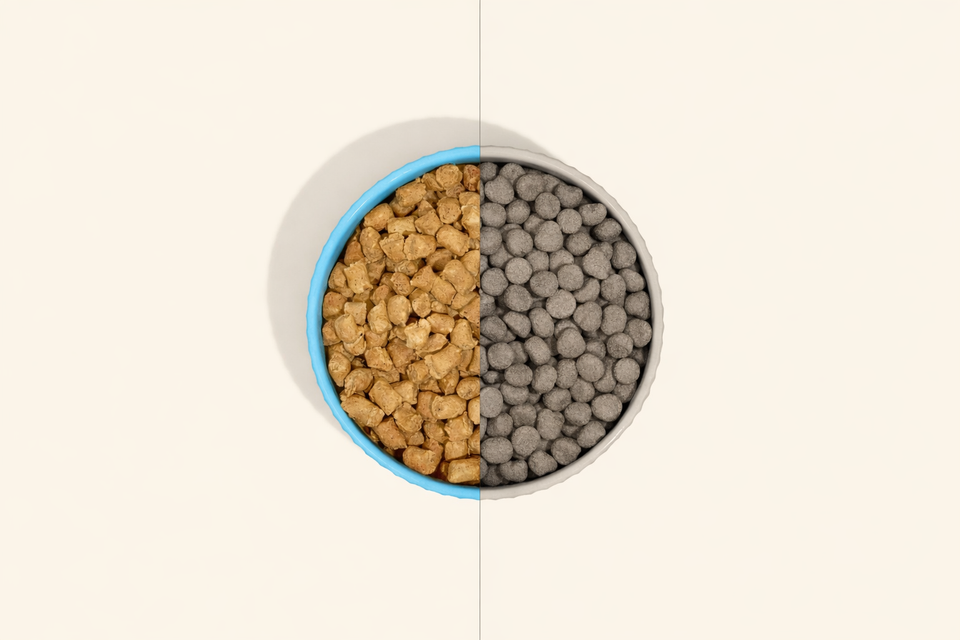
Unopened freeze-dried dog food typically stays fresh for 1–2 years when stored in a cool, dry place — far longer than fresh or wet food. Once opened, you have roughly 4–6 weeks before quality starts to decline. The key is moisture control: freeze-drying removes nearly all water from the food, and keeping it out is what preserves freshness long-term.
Small dog, big bag? Knowing how long an opened bag stays fresh helps you pick the right delivery schedule, so food never piles up.
Key Takeaways
- Unopened freeze-dried dog food has a shelf life of 1–2 years; always check the "best by" date on the package.
- Once opened, store in a resealable, airtight container and use within 4–6 weeks.
- Moisture is the enemy — never store freeze-dried food in the refrigerator before opening (humidity risk).
- Rehydrated freeze-dried food must be refrigerated and used within 3 days, just like fresh food.
- Signs of spoilage include off odor, discoloration, mold, or unusual texture — when in doubt, throw it out.
How Freeze-Drying Preserves Food
Freeze-drying is a cold-vacuum process that removes 98%+ of the moisture from raw ingredients without applying heat. Bacteria, mold, and yeast all need water to survive and reproduce — without it, they can't grow. That's what gives freeze-dried food its remarkable shelf stability compared to fresh, raw, or wet formulas.
The process also preserves nutritional integrity. Unlike high-heat processing (which can degrade proteins and vitamins), freeze-drying locks in the nutrient profile of the original whole-food ingredients. The food stays shelf-stable in the bag and reactivates when you add water at feeding time.
Why moisture is the only real enemy
Once moisture re-enters the food — from humidity, condensation, or improper storage — the protective effect of freeze-drying is undone. Bacteria can establish, fats can go rancid, and the food's quality degrades quickly. Every storage recommendation comes back to this single principle: keep moisture out.
Shelf Life: Unopened
Most high-quality freeze-dried dog food brands publish a shelf life of 18–24 months for unopened products. Get Joy Freeze-Dried Raw Meals are formulated and packaged to maintain quality through their printed "best by" date when stored correctly.
| Product Type | Typical Shelf Life (Unopened) |
|---|---|
| Freeze-Dried Raw Meals | 18–24 months |
| Freeze-Dried Raw Toppers | 12–24 months |
| Fresh/Refrigerated Dog Food | 7–14 days refrigerated |
| Wet/Canned Dog Food | 2–5 years (unopened) |
| Kibble (dry dog food) | 12–18 months |
The best-by date is a quality guarantee, not a hard safety cutoff — but for optimal nutrition and palatability, stick to the printed date.
Shelf Life: After Opening
Once you open the bag, the clock starts. Exposure to air introduces humidity, and the protective vacuum environment is gone. Most freeze-dried dog food will maintain good quality for 4–6 weeks after opening when stored properly.
Practical tip: if you feed freeze-dried as a topper or occasional meal rather than a daily staple, consider buying smaller bag sizes to ensure you use the food within that window.
How to extend opened shelf life
- Use the original bag with its resealable closure, pressing out air each time
- Transfer to a dedicated airtight food storage container if the original bag seal is weak
- Store in a cool, dry pantry — away from the stove, dishwasher, or any heat source
- Use a dry scoop — a wet scoop introduces moisture directly into the bag
Rehydrated Food: A Different Timeline
Once you add water to freeze-dried food, the shelf-stability is gone. Rehydrated food behaves like fresh food and must be treated accordingly.
- At room temperature: No more than 2 hours. Discard anything left in the bowl.
- Refrigerated: Up to 3 days in a sealed container.
- Frozen: Not recommended — refreezing rehydrated raw food affects texture and can re-introduce the conditions that allow bacterial growth.
If you're prepping meals in advance, rehydrate only what your dog will eat in 1–3 days and store it in the fridge in a sealed container.
Try Get Joy Freeze-Dried Raw Meals — real whole food ingredients with Belly Biotics™ built in. Shop Now →
Best Storage Practices
The rules for keeping freeze-dried food fresh are simple once you understand the logic:
- Cool and dry: Room temperature (below 75°F) is ideal. Avoid garages, outdoor sheds, or spots near appliances that generate heat.
- Airtight: The original bag or a dedicated pet food storage container with a secure lid.
- Dark: Light exposure, especially UV, can degrade fats over time. A pantry or cabinet is better than a countertop.
- Do NOT refrigerate unopened bags: Refrigerators introduce humidity through condensation when the bag is taken in and out. Reserve the fridge for rehydrated food only.
- Away from strong odors: Freeze-dried food can absorb ambient odors over time. Keep it away from cleaning supplies or strongly scented foods.
Signs Your Freeze-Dried Food Has Gone Bad
Even with proper storage, it's worth doing a quick check before each feeding. Trust your senses:
- Smell: Rancid, sour, or off odors are a clear signal. Fresh freeze-dried food smells neutral to mildly savory.
- Appearance: Mold (fuzzy patches), unusual discoloration, or clumping suggests moisture has entered the bag.
- Texture: Freeze-dried pieces should be light and slightly crunchy. Soft, damp, or sticky kibble-shaped pieces indicate moisture exposure.
- Your dog's reaction: Dogs are excellent at detecting spoilage. If your typically enthusiastic eater refuses the food, take it seriously.
When in doubt, discard. The cost of a spoiled bag is far less than a vet visit.
Container Options for Long-Term Storage
If you buy in bulk or your bag doesn't reseal well:
- Airtight food-grade containers — The most reliable option. Look for containers with rubber gasket lids. Transfer the entire bag's contents and tuck in the silica gel packet from the original bag.
- Vacuum-seal bags — Ideal for long-term storage. Remove as much air as possible and store in a dark location. Best for households that bulk-buy.
- Original bag with clip — A good bag clip that creates an airtight seal works well for short-term storage. Press out air before clipping.
- Mylar bags with oxygen absorbers — Extends shelf life significantly for long-term emergency prep. Overkill for most households.
From Get Joy dog parents
“Zero tummy drama.”
“Number one: my dog loves these.”
Customer reviews, shared as written
Ready when you are
Pick a delivery schedule that matches how fast your dog finishes a bag.
Freeze Dried Raw Meals have Belly Biotics™ built in, store in the pantry and work as a full meal or a topper. 50% off your first Auto-Ship order. Skip, pause or cancel anytime.
Worried they won’t eat it? Mix a little into their current food and shift over 7 to 10 days. And we guarantee they’ll love it or your first order is free — that’s the Clean-Bowl Promise.
Frequently Asked Questions
Does freeze-dried dog food need to be refrigerated?
No — unopened freeze-dried dog food should be stored at room temperature in a cool, dry place. Refrigerating an unopened bag can introduce humidity through condensation and actually shorten shelf life. Once the food is rehydrated, refrigerate any leftovers and use within 3 days.
How long does Get Joy freeze-dried food last after opening?
Get Joy Freeze-Dried Raw Meals maintain best quality for up to 4–6 weeks after opening when stored in the original resealable bag or an airtight container in a cool, dry place. Always check the printed best-by date and use your senses before each feeding.
Can I freeze freeze-dried dog food to make it last longer?
Freezing is not recommended for unopened or opened freeze-dried food — it can introduce moisture through condensation when thawed. The shelf life of 1–2 years unopened is already well beyond most feeding cycles, making freezing unnecessary.
What happens if my dog eats slightly expired freeze-dried food?
A day or two past the best-by date with proper storage is unlikely to cause harm, but quality and palatability may decline. Beyond that, the risk of rancidity and bacterial growth increases. When in doubt, consult your vet and discard the food.
Is it safe to buy freeze-dried dog food in bulk?
Yes, buying in bulk can be cost-effective given the long unopened shelf life. Just make sure you can realistically use each opened bag within 4–6 weeks, and store unopened bags in a cool, dry pantry away from heat and moisture.
Does freeze-dried dog food go bad if left out?
Dry, un-rehydrated freeze-dried food is very shelf-stable and will not spoil quickly if left exposed to air for a short time — but it can absorb moisture from the air, which degrades quality over time. Always reseal the bag tightly. Rehydrated food, however, should not be left out for more than 2 hours at room temperature.
Can I store freeze-dried dog food in the refrigerator?
You can, but it is generally not recommended for the dry product. Refrigerators introduce humidity through temperature cycling, and moisture is the enemy of freeze-dried food's shelf stability. Store dry freeze-dried food in a cool pantry instead. Only refrigerate it once it has been rehydrated.
Is Get Joy freeze-dried food shelf-stable before opening?
Yes. Get Joy Freeze-Dried Raw Meals are shelf-stable at room temperature before opening. Once opened, store in a cool, dry place in a sealed container. Once rehydrated, refrigerate and use within 3 days.
What happens if my freeze-dried dog food gets wet?
If moisture enters the bag or container — from a wet scoop, spill, or humidity — that area of the food will begin to rehydrate. Once rehydrated, it's perishable and can develop mold. If you notice clumped or moist pieces, inspect carefully for mold or off-odor. Affected portions should be discarded. If only a small area is affected and the rest smells and looks normal, you may be able to salvage the unaffected portion — but when in doubt, discard.
How can I tell if my freeze-dried dog food has gone bad?
Signs of spoilage include: rancid or sour smell (rather than a savory, meaty aroma), visible mold (any color — white, green, gray), sticky or moist texture in dry pieces, and unusual appearance after rehydrating (slimy or abnormal color). Your dog may also refuse food that's gone rancid. If anything seems off, discard the food rather than risk a GI upset.
Browse More Topics
Shop by Concern


Featured Posts
How to Transition Your Dog to Freeze-Dried Food
Freeze-Dried Dog Food for Weight Management
Freeze-Dried Dog Food with Probiotics: The Gut Health Guide