Bestseller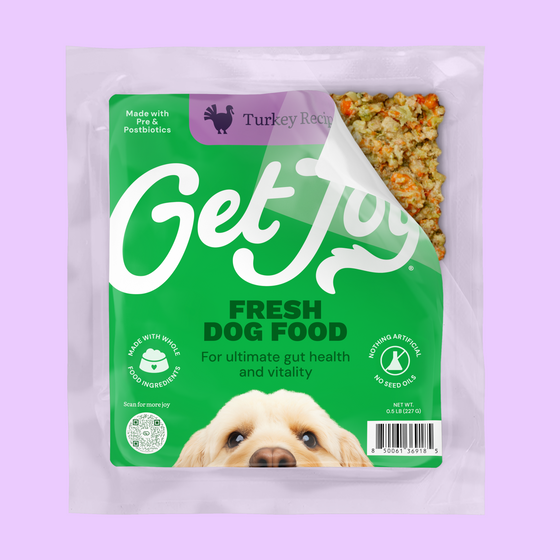
 Gut health
 Sensitive stomach
 Calm
Calm Joints & mobility
 Skin & coat
 Healthy weight
 Picky eaters



How to Switch Dog Food Without Causing Tummy Troubles
by The Get Joy Food Team ・ 19 min readLast updated: May 2026
Key Takeaways
- Switching dog food too fast disrupts the gut microbiome — the community of bacteria that drives digestion and whole-body health.
- A 7–10 day gradual transition (25% to 50% to 75% to 100% new food) gives your dog's gut time to adapt.
- Loose stool and mild gas are common early on — but sustained vomiting, blood in stool, or complete appetite loss are signals to slow down and call your vet.
- Puppies, senior dogs, and dogs with sensitive stomachs may need a longer 14-day transition window.
- Get Joy's Freeze Dried Raw Meals include Belly Biotics™ — a built-in blend of prebiotics, probiotics, and postbiotics — which helps the microbiome adapt faster and more comfortably during a food change.
Most Affected Breeds: All breeds need a careful food transition. Puppies and dogs with sensitive stomachs — including German Shepherds, Golden Retrievers, and Bulldogs — need extra care and may benefit from the 14-day transition schedule.
You've decided to switch your dog's food. Maybe it's time to move from puppy to adult nutrition. Maybe you're finally making the leap from kibble to something fresher and more functional. Maybe your vet suggested a change, or your dog's stomach has been telling you something needs to shift. Whatever brought you here — this decision matters, and so does how you make it.
Here's the honest truth: switching dog food without a plan can turn a good intention into a rough week. Loose stool, gas, vomiting, a dog who won't touch their bowl. It's not fun for them, and it's not fun for you. But it doesn't have to go that way. With the right approach, a food transition can be smooth, uneventful, and actually a genuinely positive turning point in your dog's health.
This guide covers everything you need to know — the science of why transitions are hard, a simple day-by-day plan, what to watch for, and why starting with food that supports gut health from the very first bowl makes the whole thing easier.
Why Food Transitions Are Hard on Your Dog's Gut
Your dog's digestive system isn't just a tube that breaks food down. It's home to trillions of microorganisms — bacteria, fungi, and other microbes — collectively called the gut microbiome. This community is finely tuned to the food your dog has been eating. It produces the enzymes that break down specific ingredients, regulates immune response, manages inflammation, and influences everything from coat quality to mood.
When you change your dog's food suddenly, you're essentially swapping the fuel source for that entire ecosystem overnight. The bacteria that thrived on the old food don't immediately know how to handle the new ingredients. The new food may require different digestive enzymes that the gut hasn't been producing in adequate quantities. The result: the microbiome goes into a temporary state of disruption — and that disruption shows up as gas, loose stool, or an upset stomach.
This isn't a sign that the new food is bad. It's a sign that your dog's gut needs time to catch up. The good news is that the microbiome is adaptable. Given the right transition timeline — and ideally, some built-in gut support — it will recalibrate and come out stronger on the other side.
That's why how you switch matters just as much as what you switch to.
When to Switch Your Dog's Food
Not every food change is optional — and not every dog needs to stay on the same food forever. Here are the most common reasons to make a switch, and what to keep in mind for each.
Puppy to Adult Food
Puppies need higher levels of protein, fat, calcium, and phosphorus to support rapid growth and bone development. Adult dogs don't — in fact, feeding a large breed adult dog puppy-formula food long-term can put unnecessary stress on their joints and organs. The general guideline is to transition to adult food when your dog reaches about 80–90% of their expected adult size. For small breeds, that's often around 9–12 months. For large and giant breeds, it can be 18–24 months. If your dog is showing signs of slowing down, maturing out of their puppy energy, or your vet has flagged the timing — it's probably time.
Kibble to Fresh or Freeze Dried Raw
This is one of the most impactful switches a dog parent can make. Highly processed kibble often lacks the moisture, bioavailable nutrients, and microbiome support that real food provides. Moving to a fresh or freeze dried raw diet can improve digestion, coat, energy, and stool quality — but the gut needs time to adjust, especially if it's been running on processed food for years. Go slow. The payoff is real.
Health-Driven Transitions
Sometimes a change is driven by what you're seeing in your dog — persistent loose stool, chronic gas, dull coat, low energy, itchy skin, or recurring ear infections. These are often signs that the current diet isn't serving your dog's gut, and that means it's not serving the rest of their body either. A thoughtful food change, guided by gut health principles, can address root causes rather than just symptoms.
Sensitivity or Allergy Management
If your dog has a confirmed or suspected food sensitivity, you may be switching to an elimination diet or a novel protein source. These transitions are worth being especially careful about — a slow, controlled switch makes it easier to accurately assess whether the new food is working.
The Step-by-Step Transition Guide (7–10 Days)
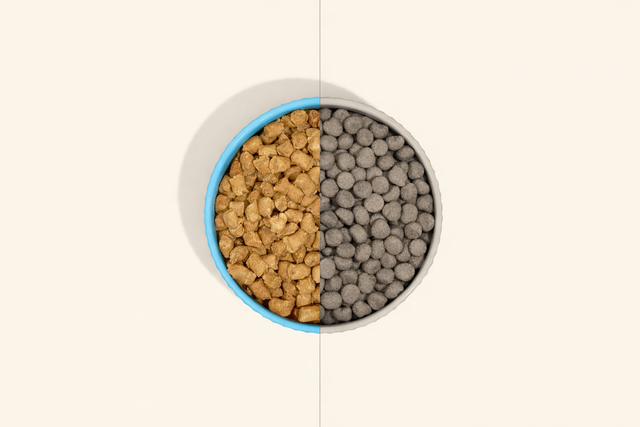
The standard approach is a gradual ratio shift over 7–10 days. You're not just mixing food for the sake of mixing — you're giving the gut microbiome time to produce new enzymes, shift bacterial populations, and adapt its chemistry to the new ingredients. Think of it as onboarding, not an overnight swap.
Here's how it works:
| Days | Old Food | New Food | What's Happening |
|---|---|---|---|
| Days 1–2 | 75% | 25% | Introduction. The gut gets its first exposure to new ingredients in a familiar context. |
| Days 3–4 | 50% | 50% | Halfway point. Watch this phase closely — this is when mild digestive responses are most likely. |
| Days 5–7 | 25% | 75% | The gut is now primarily running on new food. Most dogs start to settle in here. |
| Days 8–10 | 0% | 100% | Full transition. The microbiome has had time to adapt and the new routine is established. |
A Note on Sensitive Stomachs and Puppies
If your dog has a history of digestive sensitivity, is a puppy, or is a senior dog with a more delicate gut, consider extending this to a 14-day transition. Just stretch each phase by an extra day or two. There's no prize for speed here — a slower transition means less disruption and a better outcome.
Practical Tips for the Transition Period
- Mix thoroughly. Don't just layer old food on top of new — blend them so every mouthful has both.
- Keep mealtimes consistent. Feeding at the same time each day supports digestive rhythm.
- Stay hydrated. Make sure your dog always has access to fresh water, especially if you're moving to a drier food format.
- Hold the extra treats. During the transition window, extra chews and treats add digestive variables. Keep it simple.
- Watch the stool. It's the clearest window into what's happening in the gut. Soft but formed is fine. Watery or bloody is a signal to pause and call your vet.
Make the Switch Easier on the Gut
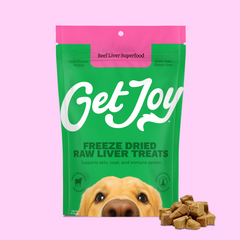
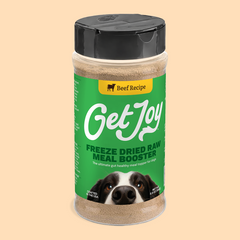
Get Joy's Freeze Dried Raw Meals include Belly Biotics™ — prebiotics, probiotics, and postbiotics built into every bowl — helping the gut microbiome adapt faster during transitions. Also available as fresh Joy Meals for a different format option.
Shop Freeze Dried Raw Explore Fresh MealsSigns the Transition Is Going Well vs. Signs to Slow Down
Knowing what to expect takes a lot of the anxiety out of the process. Here's a straightforward guide to what's normal, what to watch, and what to act on.
Signs It's Going Well
- Stool is slightly softer than usual but still formed
- Dog is eating with interest or enthusiasm
- Energy levels are normal
- Mild gas in the first few days, then settling
- No vomiting or retching
- Stool firms up as transition progresses
Signs to Slow Down or Pause
- Watery, unformed diarrhea lasting more than 2 days
- Vomiting more than once
- Blood in stool or vomit
- Complete refusal to eat across multiple meals
- Lethargy or significant behavior change
- Visible stomach distension or signs of pain
If you see any of the red-flag signs above, step back to the previous ratio and give your dog 2–3 more days at that level before moving forward again. If symptoms are severe or don't resolve within 24 hours, contact your veterinarian. Trust your instincts — you know your dog.
What Your Dog's Stool Is Telling You
During any food transition, your dog's stool is your most reliable real-time indicator of gut health. Formed, moist, and easy to pass is the goal. A slight softening during transition is completely normal — the gut is recalibrating. What you don't want is persistent wateriness, mucus, or any sign of blood. If you're ever unsure, your vet can help you interpret what you're seeing.
Why Get Joy Is Easier on the Gut
Not all foods create the same transition experience. Highly processed diets — particularly those heavy in fillers, artificial preservatives, and rendered protein meals — can leave the gut microbiome in a less resilient state. When you're switching from that kind of diet, the transition can be bumpier because the microbiome has less diversity and flexibility to begin with.
Get Joy's Freeze Dried Raw Meals are built differently, starting with what's inside every bag: Belly Biotics™.
What Is Belly Biotics™?
Belly Biotics™ is Get Joy's proprietary blend of prebiotics, probiotics, and postbiotics. It's not a supplement you add on top of the food. It's not a sprinkle. It is a structural part of every Get Joy meal — formulated directly into the product so that every bowl your dog eats is actively supporting their gut microbiome.
- Prebiotics feed the beneficial bacteria already living in your dog's gut, helping them flourish during a period of change.
- Probiotics introduce additional beneficial bacterial strains that improve digestion, strengthen the gut barrier, and support immune function.
- Postbiotics are the bioactive compounds those bacteria produce — short-chain fatty acids, enzymes, and other metabolites that directly support gut lining integrity and reduce inflammation.
Together, Belly Biotics™ gives your dog's microbiome the support it needs to adapt faster and more comfortably during a transition. Instead of the microbiome being thrown into disruption without a safety net, it has tools to rebuild and recalibrate with each meal.
Real Ingredients, Bioavailable Nutrition
Get Joy Freeze Dried Raw Meals are made with real whole food ingredients — the kind the body recognizes, digests efficiently, and actually uses. No artificial preservatives. No mystery fillers. The freeze-drying process locks in nutrients without the heat damage that degrades proteins and enzymes in conventional processing. What that means in practice: the gut doesn't have to work as hard to extract nutrition, and the microbiome gets to work with ingredients it was designed to handle.
Transitioning to Get Joy isn't just switching food — it's upgrading the foundation your dog's health is built on. And because gut health is whole-body health, the benefits show up everywhere: digestion, coat, energy, immunity, even behavior. That's what functional nutrition looks like in practice.
Learn more about what makes gut health central to everything at Gut Health 101.
Frequently Asked Questions
How long does a dog food transition take?
For most dogs, 7–10 days is the right window. You'll move through four ratio phases: 25% new food, then 50%, then 75%, then 100%. Dogs with sensitive stomachs, puppies, or seniors may need 14 days. There's no downside to going slower — a more gradual transition means less disruption and a smoother outcome.
Is it normal for my dog to have loose stool when switching food?
Yes — mild digestive changes are completely normal during a food transition, especially in the first few days. The gut microbiome is adjusting to new ingredients, and some looseness or gas is expected. What's not normal is persistent watery diarrhea lasting more than 2 days, vomiting, blood in the stool, or a dog who won't eat at all. If those signs appear, slow down the transition and contact your vet if they continue.
Can I switch my dog's food cold turkey?
It's not recommended. Switching food abruptly doesn't give the gut microbiome time to adapt, which is why abrupt transitions often result in digestive distress. The gradual method takes less than two weeks and dramatically reduces the risk of an upset stomach. The effort is minimal. The difference it makes is real.
Do I need to add probiotics when switching my dog's food?
Extra gut support during a transition is never a bad idea — and if you're switching to Get Joy, it's already taken care of. Every Get Joy Freeze Dried Raw Meal includes Belly Biotics™ — a built-in blend of prebiotics, probiotics, and postbiotics that actively supports the microbiome with every bowl. You don't need to add anything. It's baked in.
Related Reading
Ready to Make the Switch?
Get Joy's Freeze Dried Raw Meals are built for the transition and beyond. Real ingredients. Belly Biotics™ built in. Gut health from the very first bowl.
Shop Freeze Dried Raw MealsBrowse More Topics
Shop by Concern


Featured Posts
Keeping Your Dog Healthy in Winter: Cold Weather, Immunity, and Gut Health
The Best Dog-Safe Christmas Treats (Store-Bought and Homemade)