Bestseller
 Gut health
 Sensitive stomach
 Calm
 Joints & mobility
 Skin & coat
 Healthy weight
 Picky eaters




How to Mix Freeze-Dried Dog Food with Kibble (and Why It Works)
by The Get Joy Food Team ・ 8 min readPublished October 2026 · Last reviewed October 2026
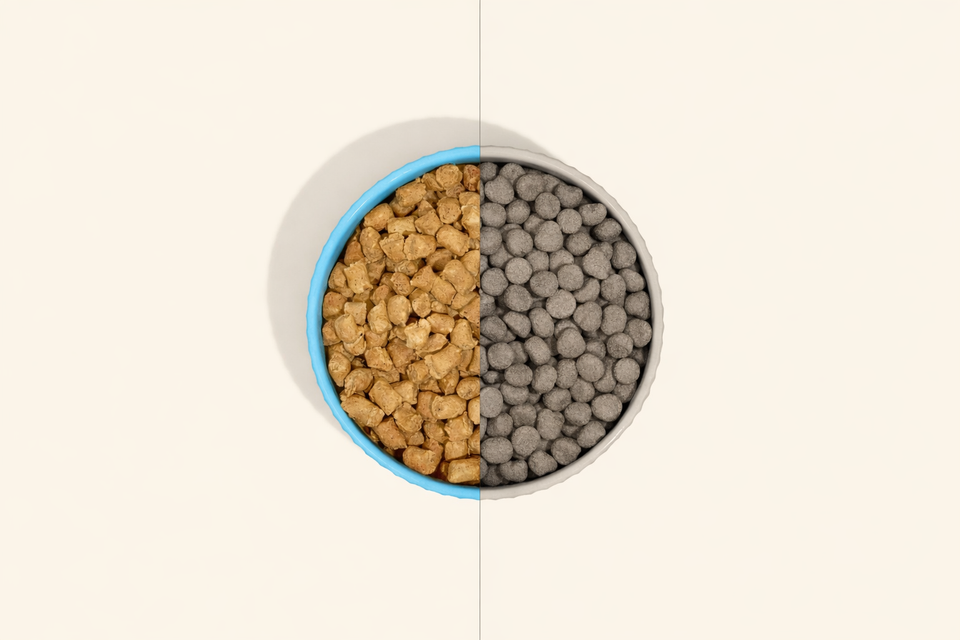
Mixing freeze-dried dog food with kibble is one of the most practical ways to upgrade your dog's nutrition without a complete overhaul. Even a 25% freeze-dried topper significantly improves protein quality, moisture content, and palatability. It's a legitimate middle ground between full raw feeding and processed-only diets — and for many families, it's the most sustainable long-term approach.
Not ready to give up kibble? You don’t have to. Mixing in freeze-dried raw is how many dog parents start, especially with picky or older dogs.
Key Takeaways
- A 25–50% freeze-dried topper meaningfully improves your dog's nutrition without the cost of 100% freeze-dried feeding
- Start with 10–15% freeze-dried and increase over 2–3 weeks to avoid digestive upset
- Freeze-dried food rehydrated before mixing digests better alongside kibble
- Adding gut-supporting ingredients (like Belly Biotics™ built into Get Joy meals) helps the microbiome adapt to dietary changes
- The "mixing causes digestive problems" claim is largely a myth when transition is done gradually
Why Mix Freeze-Dried with Kibble?
Full freeze-dried feeding delivers the best nutrition, but it costs more. Full kibble is affordable but lower in bioavailable protein, moisture, and whole-food nutrients. Mixing gives you a meaningful nutritional upgrade at a fraction of the full cost — the nutritional math works in your favor even at modest ratios.
- Better protein quality — freeze-dried whole proteins are more bioavailable than rendered kibble proteins
- Increased moisture — most dogs are chronically under-hydrated on kibble-only diets; adding moisture-retaining freeze-dried food helps
- Higher palatability — freeze-dried food dramatically improves how exciting meals are for picky dogs
- Gut microbiome diversity — varied food sources support a more diverse, resilient gut microbiome
Recommended Mixing Ratios
| Freeze-Dried % | Kibble % | Best For | Cost Impact |
|---|---|---|---|
| 10–15% | 85–90% | First-time transition, budget-conscious | Minimal |
| 25% | 75% | Most families — good nutrition/cost balance | Moderate |
| 50% | 50% | Maximum benefit with some kibble convenience | Significant |
| 75–100% | 25–0% | Full whole-food diet goal | Premium |
Most nutritionists agree that 25% freeze-dried delivers the largest benefit per dollar spent — the gut microbiome begins diversifying, protein bioavailability improves noticeably, and picky dogs show measurably better interest in meals.
How to Mix Properly
Step 1: Rehydrate the Freeze-Dried Portion First
Add warm water to your freeze-dried portion and let it sit for 2–3 minutes before mixing with kibble. This is especially important for digestion — rehydrated food moves through the stomach more similarly to how whole food digests, reducing potential for bloat in large breeds.
Step 2: Use the Right Ratio for Your Dog's Size
Smaller dogs have faster metabolisms and often benefit from higher freeze-dried ratios. Large breeds should start conservatively (10–15%) given their larger gut volume and susceptibility to GI upset.
Step 3: Transition Over 2–3 Weeks
Week 1: 10–15% freeze-dried. Week 2: 20–25%. Week 3: target ratio. Gradual transitions allow the gut microbiome to adapt — rapid switches cause the loose stools that give mixed feeding an undeserved bad reputation.
The "Mixing Causes Problems" Myth, Debunked
You may have read that mixing raw/freeze-dried food with kibble causes digestive problems because they "digest at different rates." This is largely unsupported by veterinary research. Dogs have highly acidic stomachs designed to handle variety. The real cause of digestive upset when mixing is transitioning too fast — not the mixing itself.
Studies on canine gastric pH show dogs process different food types concurrently without issue. The key variables are transition speed and individual dog sensitivity — not the mechanical act of mixing.
Supporting Gut Health During the Mix
Any dietary change shifts the gut microbiome. A foundation of prebiotics, probiotics, and postbiotics helps beneficial bacteria adapt and thrive during transitions. Get Joy's Belly Biotics™ is built directly into the food — not added as a separate supplement — so every mixed meal includes gut support automatically. This is different from sprinkling a probiotic powder on top, which delivers inconsistent dosing and often degrades before reaching the gut.
Try Get Joy Freeze-Dried Raw Meals — the ideal freeze-dried topper, with Belly Biotics™ (prebiotics, probiotics, postbiotics) built in. Shop Now →
From Get Joy dog parents
“Their poops have been solid and it’s great as a mix in.”
“My picky eater is finally eating her food!”
Customer reviews, shared as written
Ready when you are
Many dog parents start Freeze Dried Raw Meals as a topper over their current food.
Freeze Dried Raw Meals have Belly Biotics™ built in, store in the pantry and work as a full meal or a topper. 50% off your first Auto-Ship order. Skip, pause or cancel anytime.
Worried they won’t eat it? Mix a little into their current food and shift over 7 to 10 days. And we guarantee they’ll love it or your first order is free — that’s the Clean-Bowl Promise.
Frequently Asked Questions
Can I mix freeze-dried dog food with any brand of kibble?
Yes. The freeze-dried food doesn't need to be the same brand as your kibble. Focus on choosing a high-quality freeze-dried formula with whole ingredients and no fillers, then mix it with whatever kibble you currently use.
Will my dog get all the nutrients they need from a mixed diet?
A complete and balanced freeze-dried formula combined with a complete and balanced kibble provides more than adequate nutrition. Check that both products carry AAFCO or FEDIAF nutritional adequacy statements. You don't need to worry about nutrient gaps when using complete formulas.
How much freeze-dried food should I use as a topper?
Start at 10–15% of total meal volume for the first week, then increase to your target ratio (25–50% is the most popular range). Measure by weight rather than volume for accuracy — freeze-dried food is much lighter than kibble by volume.
Browse More Topics
Shop by Concern


Featured Posts
How to Transition Your Dog to Freeze-Dried Food
Freeze-Dried Dog Food for Weight Management
Freeze-Dried Dog Food with Probiotics: The Gut Health Guide