Bestseller
 Gut health
 Sensitive stomach
 Calm
Calm Joints & mobility
 Skin & coat
 Healthy weight
 Picky eaters



What NASC Certification Actually Means for Your Dog's Supplements
by The Get Joy Team ・ 20 min readLast Updated: July 1, 2026
NASC certification — issued by the National Animal Supplement Council — requires passing a comprehensive third-party audit, maintaining strict ingredient traceability, using accurate labeling, and actively reporting adverse events. It's the closest thing to independent quality assurance that pet supplements have, because unlike pharmaceuticals, the FDA doesn't pre-approve supplements before they reach shelves. The NASC seal tells you that someone outside the company verified the quality claims. Without it, you're taking the brand's word for everything.
🐾 Key Takeaways
- NASC is a non-profit that sets and enforces quality, safety, and labeling standards for animal supplements through independent audits.
- Certification requires passing a rigorous third-party audit and ongoing compliance — it's not a one-time logo purchase.
- Random follow-up audits mean NASC certification must be actively maintained, not just earned once.
- NASC requires certified companies to track and report adverse events — a level of accountability most brands avoid entirely.
- All three Get Joy supplements (Digestion Chews, Calming Chews, Mobility Chews) carry the NASC Quality Seal.
Table of Contents
Why Dog Supplements Don't Have Mandatory FDA Oversight
Here's something most dog parents don't know: the FDA does not pre-approve pet supplements before they go to market. Unlike prescription medications — which require years of clinical trials, safety data, and FDA review before a single pill can be sold — supplements for animals can be manufactured and sold with minimal federal oversight.
The FDA can take action against a supplement after the fact if it receives reports of harm, contains an unapproved drug, or makes illegal health claims. But there's no pre-market gate. No mandatory independent testing. No required audit trail. A company can formulate a supplement, slap a label on it, and start selling it on Amazon today with no external verification that what's on the label is actually in the bottle.
This isn't a fringe issue. The supplement industry for both humans and animals has a well-documented history of products that don't contain what they claim, contain contaminants, or make claims that can't be substantiated. For pet supplements specifically, the market has exploded in recent years — and the overwhelming majority of that growth has come from brands with no independent accountability.
NASC — the National Animal Supplement Council — was created specifically to fill this accountability vacuum. It's a non-profit trade organization that developed a rigorous certification program with real requirements, real audits, and real consequences for non-compliance. It doesn't replace FDA oversight. It's a voluntary standard that meaningful brands adopt because they believe in what they're making.
What NASC Certification Actually Requires — The 4 Pillars
The NASC Quality Seal isn't earned by filling out a form and paying a fee. Certification rests on four distinct pillars, each with specific requirements:
Pillar 1: Independent Oversight
NASC requires member companies to submit to rigorous third-party audits of their manufacturing processes and quality control systems. Auditors examine the facility, the production records, the ingredient sourcing documentation, and the testing protocols. This isn't a self-reported checklist — it's an independent review of whether the company's actual practices match their claims.
Manufacturing standards evaluated include Good Manufacturing Practices (GMPs), sanitation protocols, batch traceability, and equipment calibration. Companies that fail the audit don't receive the seal. Period.
Pillar 2: Ingredient Integrity
Every active ingredient in a NASC-certified product must be traceable, verified, and safety-backed. This means the company must be able to demonstrate where each ingredient came from, that it meets purity specifications, and that the dosage used has a documented safety basis. You can't put a novel or unvalidated compound into a NASC-certified product and call it a day.
Ingredient integrity also means that what's on the label is what's in the product — at the stated concentrations. This sounds like it should be table stakes for any supplement company, but the industry reality is that label accuracy is far from universal among unregulated brands.
Pillar 3: Labeling Accuracy
NASC sets specific requirements for how products must be labeled — including correct dosage guidance, claim language that doesn't cross into drug territory, and clear disclosure of all active and inactive ingredients. Claims must be accurate and substantiated. No vague promises, no misleading comparisons, no language designed to imply pharmaceutical-level efficacy without the evidence to back it up.
Labeling accuracy also protects consumers from dosing errors — a critical concern in pet supplements where body weight, species sensitivity, and ingredient interactions all matter.
Pillar 4: Adverse Event Reporting
This is the pillar most brands would prefer to avoid. NASC requires certified companies to maintain an adverse event reporting system — tracking and logging any negative reactions reported by customers — and to submit that data to NASC. If your dog has a reaction to a NASC-certified product and you report it, that information doesn't just disappear. It's recorded and reviewed.
This creates accountability that most supplement brands will never face. It also creates a feedback loop that allows NASC to identify patterns and take action if a product generates unusual adverse event rates.
What the Audit Process Looks Like (And Why Random Follow-Ups Matter)
The initial NASC audit is comprehensive. Auditors examine not just the finished product but the entire production chain: ingredient sourcing documentation, Certificate of Analysis records for incoming materials, manufacturing SOPs (Standard Operating Procedures), batch records, finished product testing data, and quality control systems.
Companies must demonstrate that they have systems in place to catch problems — not just report on them after the fact. This includes documented procedures for what happens when a batch fails a quality check, how recall protocols work, and how complaints are tracked.
What makes NASC certification meaningfully different from a one-time certification is the random follow-up audit. After earning the initial seal, certified companies are subject to unannounced re-audits. There's no "coast for five years after you pass" option. Standards must be actively maintained, and the threat of a surprise audit keeps companies honest in ways that scheduled-only audits cannot.
Supplements with something to show for themselves
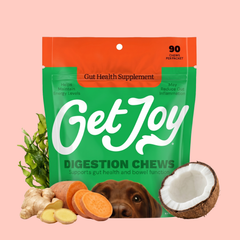
Get Joy's Digestion Chews, Calming Chews, and Mobility Chews all carry the NASC Quality Seal. Independent oversight, verified ingredients, accurate labels, adverse event reporting. The seal isn't decoration — it's accountability.
What NASC Certification Does NOT Guarantee
Honest brands don't oversell their credentials. Here's what the NASC seal does not mean:
| What the NASC seal verifies | What it does NOT guarantee |
|---|---|
| Manufacturing quality passed an independent third-party audit | That the product will produce a specific result in your individual dog |
| Ingredients are traceable and verified at standard dosages | That it's appropriate for every dog, regardless of condition or medication |
| Labels are accurate, with correct dosage guidance | Unlimited safety if you exceed the recommended dose |
| Adverse events are tracked and reported | A substitute for veterinary diagnosis or medical care |
It does not mean the product will work for your dog. NASC certifies process quality and label accuracy — not efficacy. A NASC-certified supplement that contains the right ingredients at the right dosages still may not produce the outcome you're looking for in a specific dog with a specific condition. Individual variation is real.
It does not mean the product is appropriate for every dog. NASC-certified ingredients are safety-verified at standard dosages in generally healthy animals. Dogs with underlying medical conditions, dogs on medication, or dogs with specific sensitivities may still have reactions to certified supplements. Always consult your vet if your dog has a known health condition or takes prescription medication.
It does not mean unlimited safety at any dose. Labeling accuracy and correct dosage guidance are part of NASC requirements — which means following the label matters. Giving more than the recommended dose of even a NASC-certified supplement doesn't accelerate results and can cause adverse effects.
It does not replace veterinary diagnosis. Supplements are not treatments for disease. If your dog is showing symptoms — significant joint pain, severe anxiety, digestive illness — a veterinary assessment should come before a supplement purchase. Supplements support health; they don't replace medical care when it's needed.
How to Spot Unregulated Supplements (Red Flags to Watch For)
Shopping for dog supplements — especially on Amazon or in pet store chains — means navigating a market with very little built-in accountability. Here's what to watch for:
No NASC seal (or a logo that looks similar but isn't). The official NASC Quality Seal is yellow and features the NASC name clearly. Brands sometimes use generic "quality assured" or "certified" badges that aren't affiliated with any real certification body. If you can't find the specific certifying organization and verify membership on their website, treat it as unverified.
Missing Certificates of Analysis (CoA). Reputable supplement brands make CoAs available — these are third-party lab reports confirming that a batch of product contains what the label says at the stated concentrations. If a brand won't provide CoAs on request or doesn't mention third-party testing at all, that's a flag.
Ingredient amounts listed as "proprietary blend." Proprietary blends hide individual ingredient dosages behind a total blend weight. This is sometimes legitimate, but it's also frequently used to obscure the fact that key ingredients are present in sub-therapeutic quantities — just enough to list them on the label, not enough to do anything.
Extraordinary claims without substantiation. "Clinically proven," "veterinarian-formulated," "guaranteed results" — these phrases are frequently used by unregulated brands with no evidence behind them. Look for specific, honest language about what the supplement supports and realistic timelines for results.
No contact information or customer service presence. Brands selling on Amazon with no identifiable company, no website, and no way to contact them for questions or adverse event reports are a significant warning sign. If they're not reachable, they're not accountable.
Why Get Joy Chose to Pursue NASC Certification
We didn't have to pursue NASC certification. The market doesn't require it. Most brands selling supplements online haven't gone through the audit process and never will. So why did we?
Because we actually believe the supplements work. When you're confident in your formulas — in the sourcing, the concentrations, the safety data — third-party verification isn't threatening. It's an opportunity to demonstrate what you'd claim anyway.
We also believe dog parents deserve better than having to guess. The supplement aisle is overwhelming precisely because accountability is optional. Every brand makes claims. Very few brands have those claims independently verified. The NASC seal is our way of saying: we're not asking you to take our word for it.
Digestion Chews, Calming Chews, and Mobility Chews are NASC-certified not as a marketing exercise, but because they were built to earn it. The ingredients are traceable. The dosages are meaningful. The labels are accurate. And if something goes wrong for a dog using our supplements, we want to know — and NASC's adverse event reporting system ensures that accountability is built in, not optional.
For more on what we put into each supplement and why, read our full breakdown of the gut health philosophy behind Digestion Chews and the gut-brain connection that informed Calming Chews.
Frequently Asked Questions
What is NASC certification for dog supplements?
NASC stands for National Animal Supplement Council. It's a non-profit organization that certifies animal supplement brands through a rigorous third-party audit process. Certified companies must demonstrate ingredient traceability, labeling accuracy, adverse event reporting, and compliance with manufacturing standards. The NASC Quality Seal is the most recognized independent quality indicator in the pet supplement industry.
Does NASC certification mean a supplement is safe?
NASC certification verifies ingredient integrity, manufacturing quality, and labeling accuracy — but it is not a guarantee of safety for every individual dog. Dogs with medical conditions, dogs on medications, or dogs with specific sensitivities may still have reactions to certified products. Always consult your vet if your dog has a known health issue before starting any supplement.
How is NASC different from FDA approval for pet supplements?
The FDA does not pre-approve pet supplements before they go to market. NASC fills this gap by providing voluntary, rigorous third-party certification for brands that choose to pursue it. FDA oversight is reactive (responding to problems after they're reported). NASC oversight is proactive (requiring companies to pass audits and maintain standards continuously).
How do I know if a dog supplement is NASC certified?
Look for the yellow NASC Quality Seal on the product packaging or the brand's website. You can also verify membership directly on the NASC website at nasc.cc, which maintains a public member directory. Don't rely on generic "quality assured" or "certified" badges that don't name a specific certifying body.
Are all Get Joy supplements NASC certified?
Yes. Get Joy's Digestion Chews, Calming Chews, and Mobility Chews supplements all carry the NASC Quality Seal. This means they've passed independent third-party auditing for ingredient integrity, manufacturing standards, labeling accuracy, and adverse event reporting systems. The seal appears on each product's packaging.
Supplements that earned their seal
Digestion Chews, Calming Chews, and Mobility Chews are NASC-certified — independently audited, traceably sourced, and accurately labeled. Because your dog deserves supplements you can actually trust.
Browse More Topics

Written by
The Get Joy Team
Shop by Concern


Featured Posts
Keeping Your Dog Healthy in Winter: Cold Weather, Immunity, and Gut Health
The Best Dog-Safe Christmas Treats (Store-Bought and Homemade)