Bestseller

 Gut health
 Sensitive stomach
 Calm
Calm Joints & mobility
 Skin & coat
 Healthy weight
 Picky eaters


Why Does My Dog Eat Poop on Walks
by The Get Joy Team ・ 12 min readLast Updated: June 30, 2026
🐾 Key Takeaways
- Eating poop on walks (clinically, coprophagia) is common — usually instinct or habit, not a character flaw.
- The main drivers: instinct, boredom/attention, stress or leash anxiety, and nutrient gaps — often a mix.
- Red flags (sudden onset, weight loss, vomiting/diarrhea, greasy stools, visible parasites) mean it's a vet conversation, not a training one.
- Prevention beats correction: pick it up fast, teach “leave it,” choose cleaner routes, and feed a nutrient-dense, gut-supported diet.
Watching your dog zero in on a pile of poop mid-walk is one of those things nobody warns you about. There are real reasons why dogs eat poop on walks, and understanding them is the fastest way to actually fix it. This article covers the most common causes, the warning signs worth taking seriously, and practical steps that make a real difference without turning every outing into a standoff.
Why dogs eat poop on walks — and why it’s more common than people admit
If you’ve ever watched your dog make a beeline for another animal’s droppings mid-walk, you’re not alone — and it doesn’t make you a bad dog companion. This behavior is common enough that it has its own clinical name: coprophagia. Most veterinarians have fielded this question more times than they can count.
So why does it happen on walks specifically? Outside, your dog has access to all kinds of droppings that aren’t theirs — goose, rabbit, cat, other dogs — and some find it genuinely appealing. That’s the hard part to hear, but it’s true.
The reasons behind it typically fall into three categories: instinctual behavior, behavioral triggers like boredom or stress, and underlying health issues that affect how your dog processes and absorbs nutrients. Often, it’s some mix of all three.
This article breaks down each cause clearly so you can figure out what’s actually driving it for your dog — because the fix depends entirely on the reason. You’ll also find practical steps to stop it and guidance on when a vet visit makes sense.
One thing worth knowing upfront: gut health plays a bigger role here than most people expect. If your dog is struggling to absorb nutrients properly, poop-eating can be the body’s misguided attempt to compensate. Here’s a solid overview of why dog gut health matters if you want to start connecting the dots now.
The main reasons it happens: instinct, boredom, stress, and missing nutrients
There’s rarely just one reason a dog eats poop on walks, which is why the behavior can feel so hard to pin down. The causes range from deep-rooted instinct to everyday stress, and they often overlap. Knowing which one is driving it makes it a lot easier to actually fix.
- Instinct. Dog coprophagia has ancient roots. Wild canids scavenged everything, feces included, as a survival strategy. That hardwiring doesn’t vanish just because your dog now has a food bowl and a memory foam bed.
- Boredom or attention-seeking. A dog that isn’t getting enough mental stimulation will find its own entertainment. Eating poop on walks can also become a learned behavior if it reliably gets a big reaction out of you — and even a negative reaction counts as attention.
- Stress or leash anxiety. Walks aren’t always the joyful adventure we imagine them to be. A dog that feels nervous or overstimulated on leash may mouth or eat things on the ground as a way to self-soothe. It’s a coping mechanism, not a character flaw.
- Nutritional gaps. When a diet is low-quality or incomplete, stool can retain undigested nutrients that smell oddly appealing to a dog. If you’ve ever wondered how your dog’s food is affecting his behavior, diet quality is worth a serious look — not just for this issue, but across the board.
That said, nutritional deficiencies are only part of the picture. Most dogs who eat poop on walks are driven by instinct or habit. Diet alone rarely tells the full story.
Each of these causes has a practical fix. The key is figuring out which one you’re actually dealing with.
When poop-eating is a red flag for a health issue
Sometimes the answer to why does my dog eat poop on walks has nothing to do with behavior. Most cases come down to instinct or habit, but poop-eating can also be a symptom of something internal worth taking seriously — not just redirecting with a firm “leave it.”
Watch for these warning signs:
- Sudden onset — your dog never did this before, and now it’s constant
- Ravenous appetite paired with poop-eating, even right after a full meal
- Unexplained weight loss despite eating normally
- Vomiting or diarrhea alongside the behavior
- Visible parasites in your dog’s stool or around the rear end
- Signs of malabsorption — stools that look greasy, pale, or unusually large
- Ongoing digestive distress like excessive gas, bloating, or irregular elimination
New or sudden coprophagia always warrants a vet conversation. Don’t guess when your dog’s health is on the line.
These signs can point to conditions like pancreatic insufficiency, intestinal parasites, or other digestive issues where the body simply isn’t absorbing nutrients the way it should. In those cases, no amount of training or leash work will solve anything — you’re managing the surface while the real problem goes untreated.
If the behavior is persistent, or it’s showing up alongside any of the above, skip the home remedies and get a professional opinion. Our guide on when you should see a vet can help you figure out how quickly to act.
How to stop poop-eating on walks without making the leash battle worse
Stopping this behavior isn’t about winning a battle of wills. It’s about building consistent habits that make poop-eating less likely before it ever starts. Most dog companions who crack this do it through prevention and repetition, not correction and frustration.
Here’s what actually works:
- Pick it up fast. Remove the opportunity entirely. Bring bags, clean up immediately, and don’t give your dog a chance to investigate.
- Manage the leash proactively. No yanking required. A gentle redirect before your dog reaches the target is enough — stay a step ahead and steer wide when you see something on the path.
- Teach a solid “leave it.” This cue is worth its weight. Practice at home with high-value treats, then proof it on walks. When your dog looks up at you instead of the pile on the sidewalk, that’s the win.
- Choose cleaner routes when possible. High-traffic dog areas mean more temptation. If your dog eats poop on walks consistently, switching to lower-traffic paths during training can reduce the pressure while you build the habit.
- Identify stress triggers. Anxiety can drive dogs toward coprophagia as a coping mechanism. Notice if the behavior spikes near loud streets, unfamiliar dogs, or crowded spots, and adjust accordingly.
- Look at what’s in the bowl. Dogs with poor nutrient absorption are sometimes drawn to stool to compensate for what they’re missing. A nutrient-dense diet and digestive support like Belly Biotics™ can reduce that drive. Knowing what healthy dog poop actually looks like is a useful baseline for tracking whether digestion is doing its job.
Combine better leash management with consistent training and any necessary dietary adjustments, and most dogs improve significantly. The behavior feels baffling in the moment, but why dogs eat poop on walks is rarely a mystery without a solution.
Better Absorption Starts in the Gut
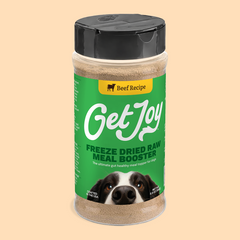
When dogs absorb more of what they eat, the urge to scavenge often fades. Get Joy Freeze Dried Raw delivers nutrient-dense whole food plus Belly Biotics™ — built-in pre, pro & postbiotics for real digestive support.
FAQ: what dog companions usually want to know next
Is poop-eating dangerous for my dog?
It can be. The biggest risks are parasites, bacteria, and viruses — and those risks go up significantly with wild animal or unknown dog feces. Your dog’s own poop is lower stakes, but it’s still not a habit worth tolerating.
Can it spread parasites?
Yes. Roundworms, hookworms, and giardia are all transmissible through feces. If your dog regularly eats poop on walks, a fecal test is a simple, smart move.
Do puppies eat poop more than adult dogs?
They do. Puppies explore the world mouth-first, and poop is fair game to them. Most outgrow it by six months. If it’s still happening well past that point, take a closer look at diet and environment.
Will it stop on its own?
Sometimes, but don’t count on it. If there’s a nutrient gap or gut imbalance driving the behavior, it won’t resolve until you address the actual cause. Not sure whether your dog’s digestion is working the way it should? This guide on gut health signs is worth a read.
When should you call the vet?
If poop-eating is sudden, frequent, or showing up alongside loose stool, weight changes, or low energy, get a professional opinion. For most dogs, better leash management, prompt cleanup, and a nutrition upgrade are enough to turn things around. But when something feels off, trust that instinct.
Browse More Topics

Written by
The Get Joy Team
Shop by Concern


Featured Posts
Keeping Your Dog Healthy in Winter: Cold Weather, Immunity, and Gut Health
The Best Dog-Safe Christmas Treats (Store-Bought and Homemade)