Bestseller

 Gut health
 Sensitive stomach
 Calm
Calm Joints & mobility
 Skin & coat
 Healthy weight
 Picky eaters



Best Calming Chews for Dogs: What Works for Anxiety (and What to Avoid)
by Dr. Jamie L. Peyton ・ 19 min readUpdated: August 2026 · By Dr. Jamie L. Peyton, DVM (Co-Chief Veterinarian) · Meet our experts
The short answer
The best calming chews for dogs use evidence-backed, named actives such as L-theanine, L-tryptophan, chamomile, valerian root, and passionflower, carry the NASC Quality Seal, and are transparent about dose. They are designed to take the edge off everyday and situational stress. They are not a fix for severe anxiety, and the most effective ones tend to skip CBD and heavy melatonin reliance in favor of ingredients with clearer safety profiles for dogs.
Key takeaways
- Look for named, dosed calming actives (L-theanine, L-tryptophan, chamomile, valerian, passionflower) and the NASC Quality Seal, not vague "calming blends."
- Calming chews may help mild, situational, and everyday stress. They are a support tool, not a cure, and severe anxiety needs a veterinarian or behaviorist.
- CBD is popular but its quality and dose vary widely between products, and it can interact with other medications. We cover it honestly below so you can decide.
- Melatonin is primarily a sleep hormone, not a dedicated anxiety fix, and is best used under vet guidance.
- Calm often starts in the gut. The gut and brain talk constantly, and much of the body's serotonin is made in the gut.
- Get Joy Calming Chews are NASC-certified, use named actives, and contain no CBD, pairing naturally with our Belly Biotics™ meals for a gut-first routine.
What's in this guide
- What to look for in a calming chew
- Signs of dog anxiety and common triggers
- Ingredients that actually work
- What to be cautious about: CBD and melatonin
- The gut-brain angle: calm starts in the gut
- Situational vs daily use, and dosing by weight
- Get Joy Calming Chews
- When to involve a vet or behaviorist
- Frequently asked questions
What to look for in a calming chew
Walk down any pet aisle and the calming category looks nearly identical, soft chews, friendly packaging, and a lot of the word "calm." The differences that matter are on the back of the bag. A genuinely useful calming chew does a few things well.
Named, dosed actives. The label should list specific ingredients and, ideally, the amount of each per chew. "Proprietary calming blend" tells you nothing about whether your dog is getting a meaningful amount of anything. Look for the actives we detail below.
The NASC Quality Seal. The National Animal Supplement Council audits manufacturing facilities and requires ongoing quality controls. The seal is one of the clearest at-a-glance signals that a supplement is made responsibly.
Honest positioning. A trustworthy product tells you what it is designed to support and what it is not. Calming chews are made to help with mild and situational stress. They are not marketed to "cure" anxiety, and they are not a replacement for training or veterinary care.
A formula that fits real life. The best chew is the one your dog will happily eat, at a dose you can give consistently, whether that is daily support or 30 to 60 minutes before a known trigger. Better for them shouldn't be a bummer for you.
Calm that starts in the gut
Vet-designed, NASC-certified chews with no CBD or melatonin.
Signs of dog anxiety and common triggers
Before you reach for a chew, it helps to recognize what anxiety looks like. Dogs rarely "act out" for no reason. Stress shows up in the body first.
Common signs include pacing and restlessness, panting when it is not hot, lip-licking and yawning, ears held back, a tucked tail, wide eyes, trembling, drooling, hiding, clinginess, and destructive behavior or house-soiling when left alone. Many dogs show a cluster of these rather than a single tell.
The most common triggers fall into a few buckets:
- Noise and storms. Thunder, fireworks, and even the drop in barometric pressure before a storm can set off a fear response. Many dogs sense a storm coming before you do.
- Separation. Being left alone is one of the most common sources of canine stress, and dogs prone to separation distress are more likely to develop storm and noise phobias too.
- Travel. Car rides, carriers, and new environments can trigger motion-related and situational anxiety.
- Vet and grooming visits. Handling, unfamiliar smells, and past experiences can make these events stressful.
Matching the tool to the trigger matters. A predictable, scheduled event like a car trip or a vet visit is a good fit for a situational chew given ahead of time. Ongoing, everyday nervousness may respond better to daily support.
Ingredients that actually work
Here are the calming actives with the most support in the body of veterinary and nutrition knowledge, and what each is designed to do. These ingredients tend to work through complementary pathways, which is why quality formulas combine several.
| Ingredient | What it is | How it is thought to support calm |
|---|---|---|
| L-theanine | An amino acid found in green tea | Associated with a calmer, more focused state without heavy sedation. A common choice for situational stress. |
| L-tryptophan | An essential amino acid | A precursor the body uses to make serotonin, a neurotransmitter linked to a stable, balanced mood. |
| Chamomile | A flowering herb | Traditionally used as a gentle nervine to soothe the nervous system and support relaxation. |
| Valerian root | A herbal root | Thought to support the brain's GABA activity, the neurotransmitter that acts like a brake on over-arousal. |
| Passionflower | A climbing vine | Also associated with supporting GABA activity, often paired with valerian for situational calm. |
What to be cautious about: CBD and melatonin
Two ingredients dominate online searches for dog anxiety, CBD and melatonin. Both are worth understanding honestly, because both come with trade-offs that the marketing often skips.
CBD. Early research and a lot of anecdotal reports suggest CBD may help some dogs with mild or situational stress, and interest is growing fast. The honest caveats: there is no universally established safe dose for dogs, and the actual amount of CBD in a product can vary widely from brand to brand and even batch to batch. CBD can also affect how the liver processes other medications, so it can interact with drugs your dog may already be taking. If you are considering CBD, third-party lab testing (a certificate of analysis) and a conversation with your veterinarian are essential, especially for dogs on other medications.
Melatonin. Melatonin is primarily a sleep hormone that helps regulate the body's daily rhythm. It is sometimes used to support rest and as an add-on within a broader plan, but on its own it is not a dedicated fix for complex or noise-related anxiety. It is best used under veterinary guidance rather than as a first-line calming ingredient.
This is why Get Joy Calming Chews are formulated with named, better-understood actives and contain no CBD and no reliance on melatonin. We would rather build on ingredients with clearer safety profiles for dogs and be straightforward about what they do. For a deeper side-by-side, see our guide to L-theanine vs melatonin for dogs.

The gut-brain angle: calm starts in the gut
Here is the piece most calming guides miss. Your dog's gut and brain are in constant conversation through what scientists call the gut-brain axis, a two-way line of communication that runs largely along the vagus nerve. The bacteria living in the gut help produce and regulate neurotransmitters, including serotonin, the same messenger tied to a stable mood.
That is why calm is not only a "head" issue. A dog whose digestion is off, or whose microbiome is out of balance, has less of the foundation that steady mood is built on. Supporting the gut is a quietly powerful lever for behavior, which is a core part of the Get Joy belief that gut health is whole-body health. A calming chew can help in the moment, but a gut-first daily routine helps set the baseline. You can read the full explanation in our post on the dog gut-brain axis and behavior.
Situational vs daily use, and dosing by weight
Calming chews are used two main ways, and matching the approach to your dog's needs makes a real difference.
Situational use. For predictable stressors like storms, fireworks, car trips, or vet visits, give the chew ahead of time so it can take effect before the trigger. A common window is 30 to 60 minutes beforehand. Follow the product label, since onset varies by formula.
Daily use. For dogs with ongoing, everyday nervousness, consistent daily support can help maintain a steadier baseline over time. Ingredients like L-tryptophan are geared toward day-to-day mood stability rather than a single-event effect.
Dose is almost always based on your dog's weight. Always follow the specific product's label, but the general structure looks like this:
| Dog weight | Typical starting approach |
|---|---|
| Up to 25 lb | Smallest labeled serving |
| 26 to 50 lb | Small to medium labeled serving |
| 51 to 75 lb | Medium labeled serving |
| Over 75 lb | Largest labeled serving |
Get Joy Calming Chews
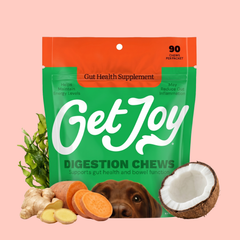
Get Joy Calming Chews are our gut-first take on situational and everyday calm. They are NASC-certified and built around named, better-understood actives such as L-theanine, L-tryptophan, chamomile, valerian root, and passionflower, with no CBD and no reliance on melatonin. In other words, calm you can read off the label.
Because we believe calm starts from within, the chews are designed to work alongside the rest of the routine, not in place of it. Meals come first. Our Freeze Dried Raw Meals are real whole-food meals with Belly Biotics™ built right in, our proprietary blend of prebiotics, probiotics, and postbiotics that supports the gut foundation steady mood is built on. Pairing a daily gut-healthy meal with Calming Chews when your dog needs extra support is the kind of simple, joyful routine we design for.
Browse the full lineup in our Calm & Behavior collection, or go straight to our calming chews for dogs.
When to involve a vet or behaviorist
Calming chews are a helpful support tool, but they have limits, and some situations call for a professional. Talk to your veterinarian or a certified behaviorist if you notice any of the following:
- Anxiety that is severe, worsening, or interfering with daily life, eating, or sleep.
- Panic-level responses to storms, fireworks, or being left alone, including self-injury or major destruction.
- Any aggression, or a sudden change in behavior, which can sometimes signal pain or an underlying medical issue.
- Your dog takes other medications, since some ingredients can interact.
- You have tried a quality calming routine and are not seeing enough improvement.
A vet or behaviorist can rule out medical causes, guide behavior modification and training, and, when appropriate, prescribe medication. Chews and a gut-first routine can be part of that plan, not a substitute for it.
Calm that starts in the gut
Vet-designed, NASC-certified chews with no CBD or melatonin. Better for them, without the tradeoffs.
Frequently asked questions
What are the best calming chews for dogs?
The best calming chews use named, dosed actives with real support behind them, such as L-theanine, L-tryptophan, chamomile, valerian root, and passionflower, carry the NASC Quality Seal, and are transparent about what is inside. Get Joy Calming Chews are formulated this way, are NASC-certified, and contain no CBD or melatonin reliance, so they pair naturally with a gut-first, meal-led routine.
Do calming chews for dogs actually work?
For mild, situational, and everyday stress, quality calming chews may help take the edge off, especially when given ahead of a known trigger and used consistently. They are a support tool, not a cure. Severe anxiety usually needs training, behavior modification, and guidance from a veterinarian or behaviorist.
Are calming chews better than CBD for dog anxiety?
It depends on what you value. CBD shows early promise for some dogs, but product quality and dose vary widely and it can interact with other medications, so it calls for third-party testing and a vet conversation. Calming chews built on named actives like L-theanine and L-tryptophan offer clearer, more consistent dosing and well-understood safety profiles. Get Joy Calming Chews are NASC-certified and contain no CBD, which many dog parents prefer.
Can I give calming chews every day?
Many calming chews are designed for daily use to support a steadier baseline, while others are meant for situational use before a stressor. Follow the product label for your dog's weight, start at the lower end of the range, and check with your veterinarian first if your dog takes other medications or has a health condition.
What can I give my dog for anxiety naturally?
Natural approaches include calming chews with evidence-backed actives, plenty of exercise and enrichment, a predictable routine, a safe quiet space, gradual desensitization to triggers, and supporting gut health, since the gut and brain are closely linked. For more ideas, see our guide to natural calming remedies for dogs at home. For severe anxiety, involve your veterinarian.
This article is for general educational purposes and is not a substitute for professional veterinary advice. Calming chews are designed to support mild and situational stress and are not intended to diagnose, treat, cure, or prevent any condition. Always talk to your veterinarian before starting a new supplement, especially if your dog has a health condition, is pregnant, or takes other medications, and seek professional help for severe or worsening anxiety.
Browse More Topics

Written by
Dr. Jamie L. Peyton
Shop by Concern


Featured Posts
Keeping Your Dog Healthy in Winter: Cold Weather, Immunity, and Gut Health
The Best Dog-Safe Christmas Treats (Store-Bought and Homemade)