Bestseller
 Gut health
 Sensitive stomach
 Calm
 Joints & mobility
 Skin & coat
 Healthy weight
 Picky eaters




The Best Dog-Safe Christmas Treats (Store-Bought and Homemade)
by The Get Joy Food Team ・ 12 min readKey Takeaways
- Most commercial holiday dog treats are high in sugar, starch, and artificial flavoring — festive packaging does not equal nutritional quality.
- The best treats for dogs are single-ingredient or short-ingredient: real meat, real vegetables, real food.
- Homemade dog treats are easy to make and give you full ingredient control.
- Even safe treats should be limited to 10% of your dog's daily caloric intake during the holidays.
- Ingredients to avoid in any treat: xylitol, chocolate, raisins, macadamia nuts, onion, garlic, and excessive sugar.
Published December 2026 · Last reviewed December 2026
Christmas is treat season — and your dog knows it. The good news is that spoiling your dog with holiday treats doesn't require compromising on their health. The best Christmas treats for dogs are the ones that deliver real enjoyment with real ingredients. Here's how to tell the difference, plus homemade recipes that take less than 30 minutes and ingredients you probably already have.
What to Look for in a Holiday Dog Treat
The holiday treat aisle is full of festively packaged products of wildly varying quality. Before the ingredient list, the packaging tells you almost nothing. Look for:
- Short ingredient lists — the fewer ingredients, the better. A treat with 3 ingredients is usually better than one with 15.
- Named protein sources first — "chicken," "beef," or "turkey" as the first ingredient. Not "chicken by-product meal" or "meat meal."
- No artificial preservatives or colorings — BHA, BHT, ethoxyquin, artificial dyes serve no purpose in a dog treat
- No xylitol, chocolate, raisins, or onion/garlic powder — these are toxic regardless of how "natural" the packaging looks
- Appropriate size for your dog — treat size affects caloric density and choking risk
Best Store-Bought Holiday Dog Treats
Freeze-Dried Single-Ingredient Treats
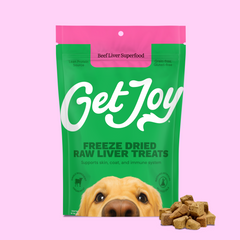
Freeze-dried raw treats — made from a single protein source like chicken breast, beef liver, or turkey — are the gold standard for ingredient quality. The freeze-drying process preserves nutritional content without the need for preservatives. They're lightweight, high-value, and dogs find them intensely rewarding. Get Joy's Freeze-Dried Raw Meals broken into small pieces make excellent high-value treats that also deliver Belly Biotics™ gut support with every bite.
Dehydrated Meat Chews
Single-ingredient dehydrated meat — chicken jerky, beef strips, fish skins — are long-lasting, protein-rich, and satisfying for dogs who need extended enrichment time. Look for products with a single protein source and no added salt, sugar, or preservatives. Avoid Chinese-manufactured chicken jerky, which has been linked to kidney illness in dogs.
Yak Milk Chews
Yak or Himalayan dog chews are made from hardened yak and cow milk with salt and lime juice. They're long-lasting, high in protein, low in fat, and digestible. They're a cleaner alternative to rawhide and appropriate for aggressive chewers. Microwaving the last small piece turns it into a puffed chew rather than a choking hazard.
Easy Homemade Christmas Dog Treat Recipes
Pumpkin & Oat Biscuits
One of the simplest and most gut-friendly treat recipes. Pumpkin is prebiotic; oats provide soluble fiber; peanut butter adds palatability (use xylitol-free only).
Ingredients: 1 cup plain rolled oats, ½ cup plain pumpkin puree, ¼ cup xylitol-free peanut butter, 1 egg
Instructions: Mix all ingredients into a dough. Roll to ¼ inch thickness, cut into shapes. Bake at 350°F for 20–25 minutes until firm. Cool completely before serving. Store refrigerated for up to one week.
Frozen Turkey & Blueberry Treats
A cold, functional treat that doubles as enrichment. Perfect for dogs that tend to gulp food — the frozen format slows consumption naturally.
Ingredients: 1 cup plain low-sodium chicken or turkey broth, ¼ cup blueberries, small pieces of plain cooked turkey
Instructions: Fill silicone molds or an ice cube tray with broth, drop in a few blueberries and turkey pieces, freeze solid. Serve one at a time as a treat or enrichment activity.
Sweet Potato Chews (Dehydrated)
Gut-healthy, high-fiber, and naturally sweet. Dogs love them; they're easy to make; and the only ingredient is sweet potato.
Instructions: Slice sweet potato into ⅜-inch rounds or strips. Bake at 250°F for 2.5–3 hours until dried but still slightly pliable. Store refrigerated for up to two weeks.
Holiday Treat Ingredients to Avoid
| Ingredient | Why It's Dangerous |
|---|---|
| Xylitol | Causes severe hypoglycemia and liver failure |
| Chocolate | Contains theobromine, toxic to dogs |
| Raisins or grapes | Cause acute kidney failure |
| Macadamia nuts | Cause neurological symptoms |
| Onion or garlic powder | Destroy red blood cells |
| Nutmeg | Causes tremors and seizures |
| High sugar content | Disrupts gut microbiome, feeds pathogenic bacteria |
| Artificial dyes and preservatives | No nutritional value; some associated with sensitivities |
Treats and Gut Health: Why Ingredient Quality Matters
Treats are a smaller volume of your dog's daily intake, but they're not nutritionally neutral. A dog receiving multiple high-sugar, high-starch treats per day has a meaningfully different gut microbiome profile than one receiving whole-food, protein-based treats. Sugar and refined starch feed pathogenic bacteria in the gut; whole protein and fiber feed beneficial ones.
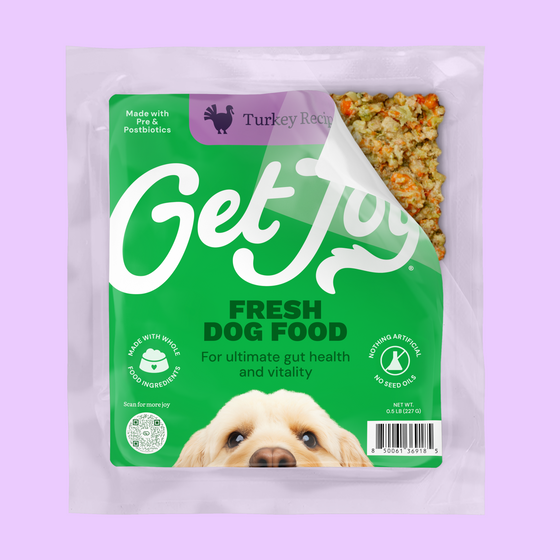
During the holiday season, when dietary disruption is already elevated, choosing treats with clean, whole-food ingredients is an easy way to maintain gut stability. Get Joy's approach — real food with Belly Biotics™ prebiotics, probiotics, and postbiotics built into every meal — creates a stable gut health baseline that makes occasional treat indulgence far less disruptive. Learn how Belly Biotics™ supports your dog from the inside out.
How Many Treats a Day?
The 10% rule still applies at Christmas: treats should make up no more than about 10% of your dog's daily calories. For a typical, moderately active adult dog, that works out to roughly:
| Dog weight | Approximate daily treat budget |
|---|---|
| 10 lb | About 35 calories |
| 30 lb | About 80 calories |
| 60 lb | About 130 calories |
Your dog's real needs depend on age, activity, and body condition, so treat these as starting points. Breaking treats into smaller pieces stretches the budget across the day.
Christmas Foods to Keep From Your Dog
- Candy canes: pure sugar and a shard hazard, and sugar-free versions may contain xylitol.
- Gingerbread and Christmas cookies: high in sugar and fat, and may contain nutmeg, raisins, or xylitol.
- Fruitcake and mince pies: raisins, currants, and often alcohol.
- Chocolate: see our chocolate strength guide.
- Cinnamon: a small amount in a recipe is not toxic, but large amounts of powder or cinnamon oil can cause problems.
Storing homemade treats: because they have no preservatives, keep baked treats in an airtight container in the fridge and use them within about a week, or freeze them for longer storage.
Frequently Asked Questions
What Christmas treats are safe for dogs?
Safe Christmas treats for dogs include single-ingredient freeze-dried meat treats, dehydrated sweet potato chews, plain cooked turkey pieces, yak milk chews, and homemade biscuits made from plain pumpkin, oats, and xylitol-free peanut butter. Avoid anything with chocolate, xylitol, raisins, macadamia nuts, onion, or garlic.
Can dogs eat Christmas cookies?
Standard Christmas cookies are not safe for dogs. They typically contain sugar, butter, nutmeg, and often raisins or chocolate. Some may be made with xylitol-based sweeteners, which are life-threatening. If you want to bake treats for your dog, use a dog-specific recipe with pet-safe ingredients like oats, plain pumpkin, and xylitol-free peanut butter.
How many treats can I give my dog at Christmas?
Treats — even healthy ones — should make up no more than 10% of your dog's daily caloric intake. This is roughly 40–80 calories of treats per day for a medium-sized dog. During the holidays, when extra treats are likely from multiple family members, it's worth tracking and communicating so the 10% limit isn't exceeded by the end of the day.
Are holiday dog treat gifts a good idea?
Yes, when the quality is right. Look for treats with short ingredient lists, named protein sources, and no artificial additives. Single-ingredient freeze-dried treats or high-quality functional food like Get Joy's Freeze-Dried Raw Meals are gifts that improve the dog's health with every serving — not just during the holidays.
Can dogs have cinnamon?
A small amount in a recipe is not toxic to dogs. Large amounts of cinnamon powder or cinnamon oil can irritate the mouth and stomach.
Can dogs eat gingerbread?
It is not recommended. Gingerbread is high in sugar and fat and may contain nutmeg or xylitol.
Can dogs eat candy canes?
No. They are pure sugar, can splinter into sharp pieces, and sugar-free versions may contain xylitol.
How long do homemade dog treats last?
Without preservatives, baked treats keep for about a week in an airtight container in the fridge, and longer in the freezer.
Sources
- ASPCA, Holiday safety tips: aspca.org
- Pet Poison Helpline, Nutmeg and cinnamon toxicity: petpoisonhelpline.com
- AVMA, FDA continues investigating jerky treats: avma.org
This article is for general education and is not a substitute for veterinary advice. If you think your dog has eaten something harmful, call your vet or a pet poison hotline right away.
Browse More Topics
Shop by Concern


Featured Posts
Keeping Your Dog Healthy in Winter: Cold Weather, Immunity, and Gut Health
The Best Dog-Safe Christmas Treats (Store-Bought and Homemade)