Bestseller
 Gut health
 Sensitive stomach
 Calm
 Joints & mobility
 Skin & coat
 Healthy weight
 Picky eaters



Keeping Your Dog's Gut Healthy Through the Holiday Season
by The Get Joy Food Team ・ 13 min readKey Takeaways
- The holiday season (Thanksgiving through New Year) is one of the most common periods for emergency vet visits from dietary-related causes.
- Rich, fatty, heavily seasoned holiday foods disrupt the dog gut microbiome even when they don't cause acute toxicity.
- The best protection is a stable, consistent diet before, during, and after the holiday season — not reactive supplementation.
- Belly Biotics™ supports the gut microbiome through dietary disruptions, making your dog more resilient to holiday chaos.
- Pancreatitis is the most serious non-toxic holiday risk — and turkey skin, gravy, and fat trimmings are the leading causes.
Published November 2026 · Last reviewed November 2026
Your dog's gut doesn't know it's the holidays. What it knows is that something is different — the schedule shifted, richer food than usual appeared, more treats than usual were offered, and the house is noisier and more chaotic. Those signals accumulate. And for many dogs, the result is a week of digestive disruption that can range from mild loose stools to a pancreatitis emergency requiring hospitalization. Here's how to protect your dog's gut through the season.
Why the Holidays Are Hard on Your Dog's Gut
The holiday period introduces several simultaneous stressors to a dog's digestive system:
- Dietary variety they're not adapted to. Dogs thrive on consistency. Sudden introduction of rich, fatty, seasoned foods — even in small quantities — disrupts the enzymatic and bacterial systems calibrated to their normal diet.
- Increased treat frequency. Well-meaning family members and guests offer more treats than usual. Even individually harmless treats add up to a significant caloric and dietary deviation over the course of a holiday gathering.
- Stress. Houseguests, travel, disrupted schedules, and loud gatherings all elevate cortisol. Through the gut-brain axis, cortisol dysregulates the gut microbiome directly.
- Garbage access. Holiday garbage — turkey carcasses, fat-soaked wrapping paper, bones, and discarded food — is one of the most dangerous and underappreciated holiday hazards.
What Holiday Food Does to the Gut Microbiome
The gut microbiome — the community of trillions of bacteria living in your dog's digestive system — is the operational center of your dog's digestion, immune function, and overall health. It takes time to calibrate to a diet. Sudden changes, even brief ones, shift the bacterial balance in ways that compound over the course of several days.
Holiday foods are particularly disruptive because they tend to be:
- High in fat (turkey skin, gravy, butter-heavy sides) — fat in excess promotes pathogenic bacterial growth
- High in sugar (pie, cranberry sauce, sweet potato casserole) — sugar feeds yeast and disrupts bacterial balance
- Heavily seasoned (garlic, onion, nutmeg, sage) — some seasonings are outright toxic; others are antimicrobial in ways that harm beneficial bacteria
- Low in the dietary fiber that feeds beneficial bacteria — holiday meals are typically low in the prebiotic fiber that keeps good bacteria thriving
The result for many dogs: loose stools, gas, vomiting, and lethargy that can persist for 3–5 days after the holiday, even if nothing acutely toxic was consumed.
Holiday Pancreatitis: The Serious Risk
Pancreatitis — inflammation of the pancreas — is one of the most common holiday veterinary emergencies, and it's almost entirely preventable. The pancreas produces enzymes that digest fats. When a dog consumes an unusually high-fat meal, the pancreas can become overwhelmed and inflamed. Mild pancreatitis causes vomiting, diarrhea, and lethargy; severe pancreatitis is a life-threatening emergency.
The highest-risk holiday foods for pancreatitis:
- Turkey skin (extremely high fat)
- Gravy (high fat, often made from drippings)
- Fat trimmings from any meat
- Butter and oil-heavy side dishes
Signs of pancreatitis include vomiting, diarrhea, lethargy, loss of appetite, hunched posture, and abdominal pain. If your dog shows these symptoms within 24–72 hours of the holiday meal, contact your veterinarian promptly.
How to Protect Your Dog's Gut Through the Holidays
Before the Holiday
- Feed a consistent, gut-healthy diet in the week before major holidays. A stable microbiome is more resilient to disruption.
- Brief family members and guests on the "no table scraps" rule before the gathering starts.
- If you're traveling with your dog, pack enough of their regular food. Switching foods abruptly while traveling compounds digestive stress.
During the Holiday
- Keep your dog's meal schedule as close to normal as possible.
- If sharing food, stick exclusively to plain, unseasoned, low-fat options: small pieces of plain turkey breast, plain carrots, plain green beans.
- Secure the garbage can before the meal begins.
- Give your dog a food-dispensing toy or chew in a separate, quiet space during the gathering to reduce stress and counter-surfing temptation.
After the Holiday
- Return to their normal diet immediately — don't extend the holiday food sharing.
- Watch for digestive symptoms for 48–72 hours post-holiday.
- Gut support through the recovery window: plain cooked rice or pumpkin mixed into their regular food can help bind loose stools while the microbiome resets.
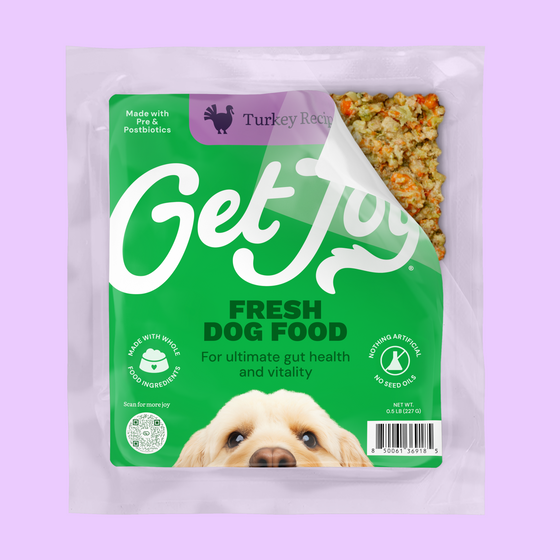
Get Joy's Freeze-Dried Raw Meals with Belly Biotics™ — our prebiotics, probiotics, and postbiotics blend — provide consistent gut support built directly into every meal. During high-disruption periods like the holiday season, that baseline matters. Learn how gut health connects to your dog's overall wellness.
Signs of Holiday Digestive Upset
Watch for these in the 24–48 hours following holiday gatherings:
- Loose stools or diarrhea
- Vomiting (mild: once or twice; serious: repeated or with blood)
- Lethargy or unusual tiredness
- Loss of appetite — a significant indicator in dogs
- Gas or bloating
- Hunched posture or abdominal guarding (sign of pain)
Mild digestive upset often resolves within 24–48 hours with bland diet and hydration. Repeated vomiting, blood in stool, lethargy, or abdominal pain warrant a veterinary call immediately.
Holiday Vet Visits by the Numbers
Nationwide pet insurance data (from more than one million insured pets) shows chocolate-related claims rising 182% in the final two weeks of the year, with treatment for pancreatitis and gastroenteritis averaging more than $1,600. Overweight dogs and some breeds, including Miniature Schnauzers, Yorkshire Terriers, and Dachshunds, are more prone to pancreatitis, so they deserve extra care around the holiday table.
Holiday Plants and Decor That Can Hurt Your Dog
| Hazard | Risk |
|---|---|
| Poinsettia | Mild to moderate stomach irritation; rarely serious |
| Mistletoe and holly | Stomach upset, and with mistletoe, possible heart effects |
| Tinsel and ribbon | Intestinal blockage |
| Ornaments | Cuts and blockages; salt-dough ornaments can cause dangerous electrolyte imbalances |
| Snow globes | Some contain antifreeze (ethylene glycol) |
| Alcohol and guests' medications | Toxic even in small amounts; keep drinks and bags up high |
Pet poison hotlines (24/7, a consultation fee may apply): ASPCA Animal Poison Control Center, (888) 426-4435 · Pet Poison Helpline, (855) 764-7661.
Frequently Asked Questions
How do I prevent my dog from getting sick after Thanksgiving?
Keep your dog on their regular feeding schedule and diet. If sharing food, use only plain, low-fat, unseasoned options in small amounts. Brief guests on the no-table-scraps rule, secure the garbage, and give your dog a quiet space away from the chaotic table. A gut-healthy diet leading into the holiday — with consistent probiotic support — builds resilience before disruption happens.
What are signs of pancreatitis in dogs after Thanksgiving?
Signs of pancreatitis include vomiting, diarrhea, lethargy, loss of appetite, hunched posture, and abdominal pain — often appearing 12–24 hours after consuming high-fat food. Pancreatitis ranges from mild (managed with fasting and supportive care) to severe (requiring hospitalization). Contact your vet if your dog shows these symptoms after the holiday meal.
How long does holiday digestive upset last in dogs?
Mild digestive upset from dietary disruption typically resolves within 24–48 hours when the dog returns to their normal diet. More significant disruptions — especially those involving high-fat food or gut microbiome imbalance — can take 3–5 days to resolve. A bland diet of plain cooked chicken and rice, or a small amount of plain pumpkin added to regular food, can help speed recovery.
Do probiotics help dogs during the holidays?
Yes. Consistent probiotic use helps maintain a balanced gut microbiome that is more resilient to dietary disruptions. The key is consistency — probiotics work best when they're already established in the gut before a disruption, not added reactively after the damage is done. Get Joy's Belly Biotics™ is built into every meal, so gut support is automatic and consistent year-round.
Which dogs are most at risk of pancreatitis?
Overweight dogs and certain breeds, including Miniature Schnauzers, Yorkshire Terriers, and Dachshunds, are more prone. Any dog can develop it after a high-fat meal.
My dog ate turkey skin. What should I do?
Watch closely over the next day or two for repeated vomiting, belly pain, hunching, or lethargy, and call your vet if any appear.
Is poinsettia poisonous to dogs?
Only mildly. It can irritate the mouth and stomach but is rarely serious.
What happens if my dog eats tinsel or an ornament?
Tinsel and ornament pieces can cause vomiting or an intestinal blockage that may need surgery, and salt-dough ornaments can cause dangerous electrolyte imbalances. Call your vet.
Sources
- Veterinary Practice News, Holidays bring rise in pet emergencies (Nationwide data, 2025): veterinarypracticenews.com
- AAHA, Understanding pancreatitis in pets: aaha.org
- ASPCA, Holiday safety tips: aspca.org
- FDA, Keep your dogs and cats safe from holiday hazards: fda.gov
This article is for general education and is not a substitute for veterinary advice. If you think your dog has eaten something harmful, call your vet or a pet poison hotline right away.
Browse More Topics
Shop by Concern


Featured Posts
Keeping Your Dog Healthy in Winter: Cold Weather, Immunity, and Gut Health
The Best Dog-Safe Christmas Treats (Store-Bought and Homemade)