Bestseller
 Gut health
 Sensitive stomach
 Calm
 Joints & mobility
 Skin & coat
 Healthy weight
 Picky eaters



New Year, Healthier Dog: A Gut Health Reset After the Holidays
by Tom Arrix ・ 14 min readKey Takeaways
- The holidays are the most common period for gut microbiome disruption in dogs.
- A post-holiday gut reset is one of the highest-leverage things you can do for your dog's health at the start of a new year.
- The reset has three components: return to dietary consistency, rebuild the microbiome, and eliminate accumulated junk.
- Results from a gut reset are visible: better stool consistency, improved energy, healthier coat, and reduced gas within 2–4 weeks.
- The new year is a natural moment to upgrade your dog's nutrition permanently — not just as a seasonal correction.
Published December 2026 · Last reviewed December 2026
January is the moment of clarity. The holiday food is gone, the guests have left, and if you're honest with yourself, your dog had a rougher two months than you planned. A few extra treats here, a bite of turkey skin someone slipped them, the stress of houseguests and travel — it adds up. The new year is an ideal moment not just to correct the damage, but to raise the baseline entirely. Gut health is where that work starts.
What the Holidays Did to Your Dog's Gut
The November–December period is the most common time for diet-related veterinary visits in dogs. But the less dramatic disruptions — the ones that don't warrant a vet trip — are far more common and often go unaddressed. The typical holiday gut impact on dogs includes:
- Microbiome disruption — repeated introduction of unfamiliar, rich, and heavily seasoned foods shifts the bacterial balance away from beneficial species and toward pathogenic ones
- Accumulated dietary fat — even without an acute pancreatitis event, repeated high-fat exposures stress the pancreas and change how the body processes fat
- Elevated inflammatory markers — sugar, refined starch, and seed oils common in holiday treats drive systemic inflammation that shows up in coat dullness, joint stiffness, and low energy
- Stress-driven gut disruption — cortisol from travel, schedule changes, and holiday chaos affects the gut-brain axis, often resulting in loose stools and reduced gut motility that persists for weeks after the stress is gone
Signs Your Dog Needs a Gut Reset
You don't need bloodwork to see the evidence. Post-holiday gut disruption shows up as:
- Loose stools or unusual gas beyond the first few days of January
- Coat that looks dull, dry, or less vibrant than usual
- Reduced energy or enthusiasm, particularly in a normally active dog
- Unusual pickiness about food — sometimes a sign of nausea or gut discomfort
- More frequent grass-eating — a self-soothing behavior dogs use for gut discomfort
- Bad breath that wasn't present before the holidays
Any of these signs, persisting two or more weeks into January, is a clear signal that your dog's gut is still recovering from the holiday period.
The Post-Holiday Gut Reset: What It Is and How to Do It
A gut reset isn't a fast or a detox — it's a return to the conditions the gut microbiome needs to thrive. Three components:
1. Return to Strict Dietary Consistency
The microbiome calibrates to the diet it receives consistently. Variance is the enemy. Starting January 1, return to a consistent, scheduled feeding routine with no table scraps, no extra treats beyond a defined daily limit, and no food variation outside the regular diet. This alone begins to stabilize the gut within 3–5 days.
2. Rebuild the Microbiome
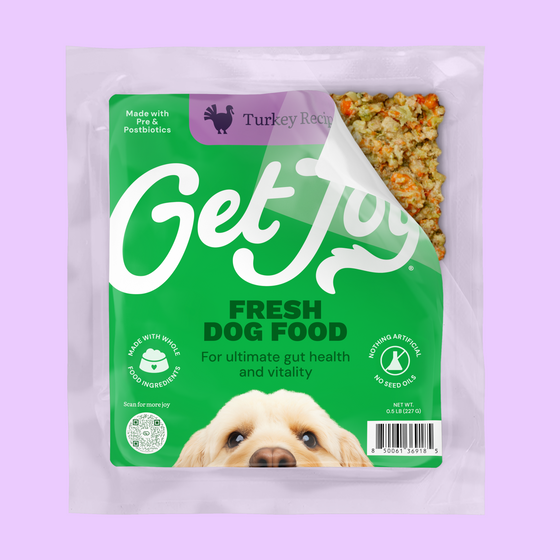
A disrupted microbiome needs two things: prebiotics (fiber that feeds beneficial bacteria) and probiotics (live beneficial bacterial strains). The fastest way to deliver both consistently is through the food itself rather than as a separate supplementation regimen. Get Joy's Freeze-Dried Raw Meals include Belly Biotics™ — prebiotics, probiotics, and postbiotics built directly into every meal — so gut rebuilding happens automatically with every serving.
If your dog is on a different food, adding a quality standalone probiotic supplement for the first 4–6 weeks of the new year accelerates microbiome recovery. Look for products with multiple bacterial strains and prebiotic fiber included.
3. Reduce the Inflammatory Load
Holiday diets are typically high in ingredients that drive systemic inflammation: refined starch, seed oils, and sugar from treats and holiday foods. Eliminating these and replacing them with whole-food protein sources, omega-3 fatty acids (from salmon oil or sardines), and anti-inflammatory vegetables (pumpkin, sweet potato, blueberries) reduces the inflammatory burden the gut is working against.
The New Year Nutrition Upgrade
The reset is a correction. The upgrade is the decision that makes January a turning point rather than just a recovery. The question every dog parent should ask at the start of a new year: is what my dog eats every day the best I can realistically do for their health?
The science on dog nutrition has shifted significantly in the past decade. We now understand that gut health is the foundation of whole-body health — that immune function, skin and coat condition, energy, behavior, and even longevity are downstream of what happens in the gut microbiome. And we know that the microbiome is largely determined by diet. Feeding a gut-healthy diet isn't a premium indulgence — it's the highest-leverage health intervention available to dog parents.
Get Joy was built around this understanding. Our Freeze-Dried Raw Meals aren't just better food — they're functional gut-healthy nutrition with Belly Biotics™ built in, designed to support the microbiome at every meal. The new year is the right moment to make that the daily standard. Start with a Get Joy trial. Learn why gut health is whole-dog health.
What to Expect and When
| Timeline | What You'll Notice |
|---|---|
| Days 1–5 | Stool consistency begins to stabilize as diet returns to routine |
| Week 1–2 | Gas and bloating reduce; appetite normalizes; energy begins to improve |
| Week 2–4 | Coat begins to look healthier; eyes clearer; energy noticeably higher |
| Month 2 | Full microbiome stabilization; immune resilience builds; body condition improves |
How Fast Does a Dog's Gut Change?
Faster than most people expect. In a University of Illinois study, dogs' gut bacteria began shifting within days of a diet change, and the bacterial community had settled by about day six. That is good news for a reset: consistent, gut-friendly meals start working on the microbiome right away, even if visible changes like coat quality take longer to show. A gradual 7–10 day food transition is still the kindest way to switch.
New Year's Resolutions for a Healthier Dog
About 59% of US dogs were overweight or obese in 2022, according to the Association for Pet Obesity Prevention, so January is a natural time to reset:
- Check body condition: you should be able to feel your dog's ribs easily and see a waist. Ask your vet if you are unsure.
- Measure meals: use a measuring cup or scale, and keep treats within about 10% of daily calories.
- Book the annual checkup: including a dental check, since bad breath is more often a mouth issue than a gut one.
- Move more: add a few minutes to daily walks or a sniff walk on weekends.
- Keep a steady routine: consistent meal times and gut-friendly food help digestion stay predictable.
Frequently Asked Questions
How do I reset my dog's gut after the holidays?
Return to strict dietary consistency immediately after the holidays end. No more table scraps, extra treats, or food variation. Add a quality probiotic and prebiotic fiber to rebuild the microbiome. Eliminate high-fat, high-sugar inputs. Maintaining this consistently for 4–6 weeks allows the gut microbiome to fully stabilize. Get Joy Freeze-Dried Raw Meals with Belly Biotics™ built in are designed to make this reset automatic.
How long does it take for a dog's gut to recover after the holidays?
Mild disruptions typically resolve within 1–2 weeks of returning to a consistent diet. More significant disruptions — particularly those involving repeated high-fat exposure or significant stress — can take 4–6 weeks for the microbiome to fully restabilize. Signs to watch: stool consistency, energy level, and coat condition are the most visible indicators of gut recovery.
What is the best dog food for gut health in 2027?
The best dog food for gut health is one that combines high-quality whole-food protein with consistent prebiotic and probiotic support. Get Joy's Freeze-Dried Raw Meals are formulated with this in mind — Belly Biotics™ prebiotics, probiotics, and postbiotics are built into every meal rather than added as a separate supplement. The result is daily, automatic gut health support that builds a more resilient, healthier dog over time.
Should I switch my dog's food in the new year?
If your dog is currently eating a food that doesn't support gut health — heavily processed kibble with low-quality ingredients, excessive fillers, or no probiotic support — the new year is an excellent time to make a change. Transition gradually over 7–10 days to avoid digestive disruption: start with 25% new food, increase to 50% after a few days, then 75%, then 100%.
How fast does a dog's gut microbiome change after a diet change?
Within days. In a University of Illinois study, gut bacteria began shifting soon after a diet change and had stabilized by about day six.
How do I help my dog lose holiday weight?
Measure meals, keep treats within about 10% of daily calories, and add activity. Check with your vet for a target weight.
What are good New Year's resolutions for my dog?
A body condition check, an annual vet and dental exam, measured meals, more daily movement, and a consistent feeding routine.
Why does my dog eat grass?
Usually not because they feel sick. In a survey of more than 1,500 dogs, most grass-eaters showed no signs of illness beforehand. Call your vet if grass-eating comes with vomiting or a change in appetite.
Sources
- University of Illinois via ScienceDaily, Dog gut microbiome stabilizes within days of a diet change (2022): sciencedaily.com
- Association for Pet Obesity Prevention, 2022 State of Pet Obesity report: petobesityprevention.org
- dvm360, Why do dogs and cats eat grass?: dvm360.com
This article is for general education and is not a substitute for veterinary advice. If you think your dog has eaten something harmful, call your vet or a pet poison hotline right away.
Browse More Topics
Shop by Concern


Featured Posts
Keeping Your Dog Healthy in Winter: Cold Weather, Immunity, and Gut Health
The Best Dog-Safe Christmas Treats (Store-Bought and Homemade)