Bestseller

 Gut health
 Sensitive stomach
 Calm
 Joints & mobility
 Skin & coat
 Healthy weight
 Picky eaters



Why Is My Dog So Gassy? Causes, Fixes & When to Worry
by The Get Joy Food Team ・ 12 min readUpdated: October 2026 · By The Get Joy Food Team · Meet our experts
The short answer
Most dog gas comes from two things: swallowed air (fast eating, flat-faced breeds) and food that ferments in the gut instead of being fully digested (sudden diet changes, table scraps, dairy, beans or rich, fatty food). Slowing mealtimes down, switching foods gradually, cutting the extras and feeding a digestible, gut-supportive diet clears the air for most dogs. Gas that's sudden, constant, or paired with diarrhea, vomiting or a swollen belly is a reason to call your vet.
Every dog parent knows the moment: a quiet evening on the couch, then a smell that clears the room. A little gas is part of being a dog. A lot of gas, or a sudden change in it, is your dog's gut telling you something. Here's what causes it, when it matters, and the simple changes that help.
What causes gas in dogs?
Gas has a few sources, and most dogs have more than one going at once.
1. Swallowed air. Dogs that gulp their food, eat in a race with another dog, or pant heavily swallow air, and it has to come out one way or the other. Flat-faced (brachycephalic) breeds such as Pugs, French Bulldogs and Boston Terriers take in extra air simply from the way they breathe.
2. Fermentation in the gut. When food isn't fully digested in the small intestine, bacteria in the large intestine break it down instead, and that fermentation makes gas. Most of that gas has no smell. The famous rotten-egg note comes from small amounts of sulfur gases.
3. What's in the bowl (and what isn't supposed to be). Common triggers include:
- A sudden switch to a new food or new treats
- Table scraps and rich, fatty foods
- Dairy, since many dogs don't digest lactose well
- Beans, soy and peas
- Hard-to-digest ingredients and fillers
- Whatever they found in the trash or on the walk
4. A gut that's out of balance. Stress, antibiotics and frequent diet swings can all shift the balance of bacteria in the gut, which changes how food is broken down. Ongoing gas can also come with medical issues such as parasites, infections or inflammatory bowel conditions, which is why persistent gas is worth a vet visit.
Why does my dog have bad gas suddenly?
Start with what changed. In most cases it's something new: a different bag of food, a new chew, a holiday plate of leftovers, or a successful raid on the trash. Stress (travel, boarding, a new baby or pet) can also unsettle digestion for a few days.
If the gas settles within a day or two of removing the new thing, that's your answer. If it doesn't, or if it comes with other symptoms, it's time to call your vet.
When is gas a reason to call the vet?
| Usually everyday gas | Call your vet | |
|---|---|---|
| Timing | After a new food, treat or scraps | Constant for more than a few days with no clear cause |
| Stool | Normal, or briefly soft | Diarrhea, mucus, blood, or very dark stool |
| Appetite and energy | Unchanged | Eating less, losing weight, low energy |
| Other signs | None | Vomiting, belly pain, straining |
How to reduce gas in dogs: 7 changes that help
1. Slow mealtimes down. A slow-feeder bowl or a food puzzle cuts down on swallowed air. In multi-dog homes, feed dogs apart so nobody feels they have to race.
2. Split the day's food into smaller meals. Two or three smaller meals are easier to digest than one big one.
3. Switch foods gradually. Mix the new food in over about 7 to 10 days (roughly 25%, 50%, 75%, then 100%) so gut bacteria can adjust. Our step-by-step switching guide walks through it. If your dog is sensitive, start the new food as a topper and go at their pace.
4. Cut the extras. Table scraps, dairy and rich chews are some of the biggest gas makers. Keep treats to about 10% of daily calories.
5. Choose a food your dog digests well. Real, named proteins and a short, recognizable ingredient list leave less undigested food for gut bacteria to ferment. Here's how to read a dog food label.
6. Keep them moving. Regular walks help keep digestion moving.
7. Support the gut every day. Prebiotics feed beneficial bacteria, probiotics add to them, and postbiotics are the helpful compounds those bacteria produce. Consistency matters more than any single dose.
Not actually gas? A fishy or lingering smell can come from anal glands or something stuck in the coat. Your vet can check both.
What's the best dog food for gassy dogs?
There's no single "anti-gas" food, but the dogs who do best tend to eat food that is:
- Digestible: real meat and organs rather than fillers and by-products
- Consistent: the same food every day, with changes made slowly
- Gut-supportive: fiber in sensible amounts plus prebiotics, probiotics and postbiotics
- Free of the usual triggers your dog doesn't tolerate
Where Get Joy fits
Get Joy Freeze Dried Raw Meals start with 100% USDA-sourced meat and organs, with pumpkin for fiber and Belly Biotics™, our blend of prebiotics, probiotics and postbiotics, built into every bowl. Gut health is whole-body health, so we put gut support in the meal itself instead of leaving it to an add-on.
As one Get Joy customer put it: "a more consistent poop schedule, less stinky poops, and no more gas" (Gregory P.). Every dog is different, so switch gradually and give the new routine a few weeks.
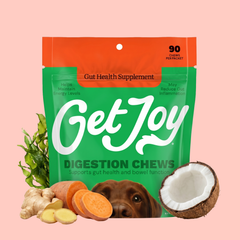
For dogs who need extra daily support, Digestion Chews combine probiotics (3B CFUs), prebiotics and postbiotics with L-glutamine, ginger and omega-3s.
Clear the air from the inside out
Gut-first Freeze Dried Raw Meals with Belly Biotics™ built in. 50% off your first Auto-Ship order.
Shop Freeze Dried RawFrequently asked questions
Is it normal for dogs to fart?
Yes. Some gas is a normal part of digestion: dogs swallow air while eating, and gut bacteria make gas as they break down food. It becomes worth looking at when it's frequent, unusually smelly, sudden, or comes with loose stools, vomiting, or a change in appetite.
Why do my dog's farts smell so bad?
Most gas has no smell. The rotten-egg odor comes from small amounts of sulfur gases made when gut bacteria ferment food that wasn't fully digested higher up. Rich table scraps, foods your dog doesn't tolerate, and a sudden diet change are common reasons the smell gets worse.
Why does my dog have bad gas suddenly?
The usual suspects are something new: a food switch, new treats, table scraps, or a trip through the trash. Stress can play a part too. If sudden gas comes with diarrhea, vomiting, low energy, or a swollen belly, call your vet.
Can switching dog food cause gas?
Yes. Gut bacteria need time to adjust to new ingredients, so a sudden switch often brings gas and soft stools. Mixing the new food in gradually over about 7 to 10 days, and starting as a topper if your dog is sensitive, gives the gut time to adapt.
Do probiotics help with dog gas?
They may help some dogs, especially when gas is tied to diet changes or an unsettled gut. Probiotics work best as part of a daily routine with digestible food and a prebiotic to feed them, rather than as a one-time fix. Ask your vet if gas is persistent.
Which dogs are gassiest?
Flat-faced breeds like Pugs, French Bulldogs and Boston Terriers tend to swallow more air, and fast eaters of any breed do too. Dogs that scavenge or get frequent table food are also more prone to gas.
When is dog gas an emergency?
A swollen or hard belly, retching that brings nothing up, drooling, restlessness, or repeatedly standing and stretching can signal bloat (GDV), which is a life-threatening emergency, especially in large, deep-chested dogs. Go to your vet or an emergency clinic right away.
Sources: American College of Veterinary Surgeons, "Gastric Dilatation-Volvulus" (acvs.org); Vetster, "Excessive Gas (Flatulence) in Dogs," reviewed by Jo Myers, DVM (2026); American Kennel Club, "Help! My Dog Has Terrible Gas" (akc.org); Wisdom Panel, "Why Is My Dog So Gassy?" with Jamie Freyer, DVM (2024).
This article is for general educational purposes and is not a substitute for professional veterinary advice. If your dog's gas is persistent or comes with other symptoms, talk to your veterinarian. Get Joy products are designed to support digestive health and are not intended to diagnose, treat, cure, or prevent any disease.
Browse More Topics
Shop by Concern


Featured Posts
Keeping Your Dog Healthy in Winter: Cold Weather, Immunity, and Gut Health
The Best Dog-Safe Christmas Treats (Store-Bought and Homemade)