Bestseller
 Gut health
 Sensitive stomach
 Calm
 Joints & mobility
 Skin & coat
 Healthy weight
 Picky eaters



What Thanksgiving Foods Can Dogs Eat? A Complete Guide
by The Get Joy Food Team ・ 12 min readKey Takeaways
- Plain turkey meat (no skin, bones, or seasoning) is safe and even beneficial for dogs.
- Plain sweet potatoes, green beans, and plain pumpkin are safe Thanksgiving sides for dogs.
- Onions, garlic, grapes, raisins, nutmeg, and xylitol are all toxic and appear in many traditional Thanksgiving dishes.
- Turkey skin, gravy, and stuffing are the three highest-risk Thanksgiving foods for dogs.
- The holiday season is one of the most common times for pancreatitis, toxic ingestion, and digestive upset in dogs.
Published November 2026 · Last reviewed November 2026
Thanksgiving is the meal most likely to land your dog at the emergency vet. Not because the food is inherently terrible for dogs, but because of how it's prepared. The same turkey that would be a great high-protein treat becomes a pancreatitis trigger once you add skin, butter, and drippings. The sweet potato casserole that would be perfectly safe is made dangerous by brown sugar, marshmallows, and nutmeg. Here's the complete guide to what's actually safe and what to keep off your dog's plate entirely.
What Thanksgiving Foods Are Safe for Dogs
| Thanksgiving Food | Safe for Dogs? | How to Serve |
|---|---|---|
| Turkey (white or dark meat) | Yes | Plain, boneless, skinless, no seasoning |
| Sweet potatoes | Yes | Plain baked or steamed — no sugar, butter, or spice |
| Plain pumpkin puree | Yes | No pie filling — must be plain with no added ingredients |
| Green beans | Yes | Plain steamed or raw — not green bean casserole |
| Plain carrots | Yes | Raw or cooked, no seasoning |
| Apples (no seeds/core) | Yes | Sliced, seeds and core removed |
| Plain cranberries | Yes (small amount) | Fresh or dried without added sugar |
What Thanksgiving Foods Are Dangerous for Dogs
| Thanksgiving Food | Risk Level | Why |
|---|---|---|
| Turkey skin | High | Extremely high fat — leading cause of holiday pancreatitis |
| Turkey bones | High | Cooked bones splinter; cause internal lacerations |
| Stuffing / dressing | High | Contains onions, garlic, butter, and seasoning |
| Gravy | High | High fat, often contains onion and garlic |
| Onions and garlic | Toxic | Destroy red blood cells; cause hemolytic anemia |
| Cranberry sauce | Moderate–High | Very high sugar; may contain grapes or alcohol |
| Sweet potato casserole | High | Contains sugar, marshmallows, butter, often nutmeg |
| Pecan and pumpkin pie | High | Pecans are toxic; pie filling contains nutmeg and sugar |
| Grapes and raisins | Toxic | Cause acute kidney failure — any amount |
| Alcohol (wine, cocktails) | Toxic | Dogs metabolize alcohol very poorly; causes CNS depression |
| Nutmeg | Toxic | Causes hallucinations, tremors, seizures in dogs |
Why Thanksgiving Is Especially Hard on Dog Gut Health
The Thanksgiving holiday creates a perfect storm for canine digestive upset. Dogs encounter rich, fatty, heavily seasoned foods that are completely outside their normal diet — often in larger quantities than a careful dog owner would ever serve intentionally. Even without consuming anything acutely toxic, a dog that gets into the turkey drippings, eats a piece of stuffing from the floor, or receives an excessive number of "just a small piece" treats throughout the day can end up with significant gut disruption in the following 24–72 hours.
The dog gut microbiome — the bacterial community that governs digestion, immunity, and overall health — is sensitive to sudden dietary shifts. A day of rich, fatty, unfamiliar food can disrupt the balance between beneficial and pathogenic bacteria, leading to loose stools, gas, vomiting, and lethargy that can persist for several days. In more serious cases — particularly with high-fat foods like turkey skin and gravy — the result is acute pancreatitis, a genuinely dangerous condition requiring veterinary care.
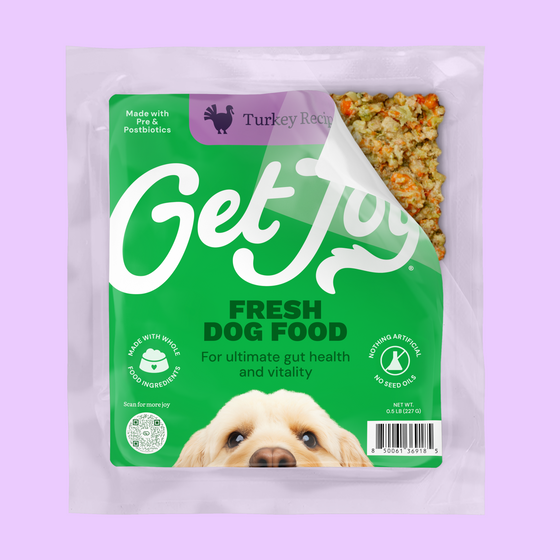
The best protection is a stable, consistent nutritional foundation going into the holiday. Dogs fed a gut-healthy diet built around high-quality protein and a balanced microbiome — like Get Joy's Freeze-Dried Raw Meals with Belly Biotics™ built in — are more resilient to occasional dietary disruptions than dogs whose gut health is already compromised. Learn more about supporting your dog's gut health year-round.
The Three Rules for Sharing Thanksgiving with Your Dog
- Plain is the only safe standard. If it has seasoning, sauce, gravy, butter, or mixed ingredients, it's not appropriate for your dog. "Plain" means genuinely plain — not lightly seasoned.
- Small amounts of safe foods only. Even safe foods cause digestive upset when introduced in large quantities suddenly. A few pieces of plain turkey or a spoonful of plain sweet potato is appropriate. A plateful is not.
- Keep the trash secured and the kitchen clear. Dogs that don't get table scraps often find them anyway through the garbage, counter-surfing, or the floor. Turkey carcasses, dripping-soaked paper towels, and foil wrapping are all attractive and all dangerous.
Thanksgiving Hazards Beyond the Plate
- Raw yeast dough: it keeps rising in the stomach and produces alcohol as it ferments. This is an emergency.
- Raw or undercooked turkey: can carry salmonella. Only share fully cooked, plain meat.
- Turkey string, foil, and the carcass: the trash can is the most dangerous spot in the house on Thanksgiving. Strings and foil can cause serious intestinal damage, and cooked bones splinter. Take the trash out right away.
- Sugar-free desserts: may contain xylitol, which is toxic to dogs.
- Guests' bags and medications: ask visitors to keep purses and pill bottles up high.
Pet poison hotlines (24/7, a consultation fee may apply): ASPCA Animal Poison Control Center, (888) 426-4435 · Pet Poison Helpline, (855) 764-7661.
Build Your Dog's Thanksgiving Plate
Want your dog to feel included? A small plate of plain, cooked foods does the trick: a few bites of skinless, boneless turkey breast, a spoonful of plain mashed sweet potato or pumpkin, and a few plain green beans, all with no butter, salt, onion, or garlic. Keep the whole plate within about 10% of your dog's daily calories, and serve it in their own bowl rather than from the table. For why turkey is a good protein for dogs, see is turkey good for dogs. If your dog's stomach does get upset, here is what to give a dog for an upset stomach.
Frequently Asked Questions
Can dogs eat Thanksgiving turkey?
Yes, with conditions. Plain white or dark turkey meat — boneless, skinless, and completely unseasoned — is safe for dogs in small amounts. Turkey bones splinter into dangerous shards. Turkey skin is very high in fat and a leading cause of pancreatitis in dogs around Thanksgiving. Gravy and stuffing both contain ingredients that are toxic to dogs.
What Thanksgiving foods are most dangerous for dogs?
Turkey skin and bones, stuffing (contains onions and garlic), gravy, cranberry sauce (high sugar), sweet potato casserole (nutmeg, sugar, marshmallows), pies containing pecans or nutmeg, and any dish containing grapes, raisins, onions, or garlic. Onions and garlic are toxic in any form — raw, cooked, or powdered.
Can dogs eat mashed potatoes?
Plain mashed potato with no butter, milk, garlic, or salt is technically safe in small amounts. In practice, mashed potatoes are almost always made with butter and often with garlic — both problematic for dogs. The high starch content also provides very little nutritional benefit. Skip it and offer a piece of plain turkey instead.
My dog ate stuffing. What should I do?
Stuffing almost always contains onions and garlic, which are toxic to dogs — in any form, including onion and garlic powder. Contact your veterinarian or the ASPCA Animal Poison Control Center (888-426-4435) immediately and tell them what your dog ate and how much. Don't wait for symptoms.
Can dogs eat cranberry sauce?
Traditional cranberry sauce is very high in sugar and sometimes contains orange peels, alcohol, or other ingredients that are hard on a dog's gut. Skip cranberry sauce and opt for a small amount of fresh or plain dried cranberries instead, which are safe in moderate amounts.
Can dogs eat bread or rolls?
A small bite of plain, baked bread is fine for most dogs. Raw yeast dough is an emergency because it expands in the stomach and produces alcohol.
Can dogs eat green bean casserole?
No. The fried onions and creamy soup base are the problem. Plain, cooked green beans are a good alternative.
Can dogs eat ham?
It is best skipped. Ham is high in salt and fat, which can upset the stomach and raise the risk of pancreatitis.
My dog ate turkey string or foil. What should I do?
Call your vet. String and foil can cause serious intestinal damage, and signs may take time to appear.
Sources
- ASPCA, Thanksgiving safety tips: aspca.org
- FDA, Keep your dogs and cats safe from holiday hazards: fda.gov
- American Kennel Club, Can dogs eat acorns and other tree nuts?: akc.org
- Pet Poison Helpline, Nutmeg: petpoisonhelpline.com
This article is for general education and is not a substitute for veterinary advice. If you think your dog has eaten something harmful, call your vet or a pet poison hotline right away.
Browse More Topics
Shop by Concern


Featured Posts
Keeping Your Dog Healthy in Winter: Cold Weather, Immunity, and Gut Health
The Best Dog-Safe Christmas Treats (Store-Bought and Homemade)