Bestseller

 Gut health
 Sensitive stomach
 Calm
 Joints & mobility
 Skin & coat
 Healthy weight
 Picky eaters




Is Turkey Good for Dogs? The Benefits of Turkey as a Dog Food Protein
by The Get Joy Food Team ・ 13 min readKey Takeaways
- Turkey is a lean, highly digestible protein that is excellent for dog gut health and muscle maintenance.
- Plain, unseasoned cooked turkey — white or dark meat without skin or bones — is safe for most dogs.
- Turkey is a good choice for dogs with chicken sensitivities, as it's a novel protein for many animals.
- Turkey skin, bones, onions, garlic, and heavily seasoned turkey are all dangerous and should be kept away from dogs.
- As a Thanksgiving food, plain turkey meat (no stuffing, gravy, or seasoning) is safe to share in small amounts.
Published November 2026 · Last reviewed November 2026
Yes, turkey is good for dogs — genuinely good, not just "safe in small amounts." It's a lean, complete protein packed with essential amino acids, and it's one of the most digestible protein sources available in dog nutrition. The catch, as with most human foods, is in the preparation. Plain turkey is excellent. Thanksgiving turkey — with skin, seasonings, gravy, and stuffing — is a different story entirely.
Why Turkey Is a Great Protein for Dogs
Turkey delivers a nutritional profile that works exceptionally well for dogs:
- High-quality protein with a complete amino acid profile — essential for muscle maintenance, immune function, and cell repair
- Low in fat compared to many other proteins — particularly skinless white meat, making it appropriate for dogs with pancreatitis or weight management needs
- Rich in B vitamins — including B3 (niacin) and B6, which support energy metabolism and nervous system function
- Good source of phosphorus and selenium — important for bone health and antioxidant defense
- Highly digestible — the proteins in turkey are well-absorbed by the canine digestive system, making it gentle on the gut
Turkey vs. Chicken: What's the Difference for Dogs?
Turkey and chicken are nutritionally similar, but there are a few meaningful distinctions for dog owners:
| Attribute | Turkey | Chicken |
|---|---|---|
| Fat content (white meat) | Lower | Slightly higher |
| Digestibility | High | High |
| Novelty (for allergy management) | Higher — less common in dog food | Lower — most common dog food protein |
| Amino acid profile | Complete | Complete |
| Cost in commercial dog food | Slightly higher | Lower |
Because chicken is the most common protein source in commercial dog food, many dogs with food sensitivities have developed reactions to chicken specifically. Turkey, being less ubiquitous, often functions as a novel protein for these dogs — meaning their immune systems haven't been exposed enough to mount a reaction. If your dog has been diagnosed with a chicken sensitivity, turkey is frequently a recommended alternative.
Turkey and Gut Health
Protein quality has a direct impact on gut health. Low-quality proteins — rendered meals, unnamed meat by-products — are harder to digest and leave more fermentable residue in the colon, which can feed pathogenic bacteria and disrupt the gut microbiome. High-quality proteins like turkey are more completely absorbed in the small intestine, leaving less disruption downstream.
Turkey is also relatively low in purines compared to some other meats, which matters for dogs prone to urate crystals or kidney sensitivities. The combination of high digestibility, clean amino acid delivery, and low fat makes turkey one of the most gut-friendly proteins you can feed your dog.
At Get Joy, functional gut health starts with ingredient quality. Our Freeze-Dried Raw Meals are built around whole food proteins and include Belly Biotics™ — our prebiotics, probiotics, and postbiotics blend — built directly into every meal to keep the gut microbiome balanced around high-quality nutrition. Learn more about why gut health is the foundation of whole-dog wellness.
How to Safely Feed Turkey to Your Dog
Safe turkey for dogs:
- Plain cooked turkey breast or thigh meat — no skin, no seasoning, no bones
- Ground turkey cooked plain — no added salt, garlic, or onion
- Small amounts as a treat or meal topper
Never feed your dog:
- Turkey bones — cooked poultry bones splinter into sharp shards and cause intestinal perforation
- Turkey skin — extremely high in fat; a common cause of acute pancreatitis in dogs after Thanksgiving
- Seasoned turkey — garlic and onion are toxic; herbs like sage can cause digestive upset
- Deli turkey / processed turkey — high sodium content and preservatives are harmful
- Turkey stuffing — typically contains onions, garlic, butter, and seasoning — all problematic for dogs
Thanksgiving Turkey: What's Safe and What's Not
The question everyone is asking on Thanksgiving: can my dog have some of what's on the table? The answer for turkey specifically is yes — with strict conditions:
- Plain white or dark meat only — removed from the bone, no skin
- No gravy — typically made with turkey drippings (high fat), garlic, and onion
- No stuffing or sides — virtually all Thanksgiving side dishes contain ingredients harmful to dogs
- Small amounts only — rich food introduces digestive stress even when the individual ingredients are safe
If you want to give your dog a Thanksgiving treat they'll genuinely love, a few small pieces of plain turkey breast is the safest and most dog-appropriate option on the table. Then maintain their regular meal schedule to keep the gut stable through the holiday.
How Much Turkey Can I Give My Dog?
As a treat or topper, keep turkey within about 10% of your dog's daily calories. Roughly:
| Dog size | Plain cooked turkey breast as a treat |
|---|---|
| Small (under 20 lb) | A few bite-sized pieces, about 1 tablespoon |
| Medium (20–50 lb) | About 2–3 tablespoons |
| Large (50 lb+) | About ¼ cup |
Always serve it fully cooked (raw or undercooked turkey can carry salmonella), plain, skinless, and boneless. Skip deli turkey, which is high in sodium and additives. If your dog has a medical condition such as pancreatitis, diabetes, or a food allergy, ask your vet before adding turkey, since some dogs allergic to chicken also react to other poultry.
Turkey in Complete Dog Meals
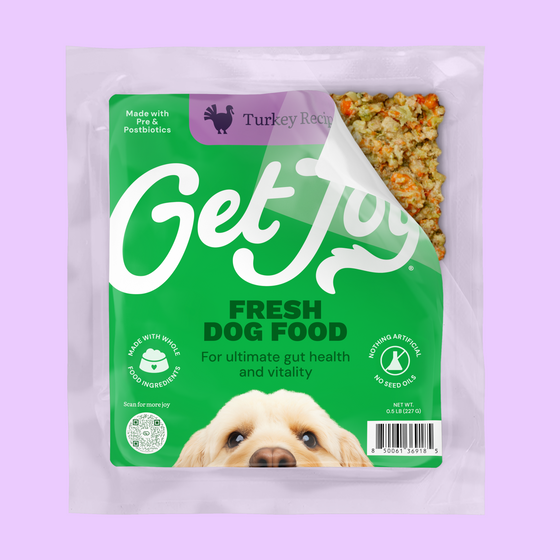
A few bites of turkey are a treat; a complete meal built around turkey is something else. Get Joy Fresh Meals come in four proteins, including turkey, gently kettle-cooked and AAFCO complete and balanced for all life stages, with functional fiber, a postbiotic, and salmon-oil omega-3 built into every recipe. See Get Joy Fresh Meals.
Frequently Asked Questions
Is turkey safe for dogs to eat?
Yes — plain, unseasoned, boneless, skinless cooked turkey is safe and nutritionally beneficial for dogs. Turkey is a lean, highly digestible protein with a complete amino acid profile. Avoid turkey bones (which splinter), turkey skin (which is very high in fat), and any turkey prepared with seasonings, garlic, or onion.
Can dogs eat turkey on Thanksgiving?
Yes, in limited form. Plain white or dark turkey meat with no skin, bones, gravy, or seasoning is safe to share in small amounts. Avoid giving your dog turkey stuffing, gravy, or any seasoned Thanksgiving dish. Turkey skin is a leading cause of pancreatitis in dogs during the holiday season.
Is turkey better than chicken for dogs?
Turkey and chicken are nutritionally similar, but turkey is slightly leaner and less common in commercial dog food, making it a useful novel protein for dogs with chicken sensitivities. Both are high-quality proteins when sourced and prepared well. The best protein for your dog depends on their specific health history and sensitivities.
Can dogs eat turkey bones?
No. Cooked poultry bones — including turkey bones — should never be given to dogs. Cooking makes bones brittle, causing them to splinter into sharp shards that can puncture the digestive tract. This is a veterinary emergency. Raw turkey bones are a different matter and can be discussed with your veterinarian, but cooked bones are never safe.
What happens if a dog eats turkey skin?
Turkey skin is extremely high in fat and heavily seasoned in most preparations. Eating turkey skin is one of the most common causes of acute pancreatitis in dogs around Thanksgiving. Signs include vomiting, diarrhea, lethargy, and abdominal pain. If your dog eats a significant amount of turkey skin, contact your veterinarian.
How much turkey can I give my dog?
Keep it to treat-sized portions within about 10% of daily calories, for example about a tablespoon for a small dog and about a quarter cup for a large dog. Ask your vet first if your dog has a medical condition.
Can dogs eat raw turkey?
It is safest to serve turkey fully cooked. Raw or undercooked turkey can carry salmonella.
Can dogs eat deli turkey?
It is not recommended. Deli turkey is high in sodium and often contains additives and seasonings.
Can dogs eat turkey necks?
Cooked turkey necks are never safe because cooked bones splinter. Some owners feed raw necks with their vet's approval, but they carry bacteria and choking risks.
Sources
- American Kennel Club, Can dogs eat turkey?: akc.org
- ASPCA, Thanksgiving safety tips: aspca.org
- FDA, No bones about it: bones are unsafe for your dog: fda.gov
- Mueller, Olivry & Prélaud, Common food allergen sources in dogs and cats (BMC Vet Res, 2016): ncbi.nlm.nih.gov
This article is for general education and is not a substitute for veterinary advice. If you think your dog has eaten something harmful, call your vet or a pet poison hotline right away.
Browse More Topics
Shop by Concern


Featured Posts
Keeping Your Dog Healthy in Winter: Cold Weather, Immunity, and Gut Health
The Best Dog-Safe Christmas Treats (Store-Bought and Homemade)