Bestseller

 Gut health
 Sensitive stomach
 Calm
 Joints & mobility
 Skin & coat
 Healthy weight
 Picky eaters




Fall Foods Your Dog Can (and Can't) Eat: Pumpkin, Apples, Sweet Potatoes, and More
by The Get Joy Food Team ・ 12 min readKey Takeaways
- Pumpkin, sweet potatoes, apples (without seeds), and blueberries are all safe, gut-supportive fall foods for dogs.
- Pumpkin is particularly valuable for dog digestive health — its soluble fiber feeds beneficial gut bacteria.
- Avoid pumpkin pie filling, apple seeds and cores, grapes, raisins, and any seasoned fall dishes.
- Many fall superfoods for humans overlap with dog-safe nutrition — when prepared plain and unseasoned.
- The best way to support your dog's gut health year-round is a stable, functional diet — not seasonal supplementation alone.
Published October 2026 · Last reviewed October 2026
Autumn brings a rich lineup of seasonal produce — and several of fall's most iconic foods are genuinely beneficial for dogs when prepared correctly. The key word is "correctly." Pumpkin puree is great for your dog; pumpkin pie filling is not. Plain baked sweet potato is excellent; candied yams are not. Here's the complete breakdown of what's safe, what's beneficial, and what to avoid.
Fall Foods That Are Safe (and Good) for Dogs
Pumpkin
Plain pumpkin — fresh or canned, with no added sugar or spices — is one of the most effective gut health tools for dogs. Its high soluble fiber content acts as a prebiotic, feeding beneficial bacteria in your dog's gut microbiome. It's commonly used to firm up loose stools and help with mild constipation. One to four tablespoons of plain pumpkin puree mixed into a meal is a safe daily addition for most dogs.
What to avoid: Pumpkin pie filling contains added sugars, spices (including nutmeg, which is toxic to dogs), and sometimes xylitol. Always use plain canned pumpkin or fresh cooked pumpkin.
Sweet Potatoes
Sweet potatoes are nutritionally dense, easy to digest, and excellent for gut health. They're high in dietary fiber, beta-carotene, and B vitamins. Plain cooked or steamed sweet potato (no butter, sugar, or seasoning) is a safe and beneficial addition to your dog's diet. Many high-quality dog foods use sweet potato as a primary carbohydrate source for exactly this reason.
Apples
Apples are safe for dogs and provide a satisfying crunch along with vitamin C, vitamin A, and dietary fiber. Remove the seeds and core before serving — apple seeds contain small amounts of cyanogenic compounds that can accumulate with repeated exposure. Sliced apple with skin on is the ideal serving format.
Blueberries
Blueberries are a year-round superfood for dogs but hit their peak in fall harvest windows. They're rich in antioxidants that support immune function and have been shown to reduce oxidative stress. Their small size makes them ideal as low-calorie training treats. Serve fresh or frozen — both are equally nutritious.
Cranberries
Plain cranberries — fresh or dried without added sugar — are safe in small amounts and support urinary tract health. Most dogs don't find them palatable on their own due to tartness, but a small amount mixed into food is fine. Avoid cranberry sauce, which is high in sugar, and any product containing grapes or raisins.
Fall Foods to Keep Away from Your Dog
| Fall Food | Safe for Dogs? | Why |
|---|---|---|
| Pumpkin pie filling | No | Contains sugar, spices, often xylitol or nutmeg (toxic) |
| Grapes and raisins | Never | Cause acute kidney failure — any amount is dangerous |
| Nutmeg | No | Toxic to dogs — causes tremors, seizures in high doses |
| Candied yams | No | High sugar, often contains marshmallows and butter |
| Apple seeds and core | No | Cyanogenic compounds in seeds |
| Corn on the cob | No | Corn kernels are fine; the cob causes intestinal blockage |
| Onions and garlic | Never | Destroy red blood cells, cause hemolytic anemia |
How Fall Produce Supports Your Dog's Gut Health
Many of fall's best dog-safe foods share a common property: high soluble fiber that acts as a prebiotic — fuel for the beneficial bacteria in your dog's gut microbiome. Pumpkin, sweet potatoes, and apples all contribute to gut diversity and digestive regularity when incorporated into a balanced diet.
This matters beyond digestion. Research in veterinary nutrition increasingly shows that gut microbiome diversity is directly linked to immune function, skin and coat health, energy levels, and even mood. A dog with a diverse, well-fed gut microbiome is fundamentally healthier across every body system.
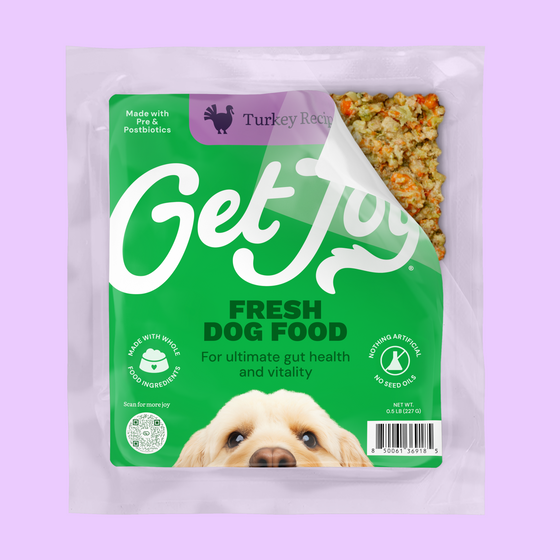
At Get Joy, we build gut health into every meal. Our Freeze-Dried Raw Meals include Belly Biotics™ — our proprietary prebiotics, probiotics, and postbiotics blend — so your dog's gut gets consistent, functional support every day, not just when pumpkin season rolls around. Explore the complete guide to dog gut health.
How to Safely Serve Fall Foods to Your Dog
- Always serve plain and unseasoned. No butter, salt, garlic, onion, nutmeg, or sweeteners of any kind.
- Introduce new foods gradually. Even safe foods can cause digestive upset if introduced too quickly. Start with a small amount and increase over a few days.
- Keep portions appropriate. Treats and food additions should make up no more than 10% of your dog's daily caloric intake.
- Cook or steam rather than raw for root vegetables like sweet potatoes — cooking improves digestibility significantly.
Fall Yard and Kitchen Hazards
- Acorns: contain tannins that can cause vomiting and diarrhea, and potentially kidney damage, plus a choking and blockage risk. Rake them up and call your vet if your dog eats several.
- Pecans and walnuts: fallen nuts can carry mold toxins and are a choking risk. Best kept away from dogs.
- Wild mushrooms: some are deadly and they are hard to identify. Treat any yard mushroom your dog eats as an emergency and bring a sample to the vet.
- Old jack-o'-lanterns: fresh pumpkin flesh is fine, but a carved pumpkin left out for days can rot and grow mold.
- Pumpkin spice products: lattes, baked goods, and spice blends bring sugar, dairy, and spices dogs do not need, and some sugar-free products contain xylitol.
How Much Is a Safe Serving?
Treats and extras, including fall produce, should stay under about 10% of your dog's daily calories. As a starting point:
| Dog size | Plain pumpkin or mashed sweet potato | Apple slices (no core or seeds) |
|---|---|---|
| Small (under 20 lb) | About 1–2 teaspoons | 1–2 thin slices |
| Medium (20–50 lb) | About 1 tablespoon | 2–4 slices |
| Large (50 lb+) | About 2 tablespoons | 4–6 slices |
Start small, introduce one new food at a time, and check with your vet if your dog has a sensitive stomach or a health condition.
Frequently Asked Questions
Can dogs eat pumpkin?
Yes — plain pumpkin is one of the most beneficial foods you can give a dog. Its soluble fiber acts as a prebiotic, supporting beneficial gut bacteria and regulating digestion. Use plain canned pumpkin or fresh cooked pumpkin with no added sugar, salt, or spices. One to four tablespoons mixed into a meal is appropriate for most dogs.
Can dogs eat apples?
Yes, with preparation. Remove the seeds and core before serving — apple seeds contain small amounts of cyanogenic compounds. Sliced apple with the skin on is safe, provides vitamin C and fiber, and most dogs enjoy the crunch.
Can dogs eat sweet potatoes?
Yes. Plain cooked or steamed sweet potato is nutritionally excellent for dogs — high in fiber, beta-carotene, and B vitamins. Avoid any preparation with added sugar, butter, or seasoning, including candied yams or sweet potato casserole.
Are pumpkin seeds safe for dogs?
Plain, unsalted, unroasted pumpkin seeds are safe for dogs in small quantities and may have some antiparasitic benefits. Avoid salted, flavored, or roasted seeds, which can have too much sodium and added oils. Grind or chop seeds before feeding to aid digestibility.
What fall foods are toxic to dogs?
Grapes and raisins are the most dangerous — they can cause acute kidney failure. Nutmeg is toxic to dogs and is often hidden in pumpkin pie filling and baked goods. Onions and garlic destroy red blood cells. Apple seeds and corn cobs also pose risks. Always check ingredients before sharing any seasonal dish with your dog.
Are acorns poisonous to dogs?
Yes. Acorns contain tannins that can cause vomiting, diarrhea, and potentially kidney damage, and they can cause blockages. Call your vet if your dog eats them.
Can dogs eat pumpkin spice?
It is best to skip it. Pumpkin spice products usually bring sugar, dairy, and spice blends that upset stomachs, and some sugar-free versions contain xylitol.
Can dogs eat a carved jack-o'-lantern?
Only fresh pumpkin flesh. A carved pumpkin that has been sitting out can rot or grow mold and make dogs sick.
Are wild mushrooms dangerous to dogs?
Some are deadly and they are hard to tell apart. Treat any wild mushroom your dog eats as an emergency and call your vet right away.
Sources
- VCA Animal Hospitals, Fall food dos and don'ts for dogs: vcahospitals.com
- Hill's Pet Nutrition, Can dogs eat pumpkin?: hillspet.com
- American Kennel Club, Can dogs eat acorns and other tree nuts?: akc.org
- Pet Poison Helpline, Nutmeg: petpoisonhelpline.com
This article is for general education and is not a substitute for veterinary advice. If you think your dog has eaten something harmful, call your vet or a pet poison hotline right away.
Browse More Topics
Shop by Concern


Featured Posts
Keeping Your Dog Healthy in Winter: Cold Weather, Immunity, and Gut Health
The Best Dog-Safe Christmas Treats (Store-Bought and Homemade)