Bestseller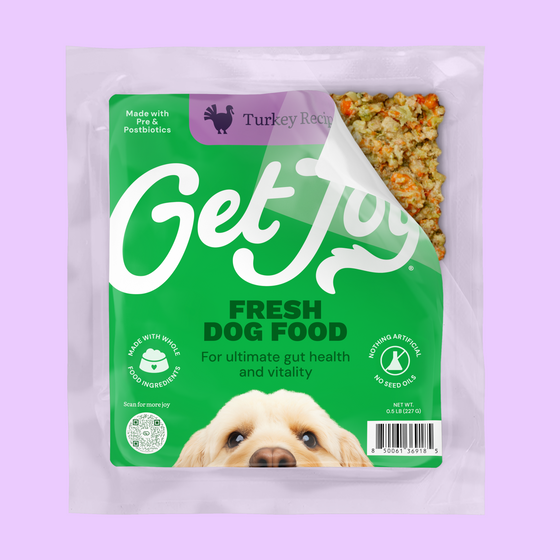
 Gut health
 Sensitive stomach
 Calm
Calm Joints & mobility
 Skin & coat
 Healthy weight
 Picky eaters



Best Dog Food For Anal Gland Issues
by The Get Joy Team ・ 14 min readScooting, licking, and that look of general misery usually send dog companions straight to the internet searching for the best dog food for anal gland issues, and the answer is less complicated than most articles make it. What the bowl contains directly affects stool quality, and stool quality is what drives whether those glands empty properly or keep causing problems. This article breaks down the ingredients that help, the ones that quietly make things worse, and when diet is genuinely the fix versus when a vet needs to be the next call.
What actually helps anal gland issues—and what doesn’t
Anal gland issues are one of those things every dog companion eventually Googles at 11pm, usually right after watching their dog scoot across the living room rug. It’s uncomfortable to witness—and even more uncomfortable for your dog. It’s also more common than most people realize, and in many cases, diet plays a much bigger role than you’d expect.
Here’s the short version: anal glands are two small sacs on either side of your dog’s rectum that are supposed to express naturally when your dog passes a firm, well-formed stool. When stools are consistently too soft or irregular, the glands don’t empty properly. They fill up, get impacted, and cause the scooting, licking, and general misery you’re probably already familiar with.
That’s where food comes in. The best dog food for anal gland issues isn’t some magic formula—it’s a diet that consistently produces firm stools, reduces digestive inflammation, and supports gut health over time. Fibre content, ingredient quality, and digestibility are the levers worth paying attention to.
That said, food isn’t always the whole answer. If your dog has recurring impactions, active infections, or needs manual expression every few weeks, that’s a vet conversation—full stop. The right diet can absolutely reduce how often the problem occurs, but it won’t resolve an anatomical issue or clear an infection.
For everything food can influence, it all comes back to gut health. That’s the right place to start.
Why fibre is the first thing to check on the label
Fibre is usually the first thing to check when comparing the best dog food for anal gland issues, because stool quality is a big part of the problem. When stools are firm and complete, they put gentle pressure on the anal glands during a bowel movement. That helps the glands empty the way they’re supposed to, instead of staying full and irritated.
Not all fibre works the same way. Soluble fibre pulls in water and helps support a steadier gut environment. Think pumpkin, beet pulp, or chicory root. Insoluble fibre adds bulk and structure, which can help stools come out more cleanly and with enough substance to do their job. Ingredients like flaxseed can contribute to both, which is exactly why smart formulas use a mix instead of leaning on one cheap filler.
Balance matters. Too little fibre often leads to soft, messy stools that do nothing for gland expression. Too much can also cause trouble, just in a different way: overly bulky stools, dry stools, extra gas, or inconsistent poop that keeps the gut guessing. More is not better. Better is better.
When reading a label, look for:
- Named fibre sources like pumpkin, flaxseed, beet pulp, or chicory root
- More than one fibre source, which usually signals better formulation
- A crude fibre percentage around 3% to 5% for many adult dogs
- Fibre ingredients supporting the recipe, not dominating it
- No heavy dependence on cellulose or grain hulls as the main event
If you want a clearer benchmark by size and life stage, here’s how much fiber dogs actually need. It makes label shopping much faster.
Ingredients to look for in a food that supports anal gland health
What goes into the bowl shows up at the other end. For anal gland health, that matters a lot. The best dog food for anal gland issues is not just “more fiber.” It’s a formula that helps create firm, regular stools without stirring up the gut.
Here’s what to look for on the label:
- Digestible animal protein (chicken, turkey, salmon): Helps keep meals easier on the digestive system and supports normal stool quality.
- Insoluble fiber (pumpkin, beet pulp, brown rice): Adds bulk to stool, which can help create the pressure needed for natural gland expression during bowel movements.
- Soluble fiber (chicory root, sweet potato): Helps slow digestion and feeds beneficial gut bacteria, which is useful in dog food for anal gland health.
- Prebiotics: Feed the beneficial bacteria already living in the gut.
- Probiotics: Add live beneficial microbes that support digestive balance and regularity.
- Postbiotics: Helpful compounds made during fermentation that support the gut lining and immune response.
- Balanced fats (like omega-3s from fish oil): Support a calmer digestive tract without tipping meals into greasy, stool-loosening territory.
The gut trio worth caring about: Prebiotics feed beneficial bacteria. Probiotics add them. Postbiotics help the gut environment stay resilient. If you want the deeper version, here’s a clear breakdown of prebiotics and probiotics for dogs.
Get Joy is a clean example of this approach. Its recipes focus on digestible protein, thoughtful fiber, and gut support through Belly Biotics™, which makes it a relevant option to compare if you’re shopping for dog food for dogs with anal gland issues.
Ingredients that can make the problem worse
The wrong food can make anal gland issues harder to manage. If a formula keeps leading to soft stool, frequent gas, or obvious digestive drama, it is not doing your dog any favors. When you are comparing the best dog food for anal gland issues, the “avoid” list matters just as much as the “include” list.
A few label red flags to watch for:
- Corn syrup and added sugars — Not there to support digestion, and they can be a poor fit for steady stool quality
- Artificial preservatives like BHA, BHT, or ethoxyquin — More of a formula-quality warning sign than a benefit, especially for sensitive dogs
- Vague animal ingredients or unspecified by-products — If the label is fuzzy about the protein source, that is usually not a great sign for digestibility or consistency
- Very high-fat or overly rich recipes — These can be tough on some dogs and may lead to looser stools
- Wheat, corn, or soy in dogs that do poorly on them — Not every dog reacts to these, but for sensitive dogs they can show up as itching, gas, or messy poop
- Carrageenan in some wet foods — Some dogs tolerate it fine, others do better without it
- Artificial colors and flavors — No real nutritional upside, and often a clue the food is leaning on marketing more than substance
- Fiber fillers used heavily — Too much cellulose or pea fiber can create bulk without actually improving stool quality
Pretty packaging does not matter if the bowl leads to scooting and chaos. For more label-reading help, this guide to gut-disrupting ingredients to avoid is worth your time.
| Look for on the label | Why it helps | Better to avoid |
|---|---|---|
| Named animal protein (chicken, turkey, salmon) | Easier to digest, supports normal stool quality | Vague “meat by-products” or unnamed sources |
| Whole-food fibre (pumpkin, beet pulp, chicory root) | Adds bulk and structure for firmer, complete stools | Heavy cellulose or pea fibre as the main fibre |
| Pre-, pro-, and postbiotics | Support a balanced gut and steadier digestion | Added sugars or corn syrup |
| Balanced omega-3 fats (fish oil) | Support a calmer digestive tract | Very high-fat, overly rich recipes |
| Simple, recognizable ingredient list | Fewer variables for sensitive dogs | Artificial colors, flavors, BHA/BHT/ethoxyquin |
Can diet alone fix chronic anal gland problems?
Switching to the best dog food for anal gland issues can make a real difference — but it’s not a fix for everything. Diet is a powerful lever, not a universal cure.
Where dietary changes are likely to help:
- Consistently soft or low-bulk stools that aren’t creating enough natural pressure during elimination
- Diets heavy in fillers with little to no fiber
- Mild, occasional scooting with no signs of infection
- Digestive sensitivity that hasn’t been properly addressed through nutrition
Where a vet needs to be involved:
- Recurring impactions that keep returning despite dietary changes
- Anal gland infections or abscesses
- Anatomical issues that affect how the glands empty
- Confirmed food allergies that require a structured elimination protocol
Not every scoot is a food problem. If symptoms persist after 4–6 weeks on a new diet, call your vet.
Dog food for anal gland health works best as a preventive and supportive tool — something that helps maintain the stool consistency and gut environment that allow glands to empty on their own. When the issue is structural, infectious, or allergy-driven, food alone won’t be enough.
If your dog’s symptoms are frequent, getting worse, or just not budging, know when it’s time to see a vet before assuming a diet change will handle it.
How to choose the best option for your dog’s routine
Start with the label, then watch the stool. That is the fastest way to narrow down the best dog food for anal gland issues. Look for a named protein source in the first few ingredients, fibre from foods that actually pull their weight, like pumpkin or beet pulp, and digestive support from prebiotics or postbiotics. Skip formulas packed with vague fillers, artificial additives, or a long list of ingredients that do not add much nutritionally.
Next, match the food to your dog’s pattern. If stools are soft and inconsistent, a formula with more fibre may help. If your dog seems itchy, gassy, or sensitive after meals, a simpler recipe with fewer ingredients and solid gut support is usually the better call. For long-term dog food for anal gland health, the goal is not trendy packaging or big promises. It is firm, easy-to-pass stools that stay consistent over time.
Make the switch slowly. Moving too fast can create the same digestive mess you are trying to fix. A gradual transition over 7 to 10 days gives the gut a fair shot to adjust.
A few common questions come up here. Does fibre always help? No. Some dogs improve with more fibre, while others need a different protein, better digestibility, or a vet check because food is not the whole issue. Are grain-free diets better for anal gland problems? Not by default. How long should results take? Give the new food about three to four weeks, then judge by stool quality first.
Browse More Topics

Written by
The Get Joy Team
Shop by Concern


Featured Posts
Keeping Your Dog Healthy in Winter: Cold Weather, Immunity, and Gut Health
The Best Dog-Safe Christmas Treats (Store-Bought and Homemade)