Bestseller
 Gut health
 Sensitive stomach
 Calm
 Joints & mobility
 Skin & coat
 Healthy weight
 Picky eaters




Freeze-Dried Dog Food Taste Test: Which Flavors Do Dogs Actually Love?
by The Get Joy Food Team ・ 9 min readPublished October 2026 · Last reviewed October 2026
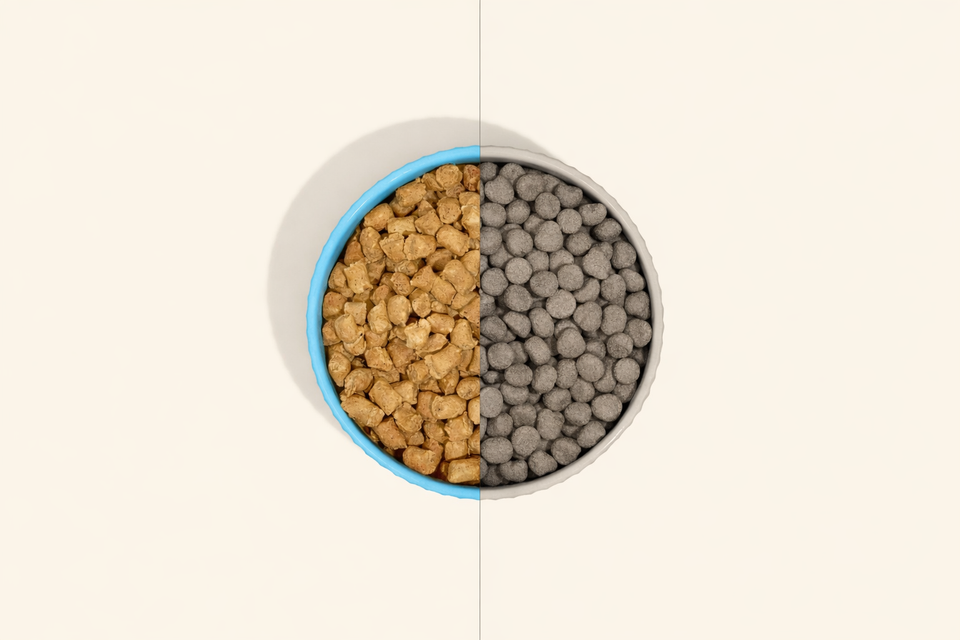
Dogs tend to love freeze-dried food because the freeze-drying process locks in natural fats and aromas that make it intensely palatable. Protein source matters most — beef, chicken, and lamb consistently rank as top performers in palatability studies. The key is finding a flavor your individual dog responds to while ensuring the formula supports gut health from the inside out.
Worried your dog won’t like it? It is the most common worry before a first order. Here is what dogs tend to go for, and how to find your dog’s favorite.
Key Takeaways
- Freeze-drying concentrates natural fats and aromas, making these foods more palatable than kibble for most dogs
- Beef and chicken are the most universally accepted proteins; lamb and salmon work well for dogs with chicken sensitivities
- Dogs with gut imbalances may show initial hesitation — this is normal during dietary transition
- Rotating proteins every few months prevents palatability fatigue and broadens nutritional coverage
- Get Joy's Belly Biotics™ is built directly into the food, so gut-supporting nutrients come with every bite regardless of flavor
Why Freeze-Dried Food Is So Palatable
Freeze-drying removes water through sublimation — ice converts directly to vapor without passing through liquid — which preserves the cellular structure, fats, and volatile aroma compounds that make food smell and taste like real meat. Heat-processed kibble, by contrast, degrades many of these compounds during cooking.
The result is a food that smells intensely meaty to dogs. Canine palatability is driven primarily by fat content and aroma, which is why freeze-dried foods often trigger excitement in dogs that seem indifferent to kibble. This also explains why freeze-dried foods work so well as training treats — the reward signal is strong.
The Gut Connection to Palatability
A healthy gut microbiome actually influences food preferences. Dogs with dysbiosis (microbial imbalance) sometimes show inconsistent appetites or interest in inappropriate items. Supporting gut health with prebiotics, probiotics, and postbiotics — like Get Joy's Belly Biotics™ built directly into the meal — can normalize appetite signals over time.
Top Flavors in Real Dog Taste Tests
Palatability research consistently shows a few clear winners across breeds and sizes:
| Protein | Palatability Rating | Best For | Notes |
|---|---|---|---|
| Beef | ⭐⭐⭐⭐⭐ | Most dogs | High fat content, rich aroma — universally loved |
| Chicken | ⭐⭐⭐⭐⭐ | Most dogs | Mild, easily accepted; most common protein |
| Lamb | ⭐⭐⭐⭐ | Sensitive dogs | Novel protein; good for dogs reacting to chicken |
| Salmon | ⭐⭐⭐⭐ | Dogs needing omega-3s | Strong aroma — dogs either love it or don't |
| Turkey | ⭐⭐⭐⭐ | Lean-diet dogs | Milder than beef; good for weight management |
| Duck | ⭐⭐⭐ | Novel protein seekers | Rich flavor; good rotation option |
Protein-by-Protein Breakdown
Beef
Beef freeze-dried formulas tend to be the most enthusiastically received. The higher fat content (compared to chicken or turkey) creates intense aroma during rehydration. If your dog has never shown excitement about food before, start here.
Chicken
Chicken is the most common protein in pet food, which means dogs raised on chicken-based kibble accept it readily. It's also a complete amino acid profile and typically lower in fat, making it a good everyday option. Note: some dogs develop sensitivity to chicken after prolonged exposure — rotation helps prevent this.
Lamb and Salmon
These shine for dogs with suspected chicken or beef sensitivities. Lamb has a distinctive earthy richness; salmon is pungent in a way dogs tend to love (owners less so). Both bring unique nutritional profiles — lamb for iron, salmon for EPA and DHA.
What to Do If Your Dog Won't Eat It
Initial hesitation is common, especially for dogs transitioning from highly processed, flavor-enhanced kibble. Kibble manufacturers use palatability enhancers (sprayed fats, flavor coatings) that create intense, artificial appeal. Real food can initially seem "less exciting" by comparison.
- Transition gradually — mix 25% freeze-dried with current food for the first week, increasing over 2–3 weeks
- Try rehydrating — adding warm water intensifies aroma and can make a hesitant dog more interested
- Serve at room temperature — cold food is less aromatic; let it sit out for 10 minutes before serving
- Try a different protein — some dogs simply prefer one protein over another; this is normal
- Be patient — gut microbiome shifts during transition can temporarily affect appetite
The Case for Protein Rotation
Feeding the same protein for years can lead to palatability fatigue and, in some dogs, sensitivity development. Rotating proteins every 2–3 months broadens the nutritional profile (different proteins deliver different amino acids and micronutrients) and keeps mealtime interesting.
A simple rotation: beef → chicken → lamb → back to beef. Transition over one week each time. A gut-healthy foundation makes rotation easier — a robust microbiome handles dietary variety better than a depleted one.
Try Get Joy Freeze-Dried Raw Meals — real whole food ingredients with Belly Biotics™ (prebiotics, probiotics, and postbiotics) built directly into every bite. Shop Now →
From Get Joy dog parents
“He does a dance around the kitchen island when I prepare it.”
“Number one: my dog loves these.”
Customer reviews, shared as written
Ready when you are
Freeze Dried Raw Meals come in Beef and Chicken.
Freeze Dried Raw Meals have Belly Biotics™ built in, store in the pantry and work as a full meal or a topper. 50% off your first Auto-Ship order. Skip, pause or cancel anytime.
Worried they won’t eat it? Mix a little into their current food and shift over 7 to 10 days. And we guarantee they’ll love it or your first order is free — that’s the Clean-Bowl Promise.
Frequently Asked Questions
Why does my dog go crazy for freeze-dried food compared to kibble?
Freeze-drying preserves natural fats and aroma compounds that heat processing destroys. These are the primary palatability drivers for dogs. Kibble manufacturers compensate by spraying palatability enhancers on the surface — freeze-dried food doesn't need that because the real thing is already there.
Can my dog get bored of the same freeze-dried flavor?
Yes, palatability fatigue is real. Dogs who eat the same food for extended periods sometimes become less enthusiastic about it. Protein rotation every 2–3 months keeps things interesting and provides broader nutritional coverage.
Is one flavor more nutritious than another?
Different proteins provide different micronutrient profiles. Beef is rich in zinc and iron; salmon in omega-3 fatty acids; chicken in niacin and phosphorus. No single protein is categorically superior — rotation gives you the benefits of all of them.
Browse More Topics
Shop by Concern


Featured Posts
How to Transition Your Dog to Freeze-Dried Food
Freeze-Dried Dog Food for Weight Management
Freeze-Dried Dog Food with Probiotics: The Gut Health Guide