Bestseller
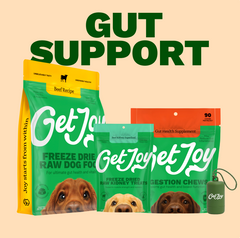
 Gut health
 Sensitive stomach
 Calm
Calm Joints & mobility
 Skin & coat
 Healthy weight
 Picky eaters



The Importance of Limiting Sugar in Dog Treats
by The Get Joy Food Team ・ 18 min readKey Takeaways
- Dogs have zero nutritional requirement for added sugar — none, ever.
- Sugar disrupts the gut microbiome by feeding harmful bacteria and yeast, starving the good guys.
- Even "natural" sweeteners like honey, molasses, and fruit juice concentrate are still sugar to your dog's gut.
- The downstream effects of excess sugar — obesity, insulin resistance, dental decay, and chronic inflammation — are all connected to gut dysfunction.
- Supporting the microbiome daily with prebiotics, probiotics, and postbiotics helps counteract occasional dietary disruption.
Dog treats are one of the most reliable sources of joy in any household. The wag, the spin, the soft eyes — it's hard to resist. But what's actually inside most commercial treats? Quite often, sugar. And not just a little.
The conversation around sugar in pet food has mostly focused on weight gain. That's worth talking about, but it's only part of the story. The deeper issue is what sugar does to the gut microbiome — the community of bacteria, fungi, and other microorganisms living in your dog's digestive tract that govern everything from immune function to mood to skin health.
When sugar enters that ecosystem regularly, it doesn't just add empty calories. It actively disrupts the balance of organisms that keep your dog healthy from the inside out.
Here's what you need to know.
How Much Sugar Do Dogs Actually Need?
The short answer: none. Dogs have no nutritional requirement for added sugar whatsoever.
Unlike humans, dogs do not have a strong evolutionary history of consuming high-carbohydrate, high-sugar diets. Their digestive systems are designed to derive energy primarily from protein and fat. Their carbohydrate tolerance exists, but it has limits — and refined sugars push well past those limits with no nutritional benefit in return.
When you see sugar, syrup, or sweeteners on a treat label, you are not looking at a functional ingredient. You are looking at a palatability tool: something added to make your dog want more. It works. But the cost is paid by the microbiome.
Where Sugar Hides in Dog Treats
Sugar is rarely listed as simply "sugar" on a dog treat ingredient label. It travels under many names, and some of them sound surprisingly wholesome. Here is what to watch for:
- Maltodextrin — a highly processed starch derivative with a glycemic index higher than table sugar
- Dextrose — glucose derived from corn or wheat, metabolized immediately as sugar
- Corn syrup / high-fructose corn syrup — inexpensive sweeteners that spike blood glucose and feed pathogenic gut organisms
- Honey — natural, yes. Still sugar. Still disruptive at regular doses.
- Molasses — often positioned as a "natural" ingredient; it is concentrated sugar with trace minerals
- Fruit juice concentrate — the fiber of whole fruit is removed, leaving a dense sugar hit
- Natural flavors — a catch-all term that can include sweetening agents without disclosure
- Cane sugar, beet sugar, brown sugar — straightforward, at least, but no less harmful
If any of these appear in the first five ingredients of a treat, that treat is sugar-forward regardless of what the front of the package says.
Sugar and the Gut Microbiome: The Real Problem
The gut microbiome is not a passive system. It is an active, living ecosystem that influences digestion, immune response, inflammation, hormone regulation, and even neurological health. When that ecosystem is balanced, your dog thrives. When it is disrupted, the effects ripple through every system in the body.
Sugar is one of the most potent disruptors of that balance.
How Sugar Feeds the Wrong Organisms
Beneficial gut bacteria — the Lactobacillus and Bifidobacterium strains that protect the gut lining, produce short-chain fatty acids, and regulate immune function — thrive on dietary fiber and complex carbohydrates. They do not particularly want simple sugars.
Pathogenic bacteria and yeast do. Candida albicans, a yeast that lives in small amounts in most dogs' guts, feeds aggressively on simple sugars. When sugar intake increases, Candida populations can expand rapidly, a process called dysbiosis. As Candida grows, it produces byproducts that further damage the gut lining, increase intestinal permeability (sometimes called "leaky gut"), and allow inflammatory compounds to enter the bloodstream.
Meanwhile, sugar creates an acidic gut environment that pathogenic bacteria like Clostridioides difficile and certain E. coli strains prefer. As these organisms crowd out beneficial bacteria, the gut loses its ability to regulate itself. The result is not just digestive upset — it is systemic immune dysfunction.
The Downstream Effects of Microbiome Disruption
A disrupted microbiome does not stay quietly in the gut. Research increasingly links gut dysbiosis to:
- Skin issues — itching, hot spots, recurring ear infections
- Immune overreaction — allergies, food sensitivities
- Mood and energy changes — lethargy, anxiety
- Digestive symptoms — gas, bloating, irregular stools
- Reduced vaccine efficacy and slower recovery from illness
None of these are labeled on a bag of treats. But they are connected to what those treats contain.
Obesity, Insulin Resistance, and Diabetes Risk
More than half of dogs in the United States are overweight or obese. Treats are a significant contributor — and sugar-heavy treats are among the worst offenders.
When your dog eats sugar, blood glucose rises rapidly. The pancreas responds by releasing insulin to drive that glucose into cells for energy. Treats are generally eaten between meals, on top of their regular caloric intake, which means that glucose hits a system that often does not need more fuel. What cannot be used for immediate energy gets stored as fat.
Over time, repeated blood sugar spikes lead to insulin resistance — cells become less responsive to insulin signals, the pancreas works harder, and eventually the regulatory system can break down entirely. In dogs, this manifests as Type 1-like diabetes requiring daily insulin injections. It is entirely preventable in most cases.
Beyond diabetes, excess fat tissue is itself inflammatory. Adipose cells release inflammatory cytokines that create a low-grade chronic inflammatory state throughout the body — compounding the gut-driven inflammation from microbiome disruption.
Dental Decay Is Not a Minor Issue
Sugar in the mouth feeds the bacteria responsible for plaque. Those bacteria produce acidic byproducts that erode enamel, inflame gum tissue, and over time cause periodontal disease. This matters far more than most pet owners realize.
Periodontal disease in dogs is not just a dental problem. Bacteria from infected gum tissue can enter the bloodstream and affect the heart, kidneys, and liver. Studies have found associations between severe periodontal disease and cardiac and renal complications in dogs.
Chewy, sticky treats are particularly problematic because they adhere to tooth surfaces, extending the period of sugar exposure with each bite.
Chronic Inflammation: The Quiet Consequence
Inflammation is the body's response to threat. Short-term, it is protective. Long-term, it is destructive.
Sugar drives chronic inflammation through several mechanisms simultaneously: gut microbiome disruption increases intestinal permeability and allows inflammatory compounds into circulation; excess fat tissue releases inflammatory cytokines; blood sugar spikes trigger oxidative stress; and dental disease adds another bacterial burden to the systemic load.
Chronic inflammation underlies some of the most common health problems in aging dogs — arthritis, cognitive decline, immune dysfunction, and certain cancers. Reducing dietary sugar is not a cure, but it removes one of the most consistent and controllable sources of inflammatory input.
How to Read Treat Labels for Sugar
Ingredient lists are organized by weight, highest first. Here is a practical approach to evaluating treats:
- Scan the first five ingredients. These represent the majority of the product. If any sweetener appears here, put it back.
- Search the entire list for every sugar alias. Use the list above. Some treats bury sweeteners lower in the ingredient list to obscure their presence.
- Check crude fiber. Higher fiber generally indicates more complex carbohydrates and less refined sugar.
- Look at crude protein. A treat where protein is not the primary macronutrient is probably being padded with carbohydrates and fillers.
- Ignore front-of-package claims. "Natural," "wholesome," and "real ingredients" are marketing terms with no regulatory definition in pet food. The ingredient list does not lie.
What an Actually Healthy Treat Looks Like
A treat worth giving your dog has a short, recognizable ingredient list anchored by whole food protein. It does not need sugar to be palatable — dogs have an instinctive preference for protein and fat, not sweetness.
Look for:
- Single-ingredient or minimal-ingredient treats — ideally one protein source, nothing added
- Named protein first — beef liver, chicken, salmon, turkey, not "meat meal" or "animal digest"
- No added sugar of any kind — including honey, molasses, and fruit juice concentrate
- No artificial preservatives, colors, or flavors
- Low glycemic carbohydrate sources if carbs are present — sweet potato, pumpkin, oats
- Freeze dried or air-dried processing — preserves nutritional density without requiring chemical preservatives
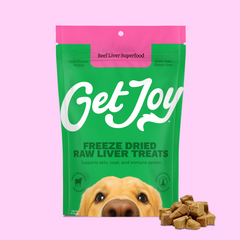
Get Joy's freeze dried treats are single-ingredient — beef liver, beef heart, or beef kidney — with nothing added. The protein is the treat. That is how it should be.
Joy starts from the gut.
Get Joy's Freeze Dried Raw Meals are built with Belly Biotics™ — our proprietary blend of prebiotics, probiotics, and postbiotics — designed to support a balanced microbiome at every meal.
Explore Freeze Dried MealsBelly Biotics™: Daily Gut Support in Every Meal
Even when you are diligent about reading labels, your dog's gut will face disruption. Travel, stress, the occasional treat at grandma's house, seasonal changes — the microbiome responds to all of it. The goal is not a perfect, hermetically controlled diet. The goal is a resilient gut that can recover quickly.
That resilience is built through consistent daily support, which is why Belly Biotics™ is not a supplement you add to your dog's bowl. It is built directly into every Get Joy Freeze Dried Raw Meal.
Belly Biotics™ is Get Joy's proprietary blend of prebiotics, probiotics, and postbiotics — the three layers of gut microbiome support working together:
- Prebiotics feed and nourish beneficial bacteria so they can establish and grow
- Probiotics introduce live beneficial organisms directly into the microbiome
- Postbiotics are the bioactive compounds produced by healthy bacteria — short-chain fatty acids and other metabolites that reduce inflammation and strengthen the gut lining
Together, these three components do not just react to disruption — they build the kind of microbiome that is harder to knock off balance in the first place.
Gut health is whole-body health. That is the foundation Get Joy is built on.
Related Reading
Frequently Asked Questions
Can dogs have any sugar at all?
Small amounts of naturally occurring sugars found in whole foods — like the fructose in a slice of apple or the lactose in plain yogurt — are generally tolerated by most healthy adult dogs in modest quantities. What dogs do not need, and are harmed by over time, is added sugar: sweeteners deliberately introduced into food or treats to improve palatability or palatability shelf life.
Is honey safe for dogs?
Honey is often promoted as a natural alternative to refined sugar. While it does contain trace antioxidants and enzymes, it is still a high-glycemic simple sugar. Given regularly in treats, it contributes to the same microbiome disruption, blood sugar spikes, and dental issues as other sweeteners. Occasional and very small amounts are unlikely to cause harm, but it should not appear as a routine ingredient in your dog's treats.
What are the signs that my dog's gut microbiome is disrupted?
Common signs of gut dysbiosis include: frequent digestive upset (gas, soft stools, vomiting), chronic skin issues or ear infections, low energy or mood changes, recurring yeast infections, and food sensitivities that seem to be worsening. These symptoms often have multiple contributing factors, but diet — including treat ingredients — is one of the most controllable variables.
How quickly can I improve my dog's gut health?
The microbiome is responsive. Studies in humans and animals suggest that significant microbial shifts can occur within days of dietary changes. Eliminating added sugar from treats and supporting the microbiome with consistent prebiotics, probiotics, and postbiotics creates conditions for recovery relatively quickly — though rebuilding a robust, diverse microbiome after sustained disruption takes longer, often weeks to months of consistent support.
Are grain-free treats lower in sugar?
Not necessarily. Many grain-free treats substitute legumes, potatoes, or tapioca as carbohydrate sources — some of which have high glycemic indices and may include added sweeteners. Grain-free is a format choice, not a nutritional guarantee. Always check the ingredient list regardless of format claims.
Do Get Joy treats contain sugar?
No. Get Joy freeze dried treats are single-ingredient animal protein — beef liver, beef heart, or beef kidney — with nothing added. No sweeteners, no fillers, no preservatives.
Better treats. Healthier gut. More joy.
Explore Get Joy's freeze dried meals and treats — built around real ingredients, zero added sugar, and Belly Biotics™ gut support in every bite.
Shop Meals Shop TreatsBrowse More Topics
Shop by Concern


Featured Posts
Keeping Your Dog Healthy in Winter: Cold Weather, Immunity, and Gut Health
The Best Dog-Safe Christmas Treats (Store-Bought and Homemade)