Bestseller
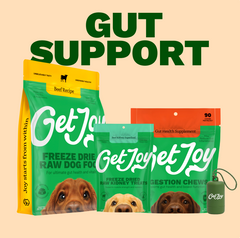
 Gut health
 Sensitive stomach
 Calm
Calm Joints & mobility
 Skin & coat
 Healthy weight
 Picky eaters



Key Takeaways
- "Healthy" in dog food has been hijacked by format marketing — fresh, raw, grain-free, organic — but format alone doesn't determine health outcomes.
- What matters is what the food does for your dog's body, starting with the gut.
- Gut health drives immune function, nutrient absorption, skin, coat, energy, and mood. It is the foundation of whole-body health.
- Look for named whole proteins first, recognizable whole food ingredients, and active gut-supportive components like prebiotics, probiotics, and postbiotics.
- AAFCO nutritional adequacy is the floor — not the ceiling. Meeting minimum requirements is not the same as supporting optimal health.
- Get Joy's Belly Biotics™ — a proprietary blend of prebiotics, probiotics, and postbiotics — is built directly into every meal, not sprinkled on as an afterthought.
Most Affected Breeds: All dog breeds benefit from quality nutrition. Breeds with known sensitivities like German Shepherds, Labrador Retrievers, Boxers, and Bulldogs may see the most noticeable improvements from upgrading to gut-first, function-led nutrition.
Why "Healthy Dog Food" Has Been Hijacked by Marketing
Walk into any pet store or scroll any dog food brand's website, and you'll be buried in signals designed to feel healthy: fresh. raw. organic. grain-free. human-grade. ancestral diet. The signals keep evolving, but the underlying question never quite gets answered.
What does the food actually do for your dog?
The conversation has been dominated by format wars — fresh vs. kibble, raw vs. cooked, freeze dried vs. wet. These debates have real merit, but they've also distracted dog parents from the more important question: regardless of format, does this food functionally support my dog's health from the inside out?
The honest answer is that format is a delivery mechanism. It matters — but it is not the whole story. A fresh meal made with poor ingredients is still a poor meal. A freeze dried formula built around gut health is delivering something fundamentally different than one that just happens to be freeze dried.
Truly healthy dog food is defined by what it does for your dog's body, not by how it is processed or packaged.
What Healthy Actually Means: The Gut-First Framework
Here's the shift that changes everything: gut health is whole-body health.
Your dog's gut is home to trillions of microorganisms — bacteria, fungi, and other microbes that collectively form the gut microbiome. This microbiome is not a peripheral concern. It governs nutrient absorption, immune system response, inflammation, skin and coat quality, energy levels, and even behavior and mood. When the gut microbiome is balanced and thriving, dogs feel and look the difference. When it is disrupted, the effects show up everywhere.
Healthy dog food, evaluated through a gut-first lens, is food that:
- Delivers nutrients in forms the gut can actually absorb
- Feeds and supports the beneficial bacteria in the microbiome
- Does not introduce inflammatory ingredients that disrupt gut lining integrity
- Provides the structural support the gut needs to function as a true health system
When you start asking "what does this food do for the gut?", ingredient lists, certifications, and format claims all look different. That is the gut-first framework.
What to Look for on the Ingredient List
Ingredient lists are organized by weight before cooking, which means the first few ingredients tell you the most about what the food is actually made of. Here is what you want to see:
Named whole proteins first
Look for specific, named proteins at the top of the list: chicken, turkey, beef, salmon, lamb. These indicate real muscle meat — not processed derivatives. If the first ingredient is a named protein, the food is at least starting from the right foundation.
Recognizable whole food ingredients
After the protein, you want to see ingredients that look like food: sweet potato, blueberries, spinach, pumpkin, eggs, carrots. If you could pick the ingredient up at a farmers market, that is a good sign. Whole food ingredients bring along their naturally occurring fiber, antioxidants, vitamins, and phytonutrients — not just isolated synthetic versions of them.
Healthy fats from identifiable sources
Fats are critical for brain function, joint health, coat quality, and the absorption of fat-soluble vitamins. Look for named fat sources: salmon oil, chicken fat, flaxseed. These are specific and traceable. Vague "animal fat" is a red flag.
Gut-supportive functional ingredients
The best formulas go beyond nutrition and actively support microbiome health. Look for prebiotics (like chicory root or inulin), probiotics (live beneficial bacteria, identified by strain), and postbiotics (beneficial compounds produced by microbial fermentation). More on this below.
What to Avoid
Just as important as what is in the food is what is not. These are the ingredients that deserve scrutiny:
Vague "meat by-products" and mystery proteins
Ingredients listed as "meat by-products," "poultry by-products," or simply "animal digest" offer little transparency about what parts of the animal were used or their nutritional quality. This is not about being squeamish — some by-products (like organ meats) are legitimately nutritious. The problem is vagueness. If the brand is not willing to tell you what the protein actually is, that tells you something.
Synthetic fillers with no nutritional function
Corn syrup, refined corn starch, and other refined carbohydrates pad out calorie counts without delivering meaningful nutrition. They can also spike blood sugar and feed the wrong bacteria in the gut microbiome. Short-term palatability, long-term disruption.
Artificial preservatives
BHA (butylated hydroxyanisole), BHT (butylated hydroxytoluene), and ethoxyquin are synthetic preservatives that extend shelf life but have raised enough concern in the research literature to be worth avoiding. Natural preservation using mixed tocopherols (vitamin E) is the cleaner alternative.
Artificial colors, flavors, and sweeteners
Dogs do not care what color their food is. Artificial dyes exist purely for the owner's perception. Artificial flavors and sweeteners are shortcuts used to make low-quality ingredients more palatable. Neither belongs in food designed for health.
Excessive salt
Some sodium is necessary for physiological function. Excessive sodium — added to enhance palatability — creates unnecessary strain on the kidneys and cardiovascular system over time. Check the guaranteed analysis and ingredient list both.
The Role of Gut-Supportive Ingredients: Prebiotics, Probiotics, and Postbiotics
The microbiome conversation in dog nutrition is still catching up to where human nutrition research has been for years. But the science is clear: actively supporting the gut microbiome produces measurable health outcomes — better digestion, firmer stools, reduced inflammation, stronger immune response, improved skin and coat, and more stable energy.
Three categories of ingredients support the microbiome:
Prebiotics
Prebiotics are non-digestible fibers that feed beneficial bacteria in the gut. Think of them as fertilizer for the microbiome. Common sources include chicory root, inulin, and certain fibers from fruits and vegetables. A food rich in whole plant ingredients will naturally contain some prebiotic fiber, but specific prebiotic additions ensure consistent delivery.
Probiotics
Probiotics are live beneficial bacteria that colonize the gut and compete with harmful microbes. The key word is live — which is why the form of the food matters. High-heat processing kills live cultures. Freeze dried or minimally processed formats preserve them. Look for identified strains (like Lactobacillus acidophilus or Bifidobacterium animalis) with colony-forming unit (CFU) counts, which indicate potency.
Postbiotics
Postbiotics are the bioactive compounds produced when beneficial bacteria ferment prebiotic fibers — short-chain fatty acids, enzymes, and other metabolites that directly support gut lining integrity and immune function. They are the downstream output of a healthy microbiome, and including them structurally in a formula means your dog benefits even before their own microbiome is fully optimized.
Healthy Dog Food Starts From the Inside Out
Get Joy's Freeze Dried Raw Meals are built gut-first — whole-food ingredients, USDA-sourced proteins, and Belly Biotics™ prebiotics, probiotics, and postbiotics built in, not bolted on. No tradeoffs between health, convenience, and real life.
Shop Freeze Dried Raw Meals Explore the Gut Support BundleBioavailability: What's on the Label vs. What Gets Absorbed
Here is a concept the pet food industry underplays: the presence of a nutrient on a label does not mean your dog can absorb it.
Bioavailability refers to how much of a nutrient actually becomes available for the body to use after digestion. The same mineral — say, zinc — can appear in a food in multiple forms. Zinc from a whole food source like muscle meat is meaningfully more bioavailable than zinc oxide (a synthetic additive). Both will appear on the guaranteed analysis. Only one actually functions as intended in the body.
This is why ingredient source and processing method matter beyond the numbers on the label. Whole food ingredients in minimally processed formats preserve the cofactors, enzymes, and structural context that make nutrients bioavailable. Synthetic vitamins and mineral supplements can fill in analytical gaps while delivering less functional value.
A gut-healthy microbiome also dramatically improves bioavailability. When the gut lining is intact and the microbiome is balanced, absorption is more efficient across the board. Which is another reason gut health is not a separate topic — it underpins every other nutritional claim a food can make.
AAFCO: The Floor, Not the Ceiling
You will see the phrase "complete and balanced nutrition" on virtually every commercial dog food. This claim is governed by AAFCO — the Association of American Feed Control Officials — which sets minimum nutrient profiles for dog food.
AAFCO compliance means a food meets defined minimums for protein, fat, vitamins, and minerals for a given life stage. That is a meaningful baseline. It rules out outright nutritional deficiency. But it is exactly that — a minimum standard.
AAFCO does not evaluate:
- The quality or source of the ingredients used to meet those minimums
- The bioavailability of the nutrients present
- The presence or absence of gut-supportive functional ingredients
- The long-term impact on microbiome health, inflammation, or chronic disease risk
- Processing methods and their effect on nutrient integrity
Two foods can both carry the "complete and balanced" label. One might be built from whole food ingredients with active Belly Biotics™ support. The other might be a heavily processed formula hitting synthetic minimums with corn syrup and artificial preservatives. AAFCO compliance tells you almost nothing about which is which.
Use AAFCO compliance as the floor you require, then evaluate everything above it using a gut-first lens.
The Difference Between "Meets Minimums" and "Supports Optimal Gut-Led Health"
There is a real difference between a dog that is not nutritionally deficient and a dog that is genuinely thriving. You can often see it: coat quality, energy levels, stool consistency, how they move, how engaged they are. But you can also feel it in how predictable and calm their digestion is, how quickly they recover from stress, and how rarely they need vet visits for diet-related issues.
Optimal gut-led health is not a marketing claim. It is a measurable functional state. A dog with a balanced, diverse, well-fed microbiome:
- Absorbs more nutrition per calorie consumed
- Has a more regulated immune response (less prone to allergies and inflammation)
- Maintains more consistent energy and mood
- Produces more stable, well-formed stools — a reliable external indicator of gut function
- Is more resilient to environmental stressors, antibiotics, and dietary changes
Food that actively supports this state is not in the same category as food that merely avoids causing harm. That is the distinction Get Joy is built on: not "good enough," but gut-first, function-led, outcomes-oriented nutrition that fits real life without asking you to make tradeoffs between health, convenience, and affordability.
Frequently Asked Questions
What is the healthiest type of dog food?
The healthiest dog food is not defined by format — it is defined by function. Look for food made from named whole proteins, recognizable whole food ingredients, and active gut-supportive components like prebiotics, probiotics, and postbiotics. The format that best preserves those ingredients with minimal processing is generally preferable, which is why freeze dried raw is a strong option — but the underlying ingredient quality and functional design matter more than the label on the bag.
Is grain-free dog food healthier?
Not inherently. Grain-free became a marketing signal without consistently being a health signal. Some dogs with grain sensitivities benefit from grain-free formulas. Others do fine with whole grains like brown rice or oats, which can actually contribute beneficial fiber to gut health. The question is not "does it contain grains?" — it is "do the ingredients support gut health and overall function?" Evaluate the full ingredient list, not just one claim.
How do I know if my dog's food is actually working?
Stool quality is one of the most reliable visible indicators of gut health — well-formed, consistent stools suggest the gut is absorbing nutrients efficiently and the microbiome is balanced. Beyond that, look at coat quality and shine, energy levels and engagement, how quickly your dog recovers from stress or dietary changes, and how often they experience digestive upset. Improvements in these areas after switching to a gut-supportive food are common and usually visible within a few weeks.
What does AAFCO "complete and balanced" actually mean?
It means the food meets minimum nutrient requirements established by AAFCO for the labeled life stage. It is a necessary baseline but not a measure of ingredient quality, bioavailability, or gut-supportive function. Two foods can both be AAFCO compliant while being nutritionally very different in practice. Always look beyond the compliance statement to the ingredient list and the functional design of the formula.
Are prebiotics, probiotics, and postbiotics necessary in dog food?
They are not legally required — but they meaningfully improve outcomes. A growing body of research supports the role of a balanced gut microbiome in immune function, nutrient absorption, inflammation management, skin and coat health, and behavioral stability. Food that actively supports microbiome health with a complete pre/pro/postbiotic system is not just nutritionally adequate — it is functionally superior. That is the premise behind Get Joy's Belly Biotics™.
Can I just add a probiotic supplement to my dog's current food?
You can, and it is better than nothing. But supplementing on top of a food that does not otherwise support gut health is working against yourself. Artificial preservatives, refined fillers, and inflammatory ingredients can actively disrupt the microbiome that the probiotic supplement is trying to support. Structural gut support built into the food — like Belly Biotics™ — is more consistent and more effective than a separate add-on because the whole formula is designed around the same goal.
Food That Works as Hard as You Do for Your Dog
Get Joy Freeze Dried Raw Meals are built gut-first — whole food ingredients, 100% USDA-sourced proteins, and Belly Biotics™ built in, not bolted on. No tradeoffs between health, convenience, and real life.
Shop Meals Learn About Gut Health