Bestseller

 Gut health
 Sensitive stomach
 Calm
 Joints & mobility
 Skin & coat
 Healthy weight
 Picky eaters




Why Halloween Stresses Dogs Out — And How to Help
by The Get Joy Food Team ・ 16 min readKey Takeaways
- Halloween triggers multiple anxiety stressors for dogs simultaneously: loud noises, unfamiliar costumes, strangers at the door, and a disrupted routine.
- The gut-brain axis means stress and gut health are directly connected — an anxious dog is often a dog with a disrupted gut.
- Preparation before Halloween night is more effective than reactive calming during it.
- Calm, predictable environments and a stable nutritional foundation are the two most impactful tools you have.
- Supplements like Get Joy Calming Chews can support your dog's stress response when used consistently ahead of the event.
Published October 2026 · Last reviewed October 2026
For most dogs, Halloween is not a holiday — it's a gauntlet. In a single evening, your dog encounters strangers in bizarre costumes, doorbells ringing every few minutes, children shrieking, decorations that move and make noise, and a completely unpredictable environment. It's not surprising that Halloween is one of the most stressful nights of the year for many dogs. Here's what's actually happening to your dog and what you can do about it.
The short answer: give your dog a quiet room away from the front door, keep their normal walk and meal routine, mask the noise with white noise or calm music, keep candy and the door secured, and start calming support ahead of the night rather than on it. If your dog panics or tries to escape, talk to your vet.
Why Halloween Is So Stressful for Dogs
Dogs experience the world primarily through smell, routine, and social familiarity. Halloween disrupts all three simultaneously:
Costumes and Disguised Familiar People
Dogs rely heavily on visual and olfactory cues to recognize people they know and trust. Costumes change both. When a family member puts on a mask or full-body costume, your dog may not recognize them — triggering a threat response toward someone they normally feel safe with. This can look like growling, barking, or hiding from the very person they love.
The Doorbell Loop
The doorbell is a high-alert signal for most dogs — it means someone new is at the boundary of their territory. On a normal evening, it happens once or twice. On Halloween, it can happen dozens of times in a single evening. The repeated alerting, the repeated "something is happening at the door," and the repeated frustrated inability to respond creates cumulative stress that builds throughout the night.
Noise and Unfamiliar Sounds
Fog machines, motion-activated decorations, kids shrieking, music, and fireworks in some neighborhoods pile additional auditory stress on top of the doorbell loop. Dogs hear much higher frequencies than people — roughly double the upper range of human hearing — so they're processing significantly more sound than you realize.
Disrupted Routine
Dogs are deeply routine-oriented animals. Halloween disrupts feeding times, walk times, and the evening wind-down routine that signals safety and predictability. This disruption alone is enough to elevate cortisol levels and trigger low-grade anxiety even in otherwise calm dogs.
Signs Your Dog Is Stressed on Halloween
Stress in dogs doesn't always look like obvious fear. Watch for:
- Panting or yawning when not hot or tired
- Ears pinned back or tail tucked
- Pacing or inability to settle
- Hiding or seeking out confined spaces
- Refusing food (a significant stress indicator)
- Destructive behavior — chewing, scratching
- Excessive licking or self-grooming
- Aggression toward strangers at the door
- Loose stools or stomach upset in the 24 hours following
The Gut-Brain Connection: Stress and Digestive Health
Here's what most pet parents don't know: stress and gut health are directly connected through the gut-brain axis — a bidirectional communication highway between your dog's digestive system and their brain. When stress spikes, it disrupts the gut microbiome. When the gut microbiome is disrupted, it can amplify the stress response. It's a loop, and it runs in both directions.
This is why many dogs experience loose stools, gas, or digestive upset in the 24–48 hours after a high-stress event like Halloween. The stress wasn't just mental — it moved through the body and landed in the gut.
Supporting your dog's gut health is therefore not just a nutrition decision — it's a stress management decision. A dog with a healthy, balanced gut microbiome is more resilient to stress. A dog fed erratically, given table scraps or Halloween candy, or whose gut health is already compromised will feel the stress of Halloween more acutely. Learn more about gut health as the foundation of whole-dog wellness.
How to Help Your Dog Through Halloween Night
The most effective approach on Halloween night itself is removal and environment control:
- Create a safe, quiet space away from the front door — a bedroom, a crate they're familiar with, or a back room. Add their favorite blanket and a long-lasting chew or food-dispensing toy.
- Use white noise or calming music to mask the sound of the doorbell and street noise. Shelter studies have found classical music reduces stress behaviors in dogs.
- Don't force social interaction. If your dog wants to hide, let them. Trying to reassure an anxious dog by bringing them into the chaos often makes anxiety worse.
- Keep feeding on schedule. Maintaining routine signals safety. A normal meal at the normal time is more calming than you might think.
- Secure all candy and wrappers. Stress-eating is real in dogs too — an anxious dog is more likely to counter-surf or get into the candy bowl.
Preparing in Advance: What Actually Works
The night itself is reactive. The week before is where you can make a real difference:
Desensitize to Costumes
If your family will be wearing costumes, put them on around the house in the days before Halloween. Let your dog observe, sniff, and adjust at their own pace. A familiar smell attached to a strange visual reduces the threat assessment significantly.
Practice Short Doorbell Exposure
Ring the doorbell yourself several times over a few days and reward calm behavior with a high-value treat. This doesn't eliminate the response, but it reduces the intensity over multiple exposures.
Start Calming Chews Before the Event
Behavioral supplements like Get Joy's Calming Chews work best when they've had time to build up in your dog's system. Starting daily support ahead of Halloween gives you a meaningful support layer before the stress peak hits, and a situational dose 30–60 minutes before trick-or-treating begins adds extra support on the night itself. For timing by situation, see how long calming chews take to work.
Maintain Gut Health Leading Into the Holiday
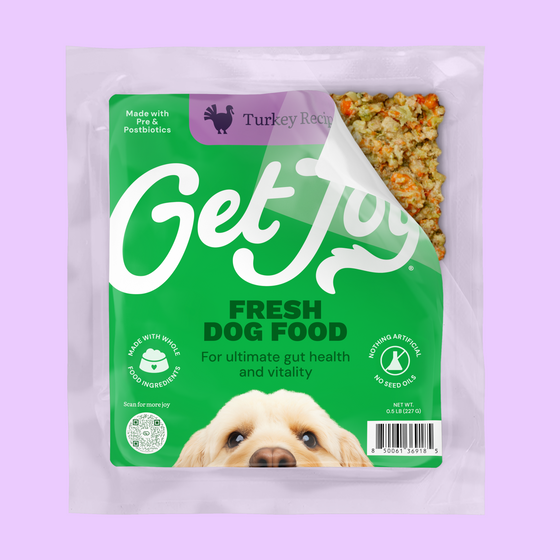
A stable, gut-healthy diet in the week before Halloween builds your dog's stress resilience from the inside out. Get Joy's Freeze Dried Raw Meals with Belly Biotics™ — our prebiotics, probiotics, and postbiotics blend built directly into every meal — supports the gut-brain axis so your dog's microbiome is balanced and resilient heading into the most stressful night of their year.
Should Your Dog Wear a Costume?
Only if your dog is relaxed in it. The ASPCA recommends trying a costume on before the big night, and skipping it if your dog freezes, tries to remove it, or seems uneasy. A good costume never limits movement, sight, hearing, breathing, or the ability to bark, and has no small dangling pieces to chew off. A festive bandana is a great fallback for dogs who would rather not dress up.
Costumes on people matter too. Masks and hats change the face and body cues dogs rely on to recognize family. Let your dog sniff you in costume before the doorbell starts, and reward calm behavior.
Halloween Night Checklist
- Walk early: a long walk and potty break before trick-or-treating starts, with a reflective collar or leash if it is dark.
- Check ID: make sure the collar tag and microchip details are current. Doors open constantly on Halloween and dogs slip out.
- Give them a quiet room: a back room with a long-lasting chew or lick mat, background music or white noise, and the blinds closed.
- Take the doorbell out of the equation: sit outside with the candy bowl or post a "please don't ring" sign, so the doorbell loop never starts.
- Keep candy out of reach: see which Halloween candy is toxic to dogs.
- Know when to call your vet: if your dog panics, tries to escape, or hurts themselves during noise or busy nights, ask your vet about prescription options and a longer-term plan.
Frequently Asked Questions
Why is Halloween so scary for dogs?
Halloween disrupts everything dogs rely on for safety signals: routine, familiar smells, recognizable faces, and a quiet predictable environment. Costumes disguise familiar people, doorbells ring repeatedly signaling territory intrusions, and unusual sounds and decorations add sensory overload. For a dog, it's genuinely a threatening environment.
How do I calm my dog down on Halloween?
Create a quiet, safe space away from the front door with familiar bedding and a long-lasting chew. Use white noise or calming music to mask street sounds. Keep feeding on schedule to signal normalcy. For dogs with significant anxiety, speak with your vet about whether a short-term anxiolytic is appropriate.
Can Halloween stress cause digestive problems in dogs?
Yes. The gut-brain axis means stress directly affects the gut microbiome. Dogs commonly experience loose stools, gas, or digestive upset in the 24–48 hours after a high-stress event. Supporting gut health with prebiotics, probiotics, and postbiotics helps the microbiome stay balanced through stress events.
Are Calming Chews safe for dogs during Halloween?
Get Joy's Calming Chews are formulated with natural calming ingredients and are safe for use around the Halloween period. For best results, start daily support ahead of the event and give a situational dose 30–60 minutes before the doorbell starts, rather than waiting until the night itself. Always consult your veterinarian before adding any supplement to your dog's routine.
Should I put my dog in a Halloween costume?
Only if your dog is relaxed in it. Try it on ahead of time, and skip anything that limits movement, sight, breathing, or barking. A bandana is an easy alternative.
How do I stop my dog from barking at trick-or-treaters?
Keep your dog in a quiet back room with a chew and background sound, and stop the doorbell by sitting outside with the candy bowl or posting a sign.
Does calming music work for dogs?
Studies of dogs in shelters found classical music reduced stress behaviors, though the effect can fade with repeated exposure. It works best as one part of a plan.
Why does my dog act scared of me in a costume?
Masks and costumes change the face and body cues dogs use to recognize people. Let your dog sniff you, speak normally, and reward calm behavior.
When should I start calming chews before Halloween?
Daily calming support works best when it has time to build, so start as early as you can before the holiday and follow the label directions. For timing by situation, see our guide to how long calming chews take to work.
Sources
- ASPCA, Halloween safety tips: aspca.org
- Purdue Center for Animal Welfare Science, Classical music reduces stress in kennelled dogs: caninewelfare.centers.purdue.edu
- The Conversation, Four ways to keep your dog happy at Halloween: theconversation.com
This article is for general education and is not a substitute for veterinary advice. If you think your dog has eaten something harmful, call your vet or a pet poison hotline right away.
Browse More Topics
Shop by Concern


Featured Posts
Keeping Your Dog Healthy in Winter: Cold Weather, Immunity, and Gut Health
The Best Dog-Safe Christmas Treats (Store-Bought and Homemade)