Bestseller
 Gut health
 Sensitive stomach
 Calm
 Joints & mobility
 Skin & coat
 Healthy weight
 Picky eaters




Best Dog Food for Senior Dogs: What Older Dogs Actually Need
by The Get Joy Food Team ・ 13 min readLast Updated: October 28, 2026
The best dog food for senior dogs is complete and balanced, rich in high-quality, digestible protein to protect muscle, and portioned to keep your dog lean. It should be easy to eat and easy to digest. There's no official AAFCO "senior" nutrient profile, so a bag labeled "senior" isn't automatically better. What matters is how the food fits your individual older dog: their weight, muscle, appetite, teeth, joints and any health conditions.
Has your older dog started picking at dinner? Or are you watching a graying muzzle and wondering what to change? Start here. Most of what helps is simple: the right protein, the right portion and a food they look forward to.
🐾 Key Takeaways
- There is no AAFCO senior standard. "Senior" on a label means whatever the brand decides.
- Healthy older dogs generally need more high-quality protein, not less, to slow age-related muscle loss. Restrict protein only if your vet advises it for a specific condition.
- Calorie needs often drop with age, so portion control matters. Lean dogs live longer: in a lifetime study, Labradors kept lean lived a median of about 1.8 years longer.
- Digestibility, moisture, fiber, omega-3s and gut support all help aging dogs eat well and stay comfortable.
- Senior checkups every 6 months help catch changes early, because nutrition should change when your dog does.
In This Article
When Is a Dog Considered a Senior?
There's no single birthday. Veterinary guidelines generally treat the senior stage as the last quarter of a dog's expected lifespan, which depends heavily on size:
| Size (adult weight) | Typically senior around |
|---|---|
| Small (under 20 lb) | 10–12 years |
| Medium (20–50 lb) | 8–10 years |
| Large (50–90 lb) | 7–8 years |
| Giant (90 lb+) | 5–6 years |
Your dog's behavior often tells you sooner than the calendar does: slowing down on walks, sleeping more, stiffness after rest, a pickier appetite, or weight creeping up or down.
What Changes in Senior Dog Nutrition
Protein: keep it high quality, and don't cut it
Older dogs tend to lose lean muscle and gain fat, even when their weight looks stable. The 2023 AAHA Senior Care Guidelines note that senior diets may benefit from a mild increase in protein quantity and quality to offset muscle loss. The old idea that seniors need low-protein food applies only to specific conditions, such as certain stages of kidney disease, and only on your vet's advice.
Calories: often fewer
Energy needs usually decline as dogs slow down, and extra weight is hard on aging joints. AAHA recommends an ideal body condition of about 4.5–5 on a 9-point scale. Weight matters for lifespan, too. In a landmark lifetime study, Labradors fed to stay lean lived a median of about 1.8 years longer than their littermates (Kealy et al., 2002).
Digestibility and moisture
Aging guts and pickier appetites do better with highly digestible food. AAHA notes research showing added moisture can increase nutrient digestibility in senior dogs. Rehydrating food also helps with hydration and is easier on older teeth.
Fiber and gut health
Fiber helps with body condition and regularity. Gut support matters too: the microbiome shifts with age, and a balanced gut supports digestion and normal immune function.
Omega-3s and joint support
Omega-3 fatty acids (EPA and DHA, from sources like salmon oil) support skin, coat and healthy joints. Many senior dogs also benefit from targeted joint support, discussed with your vet.
What to Look For in Senior Dog Food
- Complete and balanced (AAFCO) for adult maintenance or all life stages
- Named, high-quality animal protein first, with organ meats for natural nutrient density
- Highly digestible and gently processed
- Easy to chew: soft, or easy to soften with water
- Moderate calories you can portion precisely
- Omega-3s from a named source
- Fiber and biotics: prebiotics, named probiotic strains and postbiotics
- No artificial colors, flavors or fillers
How Much Should You Feed a Senior Dog?
Start with the feeding guide for your dog's weight. Then adjust every two to four weeks based on body condition: you should be able to feel the ribs easily under a thin layer of fat, and see a waist from above. Many less-active seniors need roughly 10–20% fewer calories than they did as active adults. Some very old dogs need more because they're losing weight or muscle. Weigh your dog monthly and adjust.
Our 2-minute quiz sizes daily portions for your dog's weight, age and activity. For example, a 30 lb senior on Freeze Dried Raw works out to about $5.35 a day on Auto-Ship.
Do You Need to Switch to a "Senior" Formula?
Not necessarily. If your dog is lean, active, eating well and doing great on a complete, high-quality food, there's no need to switch just because of age. Switch, or adjust portions, when something changes: weight gain or loss, a pickier appetite, digestive upset, dental trouble or a new diagnosis. Food made for all life stages can feed your dog from puppyhood through the senior years, as long as the portions change with them.
Where Get Joy Fits for Older Dogs
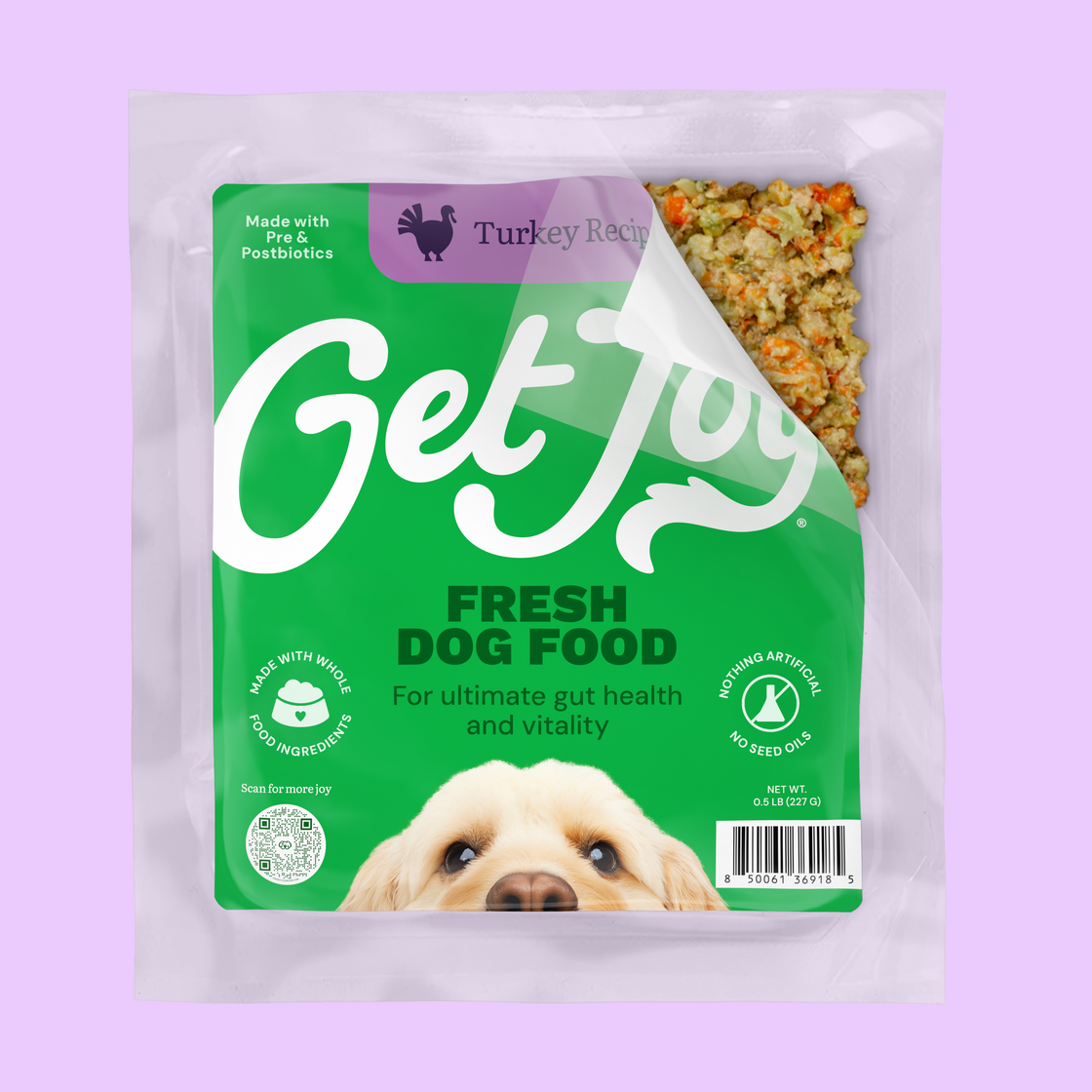
Built for every chapter. Get Joy Freeze Dried Raw Meals are complete and balanced for all life stages, with 100% USDA-sourced meat and organs first. They're gently freeze-dried, never cooked at high heat, and contain salmon oil for omega-3s and Belly Biotics™ (prebiotics, probiotics and postbiotics) for daily gut support. Rehydrate with warm water for a soft, aromatic bowl that's easy on older teeth and adds moisture. Fresh Meals are a gently cooked option for dogs who prefer a soft, warm meal.
To extend the routine, our Mobility Chews support joint comfort, flexibility and easy movement. Ask your vet about any supplement if your dog takes medication.
From Get Joy dog parents
“He’s excited about dinner again and does circles as we carry his bowl to his spot like he did when he was younger.”
Customer reviews, shared as written
Ready when you are
Rehydrated with warm water, Freeze Dried Raw Meals turn soft and aromatic, which many older dogs and picky eaters find easier to enjoy.
Freeze Dried Raw Meals have Belly Biotics™ built in, store in the pantry and work as a full meal or a topper. 50% off your first Auto-Ship order. Skip, pause or cancel anytime.
Worried they won’t eat it? Mix a little into their current food and shift over 7 to 10 days. And we guarantee they’ll love it or your first order is free — that’s the Clean-Bowl Promise.
Frequently Asked Questions
What is the best dog food for senior dogs?
A complete and balanced food with high-quality, digestible protein, moderate calories, omega-3s, fiber and gut support, in a texture your dog can eat comfortably. The best choice depends on your dog's weight, muscle, appetite and health, so check with your vet at senior wellness visits.
At what age should a dog eat senior food?
There's no fixed age. Dogs are usually considered seniors in the last quarter of their expected lifespan, around 10–12 for small dogs and 7–8 for large dogs. Change the diet when your dog's needs change, not just their age.
Do senior dogs need less protein?
Healthy seniors generally need the same or more high-quality protein to protect muscle. Lower protein is only recommended for certain medical conditions, under veterinary guidance.
Is senior dog food necessary?
No. AAFCO has no senior nutrient profile. A complete and balanced food that suits your dog, portioned to keep them lean, can work throughout the senior years.
How can I get my senior dog to eat?
Try warming the food or adding warm water to boost aroma and softness, feed smaller meals more often, and keep mealtimes calm. A sudden drop in appetite in an older dog is worth a vet visit.
Is freeze-dried raw good for senior dogs?
It can be. Freeze-dried raw is nutrient-dense and gently processed, and can be rehydrated into a soft meal. Choose one that's complete and balanced, and check with your vet if your dog has a medical condition.
Should I feed my senior dog smaller meals?
Many older dogs do well on two or three smaller meals a day instead of one large one, especially if they eat slowly or have a touchy stomach. Keep the total daily amount the same, weigh your dog about once a month, and adjust portions to keep them lean.
Is freeze-dried dog food good for senior dogs with bad teeth?
Yes — especially when rehydrated. A soft, moist texture requires minimal chewing force, making it comfortable for dogs with dental pain, missing teeth, or post-extraction sensitivity. Rehydrate with warm water for maximum softness and palatability. Many senior dogs who struggle with hard kibble thrive on rehydrated freeze-dried food.
How do I know if freeze-dried food is helping my senior dog?
Look for: improved energy and activity levels, healthier coat and skin, consistent stool quality (firm, well-formed), maintained muscle mass, healthy weight, and continued appetite. Most dog owners notice changes within 4–8 weeks of switching to a higher-quality diet. If gut health is a factor, changes in stool quality are often the earliest visible signal.
More Good Years Start in the Bowl
Complete, gut-first Freeze Dried Raw for every life stage, with Belly Biotics™ built in.
Sources: 2023 AAHA Senior Care Guidelines for Dogs and Cats (nutrition). Kealy R.D. et al. (2002). Effects of diet restriction on life span and age-related changes in dogs. JAVMA. This article is for education and isn't a substitute for veterinary care.
Browse More Topics
Shop by Concern


Featured Posts
How to Transition Your Dog to Freeze-Dried Food
Freeze-Dried Dog Food for Weight Management
Freeze-Dried Dog Food with Probiotics: The Gut Health Guide