Bestseller
 Gut health
 Sensitive stomach
 Calm
Calm Joints & mobility
 Skin & coat
 Healthy weight
 Picky eaters



Best Freeze-Dried Raw Dog Food: How to Choose (and Why It's Worth It)
by Dr. George C Fahey, Jr. ・ 19 min readUpdated: August 2026 · By Dr. George C. Fahey, Jr. (PhD Animal Nutritionist) · Meet our experts
The short answer
The best freeze-dried raw dog food starts with named, high-quality whole-food meat, carries an AAFCO 'complete and balanced' statement, is made safe with a gentle kill step that protects nutrients, and builds functional gut support into the recipe instead of sprinkling it on top. Freeze-drying pulls moisture out at low temperature, so a well-made meal keeps most of the nutrition of fresh raw food while staying shelf-stable and mess-free. Four things separate the great from the average: meat quality and sourcing, how the food is made safe, how much nutrition survives processing, and whether gut health is part of the formula.
Key takeaways
- Freeze-dried raw is raw nutrition with the water removed at low temperature, so it stays shelf-stable and scoop-and-serve without a freezer or prep.
- Gentle freeze-drying is associated with high nutrient retention, often cited around ~97%, because it avoids the high heat that can degrade delicate nutrients.
- Look for named USDA-sourced meats, an AAFCO complete-and-balanced statement, transparent sourcing, and a clear food-safety step.
- 'Raw' does not have to mean risky. Responsible brands use a validated kill step. Some rely on HPP (high-pressure processing), while Get Joy uses a gentle, FDA-approved step at low heat instead.
- Cost per day is real, so toppers are a smart way to add real raw nutrition to the bowl without switching everything at once.
- Get Joy Freeze Dried Raw Meals are complete and balanced for all life stages with Belly Biotics™ built in, because gut health is whole-body health.
What this guide covers
How freeze-drying works, and why temperature matters
Freeze-drying (technically, lyophilization) is a two-step process. The raw food is frozen solid, then placed in a vacuum chamber where the frozen water turns directly from ice to vapor, a phase change called sublimation, without ever passing through a hot liquid stage. The result is a light, shelf-stable meal that snaps back to something close to its raw state when you add water.
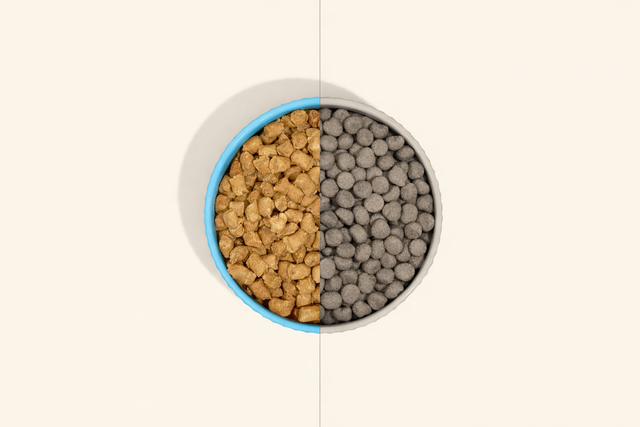
Temperature is the whole story. Traditional kibble is cooked at high heat through extrusion, which is convenient and safe but can degrade heat-sensitive nutrients. Freeze-drying keeps temperatures low, so the protein structure, natural fats, and delicate vitamins stay much closer to how they started. That is why freeze-dried raw is often described as raw nutrition you can keep in the pantry. For the science, see our explainer on how freeze-drying works in dog food.
One honest caveat: retention figures like this vary by recipe and lab, so treat the number as directional, not a promise. The point stands: gentle, low-temperature processing is associated with keeping more of the original nutrition intact.
What to look for in the best freeze-dried raw dog food
Freeze-dried dog food brands are not all built the same, and marketing can make very different products sound identical. Here is the checklist I use to read past the front of the bag.
- Named, high-quality meat, first and in quantity. The first ingredients should be specific named muscle meat and organs (for example, beef, beef liver, beef heart), not vague 'meat meal' or a long run of starches. Organ meat matters because it delivers naturally occurring vitamins and minerals.
- Transparent, traceable sourcing. Look for clear statements about where the meat comes from. USDA-sourced meats and 'human grade' language, when accurate and substantiated, signal a higher sourcing standard than commodity ingredients.
- An AAFCO 'complete and balanced' statement. This is the single most important label check. It tells you the food is formulated to meet the AAFCO nutrient profile for a life stage (growth, maintenance, or all life stages) rather than being an incomplete mix meant only as a treat or topper.
- A clear food-safety step. Reputable brands do not just freeze-dry and hope. They use a validated kill step. Understanding which one, and at what temperature, is a real differentiator (more on this below).
- Built-in functional support, not a sprinkle. Prebiotics, probiotics, and postbiotics that are formulated into the food work with every serving. A powder you shake on top is easy to skip and harder to dose. This is where gut-first brands separate themselves.
- No fillers, dyes, or synthetic junk. Corn-heavy fillers, artificial colors, and vague 'flavors' add little and can crowd out real nutrition.
Real raw nutrition, no freezer or prep
Belly Biotics™ in every bite, complete and balanced for all life stages, and ready to scoop and serve.
Freeze-dried raw vs kibble vs fresh vs air-dried
There is no single 'best' format for every dog and every budget. The honest way to choose is to weigh how each format is processed against nutrition, convenience, and cost. Here is how the main options compare.
| Format | How it is made | Nutrient retention | Convenience | Typical cost per day |
|---|---|---|---|---|
| Freeze-dried raw | Frozen, then moisture removed under vacuum at low temperature | High, gentle low-temp process | Shelf-stable, scoop and serve, rehydrate if you like | Higher (see cost section) |
| Kibble | High-heat extrusion, dried into pellets | Lower, high heat can degrade nutrients | Very high, pour and go | Lowest |
| Fresh / gently cooked | Cooked gently at low temperature, then refrigerated or frozen | Good, but heat and cold storage required | Needs fridge or freezer space and thawing | Mid to higher |
| Air-dried | Warm air slowly removes moisture | Good, though warm air is not as gentle as freeze-drying | Shelf-stable, dense, feed as-is | Mid to higher |
The pattern is straightforward: the less heat and the less aggressive the processing, the more of the original nutrition tends to survive, and generally the higher the cost. Freeze-dried raw sits at the nutrition-forward end while staying pantry-friendly, which is why so many dog parents land on it.

Is freeze-dried raw worth the cost?
Let us be candid about price. A complete freeze-dried raw diet fed as a full meal commonly runs from a few dollars up to roughly $12 per day for a medium dog, depending on weight and brand. That is a real premium over kibble. The value question is not 'is it cheap,' it is 'what am I paying for,' and with freeze-dried raw you are paying for gentle processing, better sourcing, and more nutrition surviving to the bowl.
Here is the part most guides skip: you do not have to go all-in on day one. Using freeze-dried raw as a topper over your dog's current food is the most affordable way to add real raw nutrition and aroma to the bowl. It lowers the cost barrier, makes the transition gentle, and often wins over picky eaters. Many dog parents start as toppers and scale up as the budget and the dog allow. For the math on portions, see how much freeze-dried raw to feed, and for the topper approach specifically, our guide to using freeze-dried raw as a topper.
How to serve, rehydrate, and transition
Freeze-dried raw is genuinely low-effort, which is a big part of the appeal. You can serve it three ways:
- Dry, as-is. Many dogs happily crunch it straight from the bag. Always keep fresh water available.
- Rehydrated. Add warm (not hot) water, roughly a one-to-one ratio, and let it sit about 3 to 5 minutes until it softens. Rehydrating boosts moisture intake, releases aroma, and can help dogs who prefer a softer texture or who need extra hydration.
- As a topper. Crumble it over your dog's regular food to add flavor, aroma, and real-meat nutrition.
When you switch foods, go slow. A gradual transition over 7 to 10 days helps the gut microbiome adjust without the loose stool a sudden change can cause. A typical schedule: days 1 to 3, about 25% new food with 75% old; days 4 to 6, roughly half and half; days 7 to 9, about 75% new; then fully switched. If your dog has a sensitive stomach, stretch the timeline and watch their stool. Our gut health guide explains why a slow transition protects the microbiome.
Why Get Joy Freeze Dried Raw
Get Joy was built on a simple belief: gut health is whole-body health, and the most direct lever is what goes in the bowl. Our Freeze Dried Raw Meals are designed to check every box above, and add the one most brands leave out.
- Real whole-food, USDA-sourced meats. Named muscle meat and organs, with transparent sourcing.
- No HPP. Instead of high-pressure processing, we use a gentle, FDA-approved kill step (Competitive Inhibition) at a maximum of 125°F. Food safety without high heat.
- ~97% nutrient retention from gentle freeze-drying, so more of the real nutrition makes it to the bowl.
- Belly Biotics™ built in. Our proprietary blend of prebiotics, probiotics, and postbiotics is a structural part of the food, not a sprinkle-on. It includes 5 probiotic strains at 3 billion CFU per pound, an inulin prebiotic, and a yeast-culture postbiotic, working with every serving.
- Complete and balanced for all life stages, and shelf-stable, scoop-and-serve simple.
Our recipes were developed with Dr. George C. Fahey, Jr. (PhD Animal Nutritionist) and a veterinary and nutrition expert panel. Meals are the foundation. Treats and supplements deepen the routine, but the bowl is where whole-body health starts. Explore the full lineup in our freeze-dried raw dog food collection.
Real raw nutrition, no freezer or prep
Give them USDA-sourced meat and Belly Biotics™ in every bite. New customers get 50% off their first order, then 10% off every order after.
Frequently asked questions
Is freeze-dried raw dog food good for dogs?
Yes, freeze-dried raw can be an excellent choice when the food is complete and balanced to AAFCO standards and made with quality ingredients. Because it is processed at low temperature, it is designed to retain more of the natural nutrition of raw food than high-heat kibble, while staying shelf-stable and easy to serve. As with any diet change, choose a formula that fits your dog's life stage and talk to your veterinarian if your dog has a medical condition.
Is freeze-dried raw safe, and what about raw bacteria?
Freeze-drying removes moisture and slows bacterial growth, but on its own it does not reliably kill pathogens like Salmonella or Listeria if they were present in the raw ingredients. That is why a validated kill step matters. Some brands use HPP (high-pressure processing) to inactivate bacteria with cold pressure. Get Joy uses a gentle, FDA-approved step (Competitive Inhibition) at a maximum of 125°F instead of HPP. When comparing brands, always ask what food-safety step they use, and follow normal hygiene when handling any pet food.
How much does freeze-dried raw dog food cost per day?
It depends on your dog's weight and the brand, but a complete freeze-dried raw diet fed as a full meal for a medium dog commonly falls in the range of a few dollars up to around $12 per day. It costs more than kibble because of gentler processing and better sourcing. Using it as a topper is the most affordable way to add real raw nutrition without switching the whole bowl at once.
Can I use freeze-dried raw as a topper instead of a full meal?
Absolutely, and it is a great starting point. Crumbling freeze-dried raw over your dog's regular food adds aroma, flavor, and real-meat nutrition, lowers the cost barrier, and makes the transition gentle. Many dog parents begin with a topper and build toward a full meal over time. See our guide to using freeze-dried raw as a topper for portion tips.
Freeze-dried raw vs kibble, which is better?
Both can be complete and balanced, so 'better' depends on your priorities. Kibble wins on price and shelf convenience. Freeze-dried raw uses gentle, low-temperature processing that is associated with higher nutrient retention, and quality formulas use named whole-food meats. If nutrition and minimal processing are your priorities and the budget allows, freeze-dried raw is a strong choice. If budget is the main constraint, a freeze-dried raw topper is a smart middle ground.
This article is for general educational purposes and is not a substitute for professional veterinary advice. Every dog is different. Talk to your veterinarian before making a significant diet change, especially if your dog is a puppy, is pregnant, is a senior, or has a health condition.
Browse More Topics

Written by
Dr. George C Fahey, Jr.
Shop by Concern


Featured Posts
Keeping Your Dog Healthy in Winter: Cold Weather, Immunity, and Gut Health
The Best Dog-Safe Christmas Treats (Store-Bought and Homemade)