Bestseller

 Gut health
 Sensitive stomach
 Calm
 Joints & mobility
 Skin & coat
 Healthy weight
 Picky eaters



Why Do Dogs Lick Their Paws? Causes, When to Worry, and the Gut-Skin Link
by The Get Joy Food Team ・ 13 min readLast Updated: October 28, 2026
Dogs lick their paws to clean them, to soothe an itch, or because something hurts. A little licking after a walk is normal. Constant licking, red or rust-stained fur, a yeasty smell, or licking that wakes you at night usually means an itch with a cause. The most common causes are environmental allergies, food reactions, parasites, an injury or infection, and boredom or anxiety. Many itchy dogs also have digestive signs, which is one reason vets increasingly look at the gut-skin connection.
Hearing licking at night? If you’re seeing rust-stained paws, or your itchy dog also has a touchy stomach, work through the causes below in order.
🐾 Key Takeaways
- Occasional paw licking is grooming. Frequent, focused licking is a symptom worth investigating.
- Allergies are the most common driver of itchy paws: environmental (pollen, dust mites, grasses) or food-related.
- One paw usually points to a local problem, like a splinter, cut, torn nail or sore joint. All four paws point to something body-wide, like allergies.
- Constant licking keeps the skin moist, which can let yeast and bacteria take hold and make the itch worse.
- Research links canine atopic dermatitis with a less diverse gut microbiome, so supporting gut health is a sensible part of the plan. It's never a substitute for a diagnosis.
In This Article
Is It Normal for Dogs to Lick Their Paws?
Some licking is completely normal. Dogs groom themselves, clean off mud after a walk, and lick briefly before settling down for a nap. What isn't normal is licking that's frequent, intense or hard to interrupt. If your dog licks their paws for minutes at a time, every day, or the fur between their toes has turned reddish-brown from saliva staining, their body is telling you something.
7 Common Reasons Dogs Lick Their Paws
1. Environmental allergies
Pollen, grasses, mold and dust mites can trigger atopic dermatitis, an itchy skin condition that often shows up first in the paws, face, ears, belly and armpits. It tends to flare seasonally at first and can become year-round.
2. Food allergies or sensitivities
A food reaction can look a lot like environmental allergies: itchy paws, ear trouble and skin flare-ups, sometimes with soft stools or gas. In a review of published cases, the foods most often reported in dogs with food allergies were beef, dairy, chicken and wheat (Mueller et al., 2016). Most dogs are allergic to a protein, not a grain.
3. Parasites
Fleas and mites are itchy. Even dogs on prevention can react to a single flea bite if they have flea allergy.
4. Injury or something stuck
A thorn, burr, splinter, cut pad, torn nail or ice ball between the toes can lead to sudden, focused licking of one paw.
5. Irritants and contact reactions
Ice-melt salt, hot pavement, lawn chemicals and certain plants can irritate the skin between the pads.
6. Infection
Yeast and bacterial infections often follow constant licking, because moist skin is the ideal environment for them. Watch for a musty smell, greasy residue, redness or swelling.
7. Pain, boredom or anxiety
Arthritis and other sore joints can cause licking over the painful area. And when medical causes are ruled out, licking can be a self-soothing habit for dogs who are bored, anxious or under-exercised.
Clues: One Paw or All Four?
| What you see | Likely direction |
|---|---|
| Sudden licking of one paw, limping | Injury, something stuck, a torn nail or joint pain. Check between the toes and pads. |
| All four paws, plus ears, face or belly | Allergies (environmental or food), or parasites |
| Worse in spring or fall | Environmental allergies |
| Year-round, with soft stools or gas | A food reaction is worth discussing with your vet |
| Red, smelly, greasy or swollen skin | Secondary yeast or bacterial infection |
| Mostly when alone or bored | Behavioral, once medical causes are ruled out |
The Gut-Skin Connection: Why Itchy Dogs Often Have Tummy Trouble Too
Your dog's skin and gut are both barriers between the body and the outside world, and both are patrolled by the immune system. Researchers are finding that the two are linked. In a 2023 study in Microbiome, Shiba Inus with untreated atopic dermatitis had a less diverse gut microbiome than healthy dogs, with fewer of the bacteria associated with short-chain fatty acid production. The study was small and observational, so it shows a link, not a cause. But it fits what many vets see in practice: dogs with itchy skin often have digestive signs too.
That doesn't mean a probiotic cures itchy paws. It does mean that a gut-supportive diet belongs in the plan, alongside whatever your vet recommends for the skin itself. You can read more in our guide to skin, stomach and the gut-health connection.
How to Help Your Dog Stop Licking Their Paws
- Inspect the paws. Look between the toes and pads for anything stuck, any cuts, swelling or a torn nail.
- Rinse after walks. A quick wipe or rinse with plain water removes pollen, salt and lawn chemicals. Dry thoroughly between the toes.
- Stay on parasite prevention year-round.
- Look at the bowl. If your vet suspects a food reaction, they may recommend an elimination diet trial of at least 8 weeks with a single, carefully chosen protein. See our guide to limited ingredient dog food.
- Support skin and gut from the inside. Omega-3 fatty acids (like those from salmon oil) support healthy skin. A diet with prebiotics, probiotics and postbiotics supports a balanced gut.
- Add enrichment. More walks, sniff time, puzzle feeders and chews can reduce boredom licking.
- Interrupt and redirect, gently. Punishing licking doesn't address the itch.
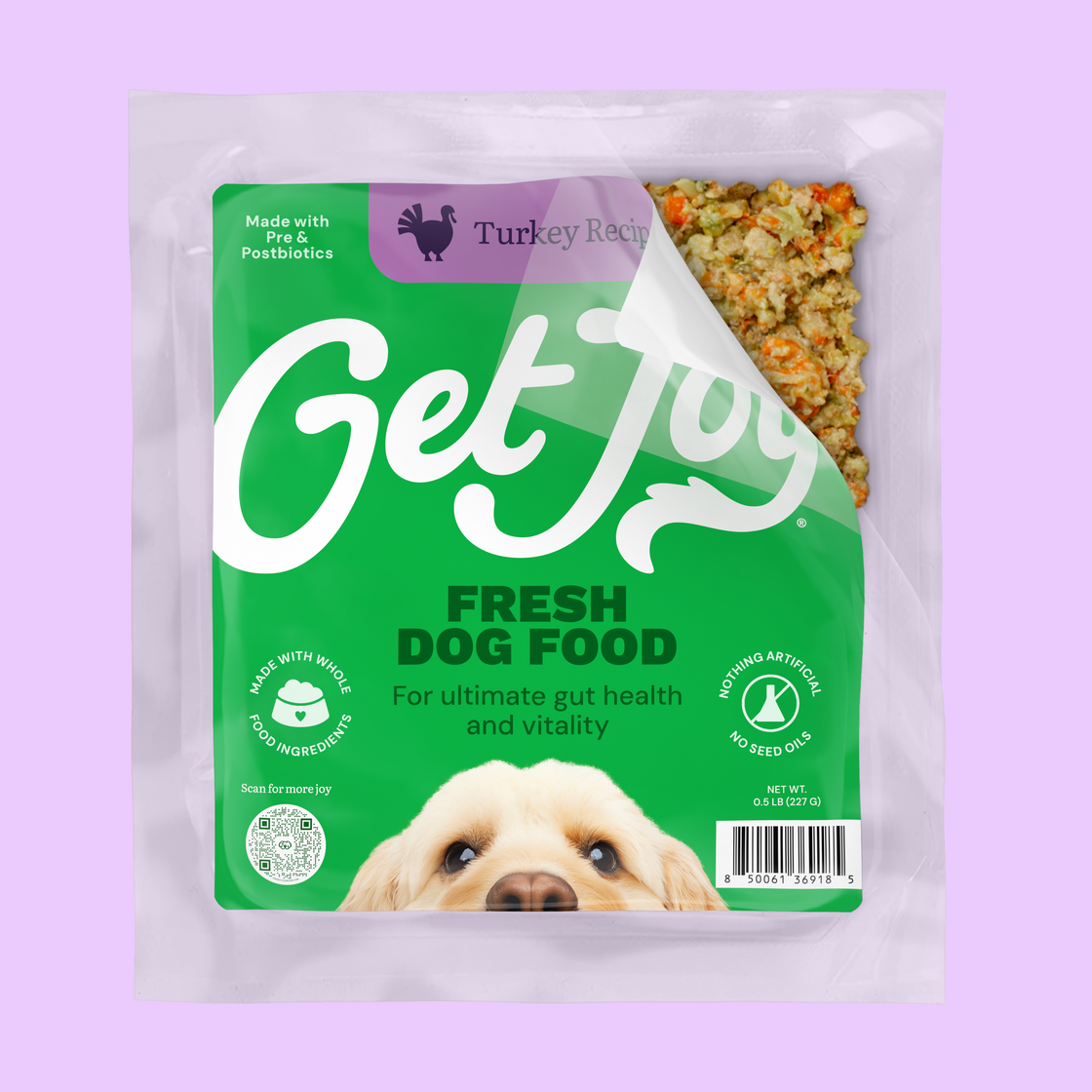
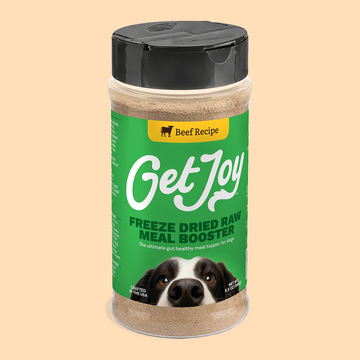
Where Get Joy fits: Our Freeze Dried Raw Meals come in single-protein Beef and Chicken recipes, with salmon oil for omega-3s and Belly Biotics™ built in. That's prebiotic inulin, five named probiotic strains (minimum 3 billion CFU per pound) and a yeast culture postbiotic. They're designed to support a healthy gut and a shiny coat every day. If your dog has a diagnosed allergy, choose a protein with your vet; beef and chicken are among the most common food allergens.
When to See the Vet
Book a visit if: licking is constant or getting worse; the skin is red, swollen, broken, oozing or smells; your dog is limping; there's hair loss or ear infections too; or licking continues after you've addressed obvious causes. Itchy dogs often need a combination of allergy control, infection treatment and diet changes, and your vet can sort out which.
From Get Joy dog parents
“Their coats are noticeably softer!!”
“All three of my dogs love the food; their coats look shiny.”
Customer reviews, shared as written
Not sure if it’s the food?
If the itching comes with loose stools, gas or a picky appetite, the gut is a good place to look first.
Start with the everyday signs a dog’s food may be falling short, then take the 2-minute quiz for a gut-first plan sized to your dog.
Frequently Asked Questions
Why does my dog lick their paws so much?
The most common reasons are allergies (environmental or food), parasites, injuries, infections, pain and boredom or anxiety. Licking all four paws usually points to allergies; licking one paw usually points to a local problem like an injury.
Is it bad if my dog licks their paws every day?
Brief licking after walks or before naps is normal. Daily licking that lasts several minutes, stains the fur or leaves the skin red is not, and is worth a vet check.
Why does my dog lick their paws at night?
Itch often feels worse when a dog is resting and has nothing else to focus on. Night licking is common with allergies and infections, and can also be a self-soothing habit.
Can food make my dog lick their paws?
Yes. Food allergies can cause itchy paws, ears and skin, sometimes with digestive signs. The foods most often reported are beef, dairy, chicken and wheat. An elimination diet supervised by your vet is the reliable way to find out.
What can I put on my dog's paws to stop licking?
Start by rinsing and drying the paws and checking for injuries. Avoid essential oils and human creams, which can be toxic if licked. Ask your vet before using any topical product, and have them examine paws that are red, swollen or smelly.
Does gut health affect paw licking?
Research links itchy skin conditions in dogs with a less diverse gut microbiome. A gut-supportive diet is a reasonable part of the plan, alongside your vet's treatment for the skin.
How long after changing food will I see less paw licking?
Skin changes take time. If food is part of the cause, most vets suggest a strict food trial of about 8 weeks before judging the result, because skin and coat renew slowly. Digestive changes, like firmer stools, often show up sooner.
Healthy Skin Starts Within
Single-protein Freeze Dried Raw with salmon oil and Belly Biotics™ built into every scoop.
Sources: Mueller R.S., Olivry T., Prélaud P. (2016). Critically appraised topic on adverse food reactions of companion animals (2): common food allergen sources in dogs and cats. BMC Veterinary Research. (2023). A comprehensive analysis of gut and skin microbiota in canine atopic dermatitis in Shiba Inu dogs. Microbiome. Olivry T., Mueller R.S., Prélaud P. (2015). Duration of elimination diets. BMC Veterinary Research. This article is for education and isn't a substitute for veterinary care.
Browse More Topics
Shop by Concern


Featured Posts
How to Transition Your Dog to Freeze-Dried Food
Freeze-Dried Dog Food for Weight Management
Freeze-Dried Dog Food with Probiotics: The Gut Health Guide