Bestseller
 Gut health
 Sensitive stomach
 Calm
Calm Joints & mobility
 Skin & coat
 Healthy weight
 Picky eaters


Get Joy vs Pup-Peroni: Reading the Ingredient Label on America's Favorite Treat
by The Get Joy Food Team ・ 14 min readUpdated: July 2026 · Reviewed against verified competitor data and Get Joy product facts · See our vet & nutrition experts
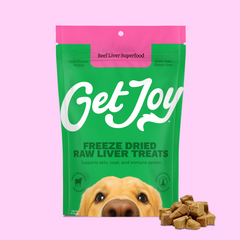
Both Get Joy Superfood Treats and Pup-Peroni are treats dogs genuinely love, so the honest question is not which brand wins in the abstract. It is what each treat is actually made of, and which one fits how you want to reward your dog. Pup-Peroni Original Beef is a soft jerky-style treat built from real beef plus a supporting cast of ingredients that create softness, shelf life, color, and aroma. Get Joy Superfood Beef Organ Treats are a single ingredient, freeze-dried raw organ. If you want a familiar soft-and-smoky treat at a low price, Pup-Peroni suits that well; if you want the shortest possible ingredient list and fewer calories per reward, single-ingredient organ treats suit that better.
Here is what most treat comparisons miss. The question is not only whether a treat is tasty. It is what your dog is getting with each reward. Pup-Peroni leads with real beef and then adds about a dozen more ingredients to hold the soft-moist format together. A single-ingredient organ treat gets its aroma and palatability from the meat itself, and its shelf stability from freeze-drying rather than from additives. Treats are extras either way, meals are the foundation, and at Get Joy that foundation is built around gut health.
Get Joy vs Pup-Peroni, in one line
Get Joy Superfood Beef Organ Treats are a single freeze-dried raw ingredient, USDA-sourced beef organ, with nothing artificial and no fillers. Pup-Peroni Original Beef is a soft jerky treat with real beef first, followed by roughly a dozen ingredients including soy grits, sugar, propylene glycol, added color, and BHA, at about 61 calories per piece. If you want the simplest label and lower-calorie rewards, Get Joy fits; if you want a familiar, budget, soft-and-smoky treat, Pup-Peroni fits.
🐾 Key Takeaways
- What Pup-Peroni gets right: its current published panel lists 13 ingredients, real beef is genuinely first, and the treat is made in USA facilities.
- What the rest of the list does: the remaining ingredients create softness, shelf life, color, and aroma, including soy grits, sugar, vegetable glycerin, propylene glycol, added color, smoke flavor, and preservatives such as BHA.
- The calorie gap: at roughly 61 calories per piece, one Pup-Peroni carries about a dozen freeze-dried organ treats' worth of calories, so the 10% treat guideline arrives fast.
- The single-ingredient alternative: Get Joy Superfood Treats deliver the meaty intensity dogs chase with one ingredient and no additions.
- Trading up keeps the joy: the reward comes from the meat and its aroma instead of the smoke flavor.
Table of Contents
What is the main difference between Get Joy and Pup-Peroni?
The main difference is ingredient count and what each treat is built from. Pup-Peroni is a processed, soft jerky treat with real beef first and about a dozen supporting ingredients; Get Joy Superfood Beef Organ Treats are a single freeze-dried raw ingredient. Dogs love Pup-Peroni, and that is not an accident. The recipe is slow cooked for a rich aroma, real beef leads the panel, the soft texture breaks easily for any size dog, and it is produced in USA facilities. It is affordable, it is everywhere, and it has been making tails wag for over 40 years. None of that is in dispute.
Where the paths split is how each treat earns its softness, shelf life, and smell. Pup-Peroni uses added ingredients to do those jobs. A single-ingredient organ treat lets freeze-drying and the meat itself do them instead. If you want to see how to read any panel with a clear eye, our guide on how to read dog food labels is a good starting point.
Get Joy vs Pup-Peroni at a glance
Here is the head-to-head on the factors dog parents ask about most.
| Feature | Get Joy Superfood Beef Treats | Pup-Peroni Original Beef |
|---|---|---|
| First ingredient | Beef organ | Beef |
| Total ingredients | 1 | 13 |
| Processing | Freeze-dried raw | Slow cooked soft jerky |
| Calories per piece | Low, break to size | ~61 |
| Added sugar | None | Yes |
| Preservatives | None | Potassium sorbate, citric acid, BHA |
| Added color | None | Yes |
| Chicken-free | Yes | Beef recipe: yes per panel |
| Part of full meal + treat system | Yes | No |
What is actually in Pup-Peroni?
Pup-Peroni Original Beef Recipe's published ingredient list is real beef first, followed by roughly a dozen more. Here it is as printed: Beef, Soy Grits, Beef Lung, Sugar, Beef Liver, Vegetable Glycerin, Salt, Propylene Glycol, Potassium Sorbate (preservative), Added Color, Natural Smoke Flavor, Citric Acid (preservative), BHA (preservative). And here is Get Joy Superfood Beef Liver: Beef Liver.
Let's be curious rather than judgmental about what each Pup-Peroni ingredient is doing. Soy grits bulk and bind. Sugar drives palatability. Vegetable glycerin and propylene glycol keep the texture soft and moist on a shelf for months. Added color makes the treat look meaty to humans, and dogs do not care. Smoke flavor supplies the aroma the meat alone does not. Potassium sorbate, citric acid, and BHA keep it all shelf-stable. Every one of those jobs is real.
Here is the thing: freeze-drying does all of them with zero additions. Freeze-dried raw organ meat is shelf-stable because the water is gone, aromatic because raw liver is intensely aromatic on its own, and palatable because it is meat. The technology replaces the additive list. That is the difference between an ingredient-led treat and a single whole-food ingredient.

How do they compare for training and calories?
For daily treating, the calorie math is the most practical difference. At roughly 61 calories per piece, two Pup-Peronis a day is over 120 calories, a meaningful share of a small or medium dog's budget and an easy way to drift past the AAFCO 10% treat guideline without noticing.
Freeze-dried organ treats run a fraction of the calories of a full Pup-Peroni per piece, and they snap into smaller rewards, so the same number of happy moments costs far fewer calories. Because organ meat is rich, the 10% rule still applies: keep organ treats to a moderate share of the day and they stay a smart everyday reward. For portion context, our primer on beef liver, heart, and kidney for dogs covers why a little organ goes a long way.
Do treats work better as part of a routine?
The typical treat drawer is a junk drawer: a jerky bag from one brand, biscuits from another, dental chews from a third, food from a fourth, each with its own ingredient philosophy, which mostly means no philosophy at all. Get Joy replaces the junk drawer with a routine. Freeze-Dried Raw Meals with Belly Biotics anchor the bowl, Superfood Treats handle rewards, and supplements fill specific needs, all from one brand with one standard. You vet us once, and every product answers to the same belief: gut health drives whole-body health. Meals come first; treats deepen the routine.
The final verdict: Get Joy or Pup-Peroni?
If Pup-Peroni is your dog's happy place, we get it, and we are not here to shame the pantry. The joy your dog gets from that bag comes from meat and aroma, and both exist in a purer form. Same tail wag, one ingredient, and a routine behind it. That is the trade.
Choose Get Joy if
- You want a single named ingredient with nothing artificial
- You want lower-calorie rewards you can break to size
- You want no added sugar, color, or preservatives
- You want treats that connect to a gut-first meal routine
Choose Pup-Peroni if
- You want a familiar, budget-friendly soft jerky treat
- Your dog prefers a soft, chewy texture
- You want a treat stocked in nearly every store
Upgrade the Wag
Same meaty joy your dog chases, one clean ingredient, and a gut-first routine behind it. Reward with Get Joy Superfood Beef Organ Treats.
Frequently asked questions
Is Pup-Peroni healthy for dogs?
Pup-Peroni is safe to feed as an occasional treat per its label, with real beef first, but it also contains sugar, propylene glycol, added color, and preservatives including BHA, and runs about 61 calories per piece. Nutrition-focused owners often prefer simpler, lower-calorie options for daily treating.
What ingredients should I avoid in dog treats?
Many owners choose to limit added sugar, artificial colors, and synthetic preservatives like BHA, and to watch calorie counts on soft jerky treats. The simplest screen is ingredient count: the shorter the list, the less there is to question.
Are single ingredient treats better than soft jerky treats?
Single ingredient freeze-dried treats deliver meat aroma and flavor without binders, sweeteners, colors, or preservatives, and at far fewer calories per piece. Soft jerky wins on texture for some senior dogs; otherwise simpler is generally the stronger daily choice.
How many treats per day is too many?
Keep all treats under 10% of your dog's daily calories per AAFCO guidance. With a 61-calorie treat that cap arrives fast; with low-calorie freeze-dried pieces you get many more reward moments inside the same budget.
Can I use Get Joy Superfood Treats for training?
Yes. Get Joy Superfood Beef Organ Treats snap into smaller pieces, so you can reward often while keeping treats under 10% of daily calories. Meals stay the foundation, and treats are the reward layer on top.
Pup-Peroni ingredient and calorie details are drawn from the product's own packaging and public retailer listings as of July 2026; panels can vary slightly by retailer and date, so confirm current details before relying on them. Get Joy figures are from getjoyfood.com and internal product documentation. The 10% treat guideline follows AAFCO guidance. This article is for education and is not veterinary advice; consult your vet for your dog's individual needs.
Browse More Topics
Shop by Concern


Featured Posts
Keeping Your Dog Healthy in Winter: Cold Weather, Immunity, and Gut Health
The Best Dog-Safe Christmas Treats (Store-Bought and Homemade)