Bestseller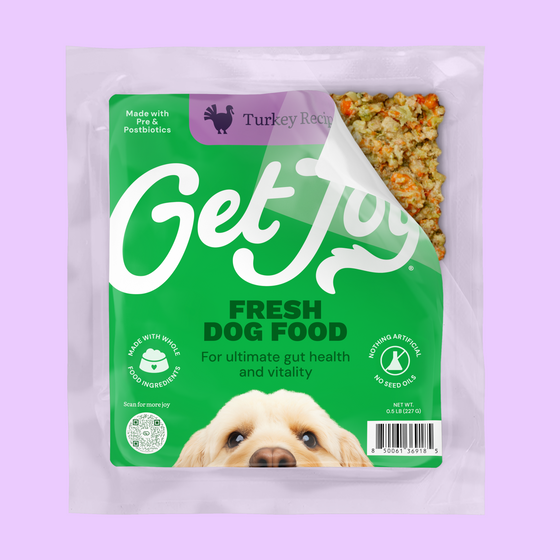

 Gut health
 Sensitive stomach
 Calm
Calm Joints & mobility
 Skin & coat
 Healthy weight
 Picky eaters



Raw Diet vs Gently Cooked Dog Food: Choosing the Right Fresh Food
by The Get Joy Team ・ 17 min readLast Updated: July 2026 · Reviewed against Get Joy product formulation & published canine research · See our vet & nutrition experts
The raw vs gently cooked dog food debate has real stakes: food safety, digestion, daily convenience, and whether your dog actually thrives on what you’re serving. This article cuts through the noise and breaks down what the differences actually mean in practice. By the end, you’ll have a clear picture of which approach makes more sense for your dog and your life.
🐾 Key Takeaways
- Raw and gently cooked both beat ultra-processed kibble on ingredient quality and usable nutrition.
- Gently cooked has the practical food-safety edge — heat lowers the microbial load in a way careful sourcing alone can’t.
- Raw retains more heat-sensitive vitamins and enzymes, but digestibility and meal-to-meal consistency tend to favor gently cooked.
- For sensitive stomachs, busy schedules, or homes with kids or immunocompromised family, gently cooked is usually the lower-friction fit.
- Whatever you choose, gut health is the goal — and a gradual transition protects digestion along the way.
Table of Contents
Raw vs gently cooked dog food: what’s the real difference, and who is this for?
If you’ve started researching fresh food for your dog, you’ve probably already landed in the middle of the raw vs gently cooked dog food debate. It gets loud fast—strong opinions, conflicting studies, passionate Reddit threads that somehow end in personal attacks. So let’s skip all that.
Raw dog food means exactly what it sounds like: uncooked meat, organs, and often raw bones, either commercially prepared or assembled at home. The appeal is rooted in the idea that dogs evolved eating whole prey animals, so leaving food unprocessed keeps nutrition intact. Dog companions drawn to raw feeding tend to prioritize minimal processing above almost everything else.
Gently cooked dog food takes a different approach. Ingredients are cooked at low temperatures—long enough to reduce pathogens and improve digestibility, but not so long that the nutrients get cooked out the way they would in conventional kibble processing. It’s not a compromise. It’s a smarter execution.
Both are real-food options, and both are a serious upgrade over ultra-processed kibble. But they’re not interchangeable, and the differences matter more than most people realize—especially when you factor in food safety, gut health, and what feeding actually looks like on a Tuesday morning.
If you’re newer to fresh feeding altogether, it’s worth understanding why fresh food matters in the first place before getting into the specifics. Once you have that foundation, the raw vs cooked comparison gets a lot easier to navigate.
Is raw or gently cooked safer? Here’s what food-safety science says
Food safety is not the sexy part of the raw vs gently cooked dog food debate, but it is the part that matters when dinner also comes with bacteria. Both are fresher than kibble. Both need real care. But they are not equally risky.
| Safety Factor | Raw Dog Food | Gently Cooked Dog Food |
|---|---|---|
| Bacterial contamination risk | Higher — uncooked meat can carry pathogens like Salmonella, Listeria, and E. coli | Lower — gentle cooking reduces harmful bacteria before the food reaches the bowl |
| Handling requirements | Stricter: careful storage, thorough handwashing, and extra attention to cross-contamination | Still important: refrigerate promptly, serve cleanly, and avoid leaving food out too long |
| Household vulnerability | Bigger concern in homes with young kids, older adults, pregnant people, or anyone immunocompromised | Generally easier to manage in shared households because the pathogen load is lower |
| Safety controls | Depends heavily on the manufacturer’s sourcing, sanitation, testing, and cold-chain practices | Also depends on the manufacturer, but cooking adds an extra food-safety step that raw does not have |
That last point matters. In raw dog food vs cooked dog food, brand quality always counts, but heat is doing real work here. It lowers the microbial burden in a way careful sourcing alone cannot.
Whichever side of the cooked vs raw diet for dogs question you land on, basic food safety is non-negotiable:
- Refrigerate meals promptly and use them within the recommended time
- Wash bowls after every meal because a lazy rinse is not enough
- Clean prep surfaces and utensils that touch the food
- Check your shipment when it arrives — here’s how to tell if your dog’s fresh meals are safe to use
Bottom line: gently cooked has the practical safety edge. Raw can be done responsibly, but it asks more from your kitchen, your routine, and your risk tolerance.

Nutrient retention and digestibility: what survives raw, what benefits from gentle cooking
Both raw and gently cooked meals usually hang on to more usable nutrition than ultra-processed kibble. In raw vs gently cooked dog food, the real question is less “Is there nutrition?” and more “How much of it actually gets used?”
| Nutritional Factor | Raw | Gently Cooked |
|---|---|---|
| Heat-sensitive vitamins (C, B) | Higher retention | Some loss, often balanced through formulation |
| Natural enzyme activity | Preserved | Reduced by heat |
| Protein digestibility | Good, but can vary | High and more consistent |
| Pathogen risk | Present without mitigation | Reduced through cooking |
| Nutrient consistency meal to meal | Can vary | More stable and predictable |
Raw does keep certain heat-sensitive nutrients and natural enzymes intact. That part is true. But dogs do not eat nutrition labels. They eat food their bodies need to break down, absorb, and tolerate well.
One study in adult dogs fed raw and lightly cooked diets were tested for apparent total-tract macronutrient digestibility, fecal characteristics, metabolites, microbiota, serum chemistry, urinalysis, and voluntary physical activity, but it did not compare only raw versus gently cooked. It looked at four commercial diet formats, including kibble, two roasted refrigerated diets, and raw. The takeaway is specific: the lightly cooked and raw diets tested were highly palatable, highly digestible, reduced blood triglycerides, maintained fecal quality and serum chemistry, and modified the fecal microbial community in healthy adult dogs.
That’s the practical split in a fresh dog food comparison. Raw dog food benefits and risks come as a package deal. Gently cooked dog food benefits tend to show up in digestion, consistency, and day-to-day ease. If you want to dig deeper into how ingredient quality and preparation work together, Get Joy’s nutrition philosophy lays it out clearly.
Which is easier on your dog’s stomach, immune system, and daily routine?
Nutrition matters, but so does real life. In the raw vs gently cooked dog food debate, the best diet is the one your dog actually thrives on and you can realistically maintain. That means weighing gut tolerance, lifestyle, and logistics alongside what looks good on paper.
| Factor | Raw Diet | Gently Cooked |
|---|---|---|
| Sensitive Stomachs | Higher adjustment risk | Easier to tolerate |
| Picky Eaters | Hit or miss | Broadly palatable |
| Travel & Portability | Complicated, requires cold | Simple, travel-friendly |
| Storage Requirements | Freezer space needed | Refrigerator-friendly |
| Prep Time | More handling, thawing | Ready to serve |
| Day-to-Day Consistency | Variable, more effort | Reliable, low-friction |
Easier digestibility is one of the standout gently cooked dog food benefits—and a decisive one for dogs with gut sensitivities or households that need a consistent, low-effort routine.
Raw feeding genuinely works for some dogs and some households. But for most, the handling requirements, freezer logistics, and digestive adjustment period add friction that quietly compounds over time. Gently cooked food is the cleaner everyday fit—especially for dogs with sensitive digestion or companions juggling busy schedules. If gut health is a priority, it’s worth exploring why gently cooked meals are the go-to recommendation for the best dog food for sensitive stomachs. Simpler to manage and easier on digestion is a hard combination to argue with.
Where Get Joy fits in: why gently cooked fresh food often wins in the real world
In the raw vs gently cooked dog food debate, this is usually where real life takes over. Raw can sound great on paper: less processing, simple ingredient lists, a back-to-basics feel. But for plenty of dog companions, the tradeoffs are hard to ignore. Safe handling matters. Storage matters. And not every dog does well with raw meat and bone.
That’s why gently cooked fresh food often lands in the sweet spot.
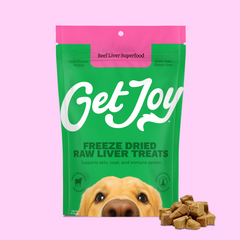
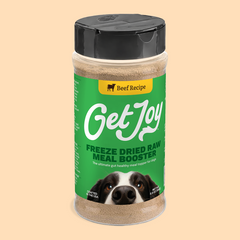
Get Joy’s approach is practical and nutrition-first. Fresh Meals are kettle-cooked gently to reduce the food-safety concerns that come with raw feeding, while still using fresh, whole-food ingredients and avoiding the heavy processing that gives dry food its reputation. And for households that want whole-food nutrition without freezer logistics, Get Joy’s Freeze Dried Raw offers a shelf-stable option with Belly Biotics™ — a proprietary blend of prebiotics, probiotics, and postbiotics — built right into the food. Here’s how the two Get Joy formats compare:
| Factor | Get Joy Freeze Dried Raw | Get Joy Fresh Meals (Gently Cooked) |
|---|---|---|
| Processing / heat | Raw ingredients freeze-dried at a low ~125°F — no high-heat cooking | Kettle-cooked gently at low temperatures to reduce pathogens |
| Moisture | Very low (~5%) — rehydrate with water before serving | High (~68–71%) — ready to serve |
| Texture | Light, crumbly nuggets; softens when rehydrated | Soft, moist, stew-like |
| Storage & shelf life | Shelf-stable in the pantry; no freezer needed | Frozen until use, then refrigerated |
| Gut support | Belly Biotics™ built into the food | Whole-food, gut-friendly recipes |
| Best for | Travel, convenience, pantry storage, topping or full meals | Sensitive stomachs, picky eaters, easy everyday feeding |
Both are formulated to meet AAFCO standards, which means dog companions are not left piecing together a diet and hoping it covers the basics. And gut health is the throughline — because gut health is whole-body health, and it’s where visible benefits like digestion, coat, and even breath tend to start.
There are also the everyday wins. Gently cooked food is easier to portion, serve, and store than a raw setup. No dealing with thawing routines, sanitizing every surface, or wondering whether that chicken sat out too long. For many households, that convenience is not a small detail. It’s the reason a feeding plan actually sticks.
In a fresh dog food comparison, raw dog food benefits and risks both deserve a fair look. But cooked vs raw diet for dogs is not just about ideology. It’s about what is safe, balanced, digestible, and realistic to serve every day. If you want the specifics, what makes Get Joy recipes different lays it out clearly.
Fresh, whole-food nutrition that fits real life
Whether you want shelf-stable convenience or soft, ready-to-serve meals, Get Joy makes gut-first nutrition simple — with Belly Biotics™ built into Freeze Dried Raw. Better for them, not a bummer for you.
How to choose: the best raw vs gently cooked dog food choice for your household
Here’s how to think through the raw vs gently cooked dog food decision without overcomplicating it.
If safety and convenience are your top priorities, gently cooked wins. You get the same whole-food nutrition as raw — without the bacterial risk, the careful handling, or the mental overhead. It’s also gentler on sensitive stomachs and a more predictable fit for households with kids, immunocompromised family members, or a schedule that doesn’t leave room for extra steps.
If you’re already deep in the raw world, your dog is thriving, and you’re comfortable with the protocols — no urgent reason to switch. Raw done right can work. The catch is that “done right” takes real commitment, and most households find that harder to sustain than they expected.
For most dog companions honestly weighing their fresh food options, gently cooked is the cleaner, lower-risk path to real nutrition gains. The benefits of minimally processed, whole-food ingredients without the tradeoffs that make raw difficult to stick with long-term.
Whichever direction you choose, don’t rush the transition. A gradual switch protects your dog’s digestion and sets the new diet up for success. If you’re ready to make the move, this guide on how to switch dog food without causing tummy troubles walks you through it step by step.
Browse More Topics

Written by
The Get Joy Team
Shop by Concern


Featured Posts
Keeping Your Dog Healthy in Winter: Cold Weather, Immunity, and Gut Health
The Best Dog-Safe Christmas Treats (Store-Bought and Homemade)