Bestseller
 Gut health
 Sensitive stomach
 Calm
Calm Joints & mobility
 Skin & coat
 Healthy weight
 Picky eaters



Key Takeaways
- Vitamin A is essential for your dog's vision, immune function, skin and coat, cell growth, and reproductive health.
- Dogs use two forms: preformed vitamin A (retinol) from animal sources, and provitamin A (beta-carotene) from plants — but dogs convert beta-carotene inefficiently.
- Vitamin A is fat-soluble, meaning it accumulates in the body — making over-supplementation the primary toxicity risk, not whole food sources.
- A healthy gut is essential for absorbing fat-soluble vitamins like vitamin A — gut dysbiosis can quietly impair absorption even when the diet is right.
- Liver and organ meats are the richest whole food sources. Get Joy's Freeze Dried Raw Meals include organ meats as part of a nutritionally complete, gut-first formula.
- Never supplement with isolated vitamin A without veterinary guidance.
Most Affected Breeds: All dog breeds benefit from adequate vitamin A. Growing puppies have higher relative requirements, and senior dogs may have compromised absorption. Breeds prone to skin conditions — including German Shepherds, Cocker Spaniels, and Bulldogs — may see especially visible benefits from optimized vitamin A intake through whole food sources.
Vitamin A gets talked about a lot in dog nutrition circles — and for good reason. It is one of the most functionally important micronutrients in your dog's diet, touching everything from eyesight to immune defense to skin health. But it is also one of the easier nutrients to get wrong, particularly when well-meaning dog parents start adding supplements on top of an already complete diet.
Here is what you actually need to know: where vitamin A comes from, what it does, how your dog's gut processes it, what happens when levels go too high, and why whole food sources are almost always the safer and smarter path.
What Vitamin A Does for Your Dog
Vitamin A is a fat-soluble vitamin, which means it is stored in your dog's fatty tissues and liver rather than flushed out daily like water-soluble vitamins. That storage capacity is what makes it both powerful and worth watching carefully.
Here is what adequate vitamin A supports:
Vision
Vitamin A is directly involved in the production of rhodopsin, the photosensitive pigment in the eye's rod cells. Without enough of it, your dog's ability to see in low light deteriorates. Prolonged deficiency can lead to night blindness and, in severe cases, more serious vision loss.
Immune Function
Vitamin A is essential for maintaining the integrity of mucosal surfaces — the linings of the respiratory tract, digestive system, and urinary tract. These linings serve as the body's first physical barrier against pathogens. Vitamin A also regulates the production and activity of white blood cells, including T-cells and B-cells, making it a central player in both innate and adaptive immunity.
Skin and Coat Health
Vitamin A drives the normal turnover of skin cells and supports healthy sebaceous (oil) gland function. A well-functioning skin barrier depends on it, and so does that coat sheen that signals a dog is genuinely thriving — not just getting by.
Cell Growth and Differentiation
Vitamin A is involved in gene expression that governs how cells develop and specialize. This is especially critical during growth phases — puppies have higher relative requirements — but it remains important for tissue maintenance throughout life.
Reproductive Health
Vitamin A plays a role in healthy sperm production in males and normal fetal development in pregnant females. Deficiency during pregnancy has been linked to developmental abnormalities in offspring.
Two Forms of Vitamin A: Not All Sources Are Equal
One of the most practically important things to understand about vitamin A is that it comes in two distinct biological forms — and dogs handle them differently.
Preformed Vitamin A (Retinol)
Found in animal-based foods — primarily organ meats, especially liver, as well as eggs and dairy. Retinol is biologically active and immediately usable by the body. When your dog eats liver, they are getting vitamin A in a form their body can deploy directly. This is the most potent dietary source, and the one most associated with toxicity when fed in excess — specifically from liver overconsumption or supplementation.
Provitamin A Carotenoids (Beta-Carotene)
Found in plant-based foods — carrots, sweet potato, leafy greens, pumpkin. Beta-carotene is a precursor to vitamin A. In humans, it converts to retinol fairly efficiently. In dogs, this conversion is significantly less efficient. Dogs lack the same enzymatic capacity to cleave beta-carotene that humans have, meaning plant sources contribute far less usable vitamin A than the raw beta-carotene content might suggest.
This is an important nuance. A diet centered on plant sources as a primary vitamin A delivery mechanism is likely to underdeliver for dogs. Animal-sourced retinol is the reliable form.
It is also why synthetic vitamin A (usually retinyl acetate or retinyl palmitate) is commonly added to commercial kibble — processing destroys most naturally occurring retinol, so it has to be added back in. Whole food-based diets with organ meats do not have this problem.
The Best Whole Food Sources of Vitamin A
When it comes to getting vitamin A through food rather than isolated supplements, organ meats are in a category of their own.
- Liver (beef, chicken, lamb): The single richest dietary source. Beef liver in particular contains extremely high concentrations of retinol — which is why feeding large amounts of raw liver daily is not recommended, but including it as part of a balanced, complete diet is exactly right.
- Eggs: A moderate source of retinol, with the yolk carrying the vitamin A. Also deliver healthy fats that support absorption.
- Kidney and heart: Lower in vitamin A than liver but contribute meaningfully as part of a varied organ meat inclusion.
- Carrots and sweet potato: Contain beta-carotene, but as noted, dogs convert this poorly. Good for overall nutrition but not a reliable primary vitamin A source for dogs.
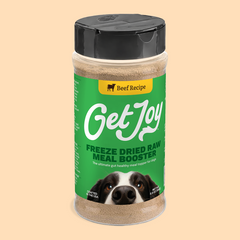
Get Joy's Freeze Dried Raw Meals include organ meats as part of the whole food ingredient profile — delivering vitamin A in its bioavailable, retinol form alongside the complete nutritional matrix that real food provides. This is meaningfully different from a kibble that has had vitamin A sprayed on after processing.
Gut Health and Vitamin A Absorption
Here is where the conversation gets more interesting — and more important — than most dog food articles go.
Because vitamin A is fat-soluble, it requires dietary fat and a healthy digestive system to be absorbed properly. Specifically, absorption happens in the small intestine, where bile salts (produced by the liver and released from the gallbladder) emulsify fats so that fat-soluble vitamins can be taken up by the intestinal lining.
What this means in practice: even if your dog's diet contains plenty of vitamin A, a compromised gut can undermine absorption. Conditions that damage the intestinal lining — chronic inflammation, dysbiosis (microbial imbalance), leaky gut, or excessive pathogenic bacteria — impair the structural integrity of the enterocytes (intestinal cells) responsible for absorbing fat-soluble nutrients.
Gut dysbiosis can quietly deplete fat-soluble vitamins like A, D, E, and K even when the diet looks complete on paper. It is one of the more underappreciated pathways through which poor gut health manifests as systemic nutritional insufficiency.
This is a core reason why gut health is not a separate topic from nutrition — it is nutrition. What you feed your dog matters, but so does whether their gut is in a state to actually absorb and use what you are feeding them.
Whole-Food Vitamin A — Delivered the Right Way
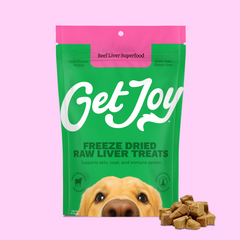
Get Joy's Freeze Dried Raw Meals include organ meats for natural, bioavailable vitamin A — plus Belly Biotics™ prebiotics, probiotics, and postbiotics to keep the gut healthy enough to actually absorb it. Pair with Organ Treats for an extra whole-food vitamin A boost.
Shop Freeze Dried Raw Meals Explore Organ TreatsSigns of Vitamin A Deficiency
True vitamin A deficiency is relatively uncommon in dogs eating a complete, balanced diet — but it does occur, particularly in dogs eating nutritionally incomplete homemade diets, or in dogs with chronic gut issues that impair absorption.
Signs to watch for include:
- Night blindness or difficulty seeing in low light
- Dry, flaky, or thickened skin
- Dull or rough coat
- Watery or crusty eye discharge
- Increased susceptibility to infections (especially respiratory)
- Muscle weakness
- Stunted growth in puppies
Because many of these signs overlap with other conditions, a veterinary workup is the appropriate next step if you observe them — not supplementation on a hunch.
Hypervitaminosis A: The Real Risk Is Over-Supplementation
Vitamin A toxicity — hypervitaminosis A — is the more commonly encountered clinical problem in dogs, and it is almost always caused by over-supplementation, not by whole food diets.
Because vitamin A is fat-soluble, it does not clear the body the way water-soluble vitamins do. Excess retinol accumulates in the liver and fatty tissues. Over time, those accumulating stores can reach levels that become genuinely toxic.
How Toxicity Develops
Two patterns emerge:
- Acute toxicity: A single large dose — usually from accidentally ingesting vitamin A supplements or eating enormous quantities of raw liver in a short period.
- Chronic toxicity: More common and more insidious. Gradual accumulation over weeks or months from consistent over-supplementation or feeding liver as a large portion of daily intake over a long period.
Signs of Hypervitaminosis A
- Lethargy and depression
- Loss of appetite and weight loss
- Nausea and vomiting
- Bone pain and joint stiffness — particularly in the neck and forelegs
- Abnormal bone growths (exostoses) — bony spurs that can appear around joints and on the spine
- Reluctance to move or an abnormal gait
- In severe cases: paralysis
The bone-related signs are particularly characteristic of chronic vitamin A toxicity in dogs and can become irreversible if allowed to progress. Early recognition and removal of the excess vitamin A source typically halt progression, but existing skeletal changes may be permanent.
Why Whole Food Sources Are Safer Than Supplements
Whole food sources of vitamin A come naturally packaged with cofactors, competing nutrients, and the physiological signals that regulate absorption. The body is reasonably good at moderating uptake from food in normal circumstances. Isolated synthetic supplements bypass many of those regulatory mechanisms and deliver concentrated doses that can overwhelm the system.
The AAFCO Canine Nutrient Profile sets a minimum of 5,000 IU per kilogram of food and a maximum of 250,000 IU per kilogram of food. A properly formulated complete diet stays comfortably within that range. Stacking supplements on top of a complete diet removes that buffer.
Should You Supplement? What to Know Before You Do
If your dog is eating a nutritionally complete diet — one formulated to meet AAFCO or equivalent standards — they are almost certainly already getting adequate vitamin A. Adding more is not a wellness upgrade. It is a risk.
The scenarios where supplementation might be warranted are narrow:
- A confirmed deficiency diagnosed through bloodwork and veterinary evaluation
- A dog with a specific malabsorption condition affecting fat-soluble vitamin uptake
- A dog eating a nutritionally incomplete homemade diet under veterinary supervision
In all of these cases, the supplementation protocol should be determined and monitored by a veterinarian — ideally one with clinical nutrition experience. Self-directed vitamin A supplementation based on general wellness logic is the primary way toxicity happens.
The simpler path: feed a complete, whole food-based diet that includes organ meats, support your dog's gut health so absorption is actually working, and trust the food to do the job it was designed to do.
Frequently Asked Questions
Can dogs get enough vitamin A from vegetables alone?
Not reliably. Dogs convert beta-carotene from plant sources to active vitamin A far less efficiently than humans do. Animal-sourced retinol — from organ meats, eggs, and other animal foods — is the dependable dietary form for dogs.
Is it safe to feed liver every day?
Small to moderate amounts of liver a few times per week as part of a balanced diet are generally fine. Feeding large quantities of raw liver daily over extended periods can contribute to vitamin A excess due to liver's very high retinol concentration. As a rough guideline, liver should not constitute more than 5–10% of a homemade diet by weight. In a properly formulated commercial product, this is already accounted for.
My dog's food already has vitamin A listed in the ingredients. Should I still add a supplement?
No. If your dog's food meets AAFCO standards or equivalent, it contains the required vitamin A. Adding a supplement on top creates the conditions for excess accumulation. Check with your vet before adding any fat-soluble vitamin to your dog's routine.
What does gut health have to do with vitamin A?
Vitamin A is fat-soluble and absorbed in the small intestine. A compromised gut lining — from dysbiosis, inflammation, or other issues — impairs the absorption of fat-soluble vitamins. Your dog can be eating plenty of vitamin A and still be functionally deficient if their gut is not in good shape. Supporting gut health is not separate from nutritional sufficiency — it is what makes nutritional sufficiency possible.
What should I do if I think my dog has vitamin A toxicity?
Contact your veterinarian immediately. Do not wait for symptoms to worsen. Bring any supplements you have been giving so your vet can assess the source and quantity. Early intervention significantly improves outcomes.
Nutrition that works from the inside out.
Get Joy's Freeze Dried Raw Meals are built around whole food ingredients — including organ meats for natural vitamin A — plus Belly Biotics™ to keep the gut healthy enough to actually absorb what you are feeding. No guesswork. No tradeoffs.
Explore Freeze Dried Raw Meals